Multicomponent smoking cessation intervention increased abstinence rates for adults with serious mental illness
Sustained Care Smoking Cessation Intervention for Individuals Hospitalized for Psychiatric Disorders: The Helping HAND 3 Randomized Clinical Trial
Randomized clinical trialBenefit found
Is a sustained care smoking cessation intervention effective for adults with serious mental illness?
Who
342
Adults with serious mental illness who smoked daily · Single hospital in Austin, Texas
Compared
8.9%Sustained care
3.5%Usual care
Main outcome
Biochemically verified 7-day point-prevalence abstinence at 6-month follow-up
Result: adjusted odds ratio 2.95 (95% CI 1.24-6.99)
Bottom line: A multicomponent sustained care intervention increased smoking abstinence rates among individuals with serious mental illness after hospital discharge.
JAMA Psychiatry · 2021-05-06Download image
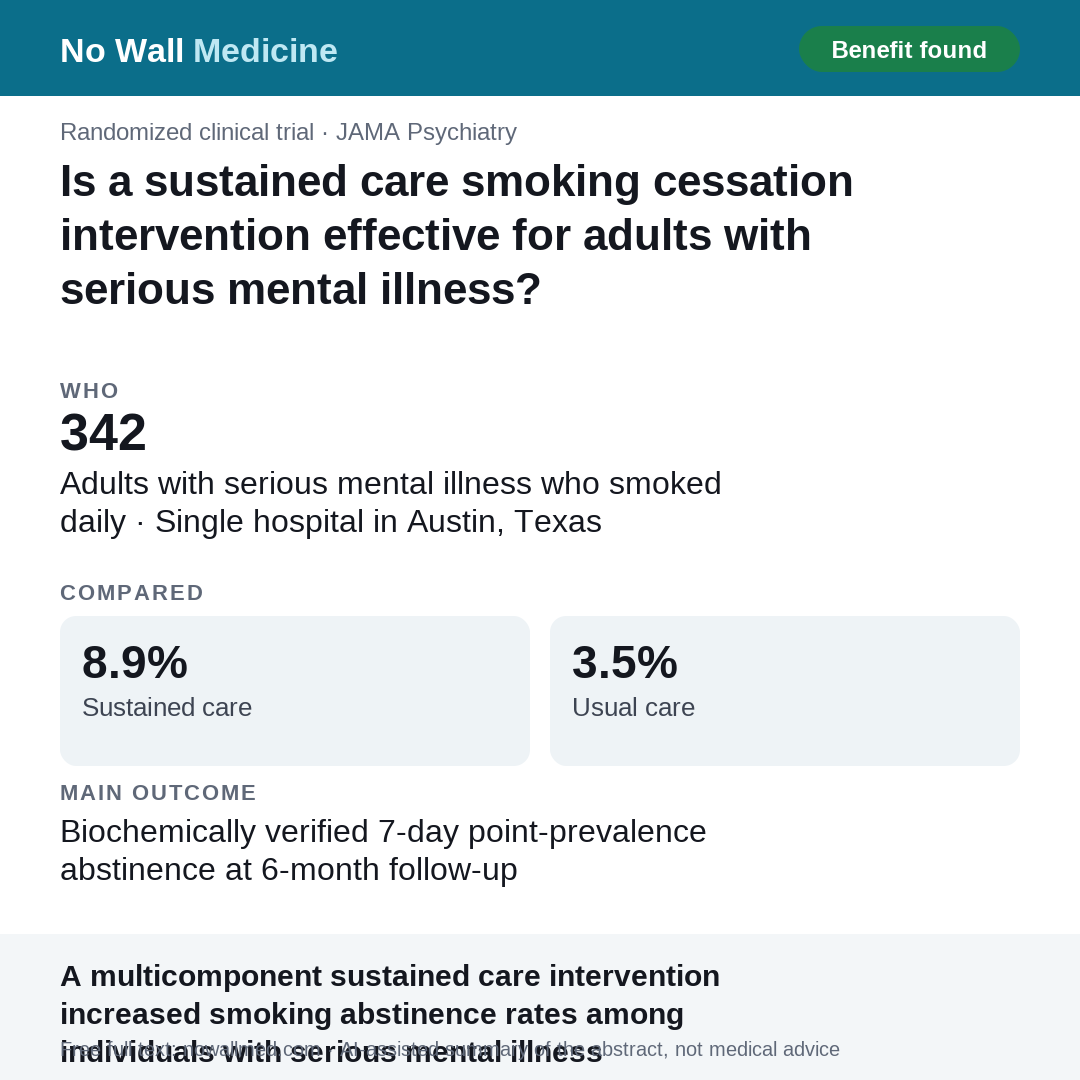
Clinical question: Is a sustained care smoking cessation intervention effective for adults with serious mental illness?
Why it matters: It is unknown if a multicomponent, sustained care intervention can effectively promote smoking abstinence and treatment use for individuals with serious mental illness following psychiatric hospitalization.
Key points
- Researchers randomized 353 adults with serious mental illness who smoked daily to receive either usual care or a multicomponent sustained care intervention.
- At 6-month follow-up, the sustained care group had higher biochemically verified 7-day abstinence rates of 8.9% compared to 3.5% in the usual care group.
- Participants receiving the sustained care intervention were more likely to report using smoking cessation treatment at 74.6% versus 40.5% in the usual care group.
Headline and key points written with AI from the paper’s abstract, with every number checked against it. Read the paper before relying on them.
Was this summary helpful?
Subject terms
Cite this article
Brown RA, Minami H, Hecht J, Kahler CW, Price LH, Kjome KL. Sustained Care Smoking Cessation Intervention for Individuals Hospitalized for Psychiatric Disorders: The Helping HAND 3 Randomized Clinical Trial. JAMA Psychiatry. 2021. doi:10.1001/jamapsychiatry.2021.0707
Spotted a mistake? Suggest a correction
Top studies every Monday
The week’s key trials and guidelines in your specialties, plus any topics you follow. By email, free.
Get the weekly digest