Nitrous oxide treatment for depression produces significant greenhouse gas emissions per patient
Sustained mood improvement with laughing gas exposure (SMILE): a randomised, placebo-controlled pilot trial of nitrous oxide for treatment-resistant depression: commentary, Kalmar et al
CommentaryUnclear result
What are the environmental implications of nitrous oxide for treatment-resistant depression?
Who
Patients with treatment-resistant depression
Compared
Single 1 hour treatment: 150 kg CO2-equivalents
Per patient-year: 7.8 t
Main outcome
Environmental implications as a greenhouse gas
Bottom line: Nitrous oxide treatment for depression generates significant greenhouse gas emissions per patient-year.
BJPsych Open · 2026-07-03Download image
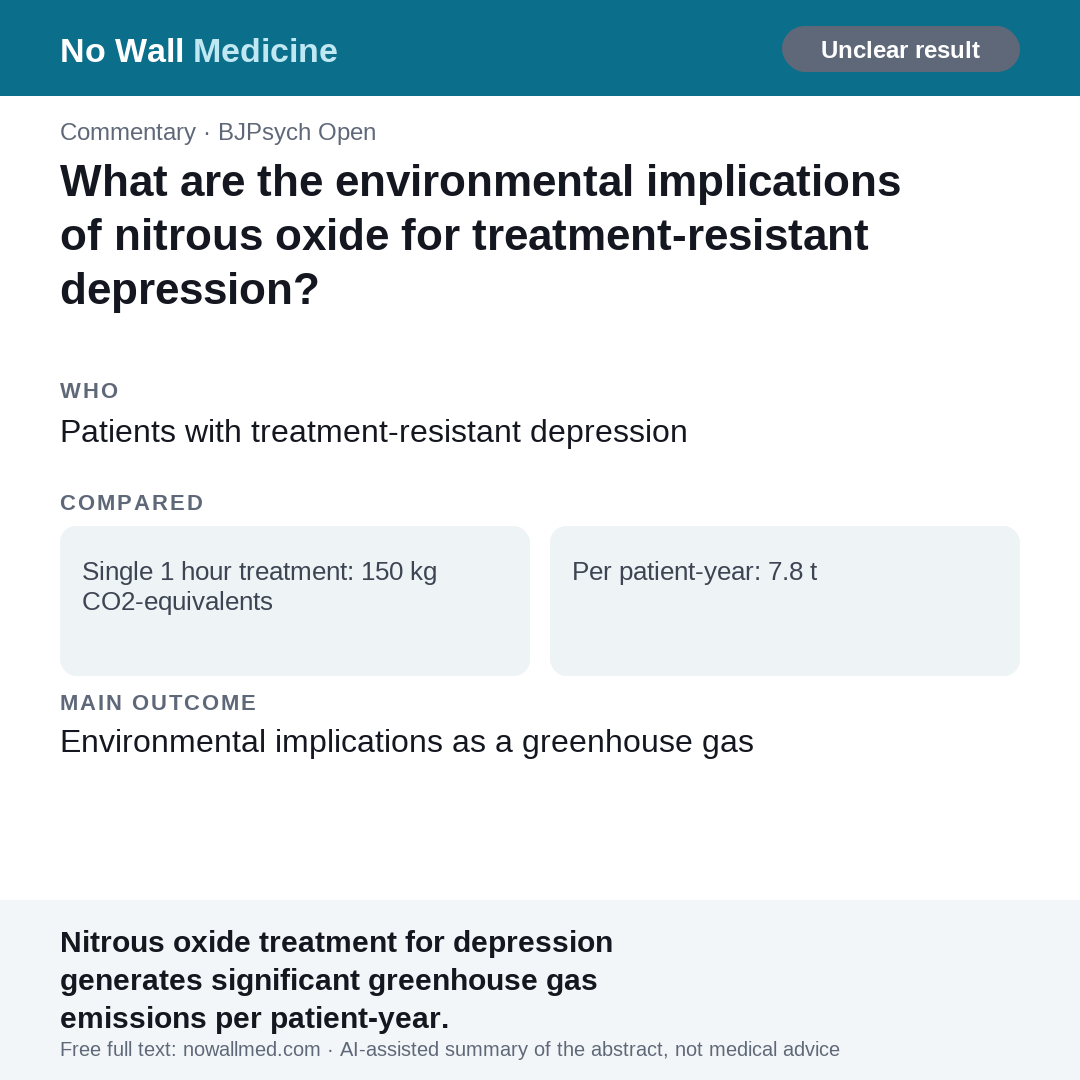
Clinical question: What are the environmental implications of nitrous oxide for treatment-resistant depression?
Why it matters: The environmental implications of using nitrous oxide as a treatment for therapy-resistant depression have been largely unaddressed.
Key points
- Researchers evaluated the environmental impact of using nitrous oxide, a gas used to treat therapy-resistant depression.
- A single 1 hour treatment generates approximately 150 kg of carbon dioxide equivalents.
- The total environmental impact can rise to approximately 7.8 tonnes per patient-year.
Headline and key points written with AI from the paper’s abstract, with every number checked against it. Read the paper before relying on them.
Spotted a mistake? Suggest a correction