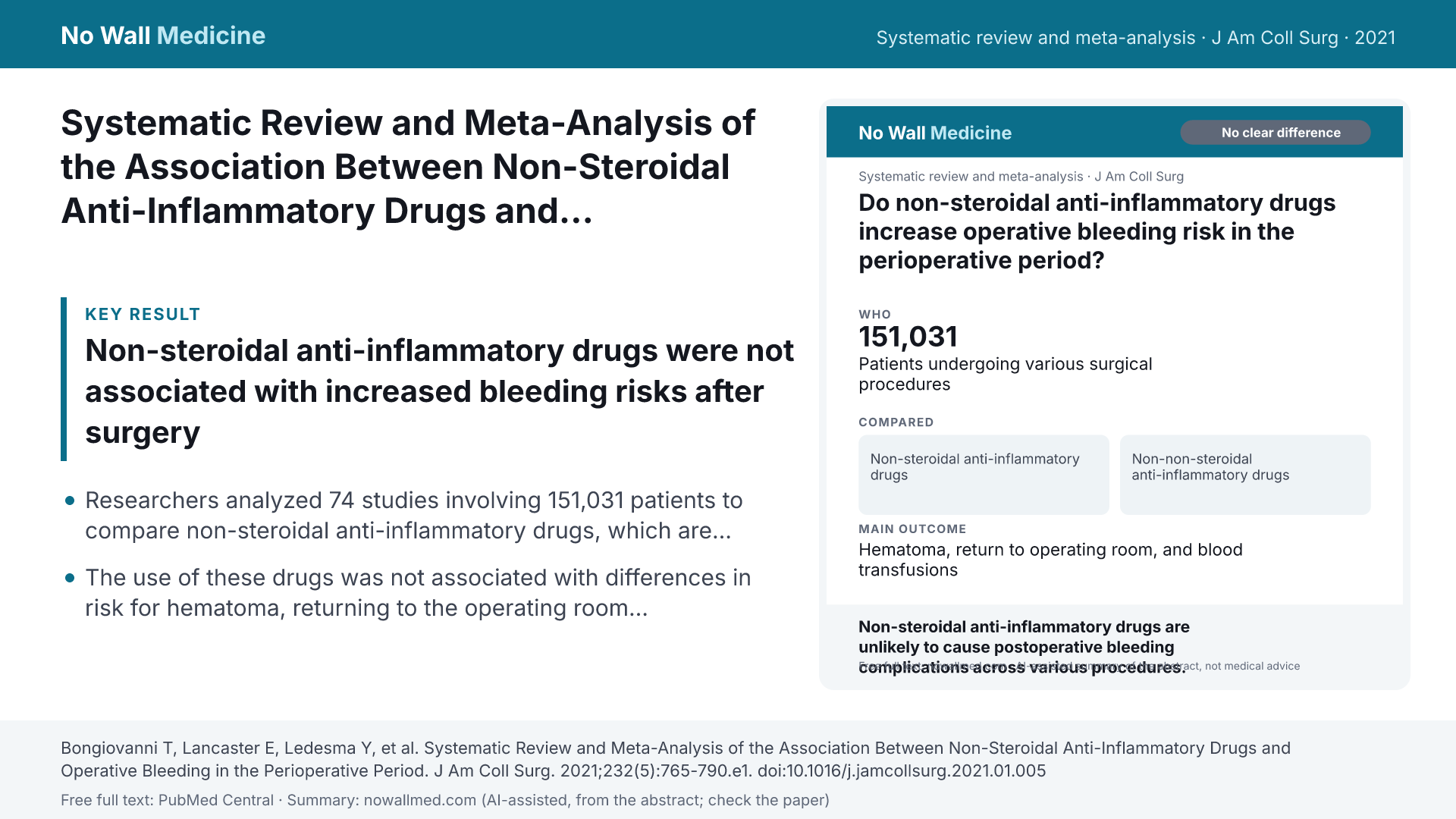
Non-steroidal anti-inflammatory drugs were not associated with increased bleeding risks after surgery
Systematic Review and Meta-Analysis of the Association Between Non-Steroidal Anti-Inflammatory Drugs and Operative Bleeding in the Perioperative Period
Systematic review and meta-analysisNo clear difference
Do non-steroidal anti-inflammatory drugs increase operative bleeding risk in the perioperative period?
Who
151,031
Patients undergoing various surgical procedures
Compared
Non-steroidal anti-inflammatory drugs
Non-non-steroidal anti-inflammatory drugs
Main outcome
Hematoma, return to operating room, and blood transfusions
Bottom line: Non-steroidal anti-inflammatory drugs are unlikely to cause postoperative bleeding complications across various procedures.
Limitation: Quality scores of included studies ranged from 12 to 25 out of 27.
J Am Coll Surg · 2021-01-27 · Save PNG
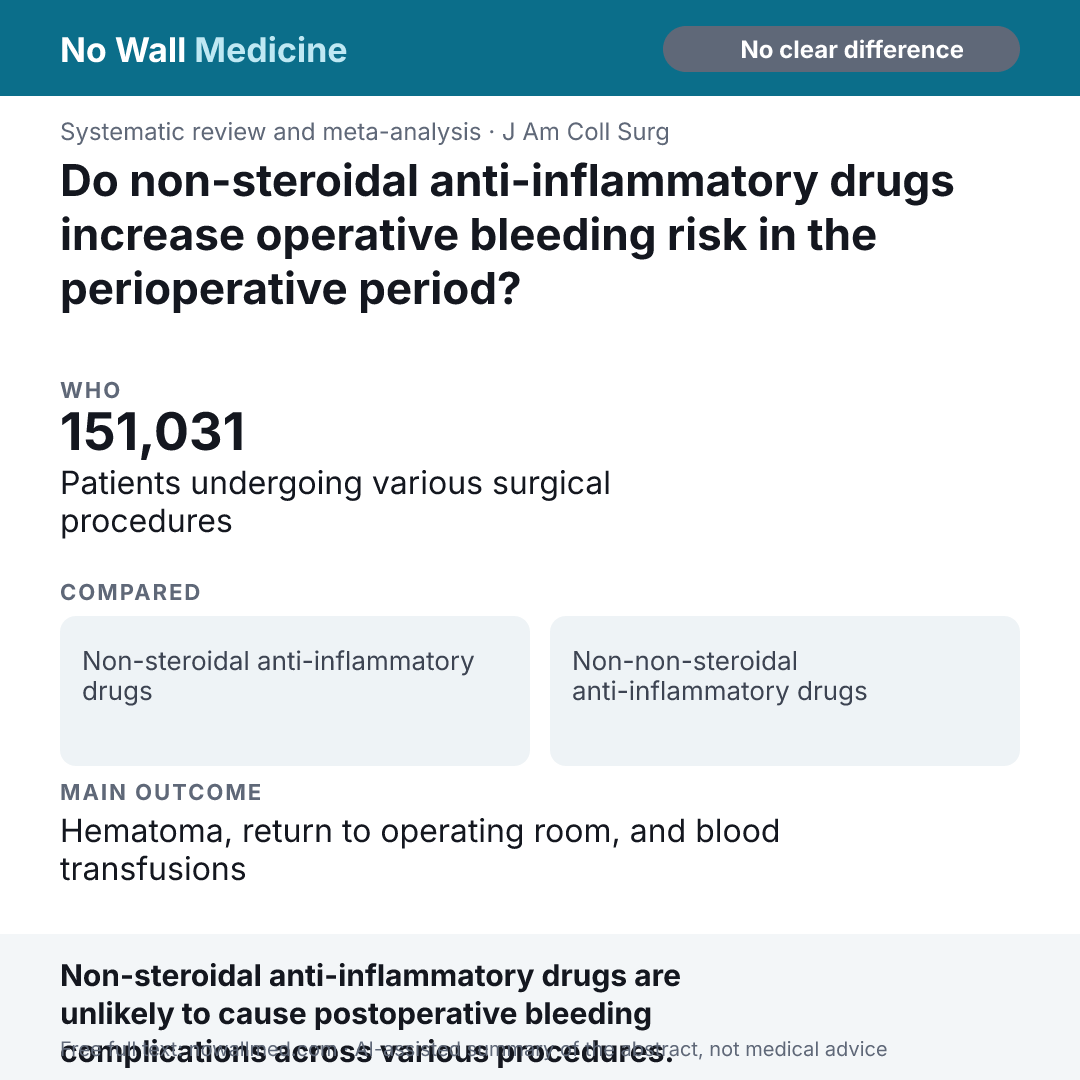
Clinical question: Do non-steroidal anti-inflammatory drugs increase operative bleeding risk in the perioperative period?
Why it matters: Concerns regarding bleeding side effects have slowed the use of non-steroidal anti-inflammatory drugs as an alternative to opioids for pain management around the time of surgery.
Key points
- Researchers analyzed 74 studies involving 151,031 patients to compare non-steroidal anti-inflammatory drugs, which are common pain relievers, against non-drug alternatives during the surgical period.
- The use of these drugs was not associated with differences in risk for hematoma, returning to the operating room for bleeding, or needing blood transfusions.
- The analysis included 12 different types of drugs, most commonly ketorolac, diclofenac, and ibuprofen, across various surgical procedures.
Limitation the authors note: The included studies showed a wide range of quality, with scores ranging from 12 to 25 out of a total of 27.
Headline and key points written with AI from the paper’s abstract, with every number checked against it. Read the paper before relying on them.
Was this summary helpful?
Subject terms
Headline, design, result, key points, caveat and citation as plain text.
Cite this article
Bongiovanni T, Lancaster E, Ledesma Y, et al. Systematic Review and Meta-Analysis of the Association Between Non-Steroidal Anti-Inflammatory Drugs and Operative Bleeding in the Perioperative Period. J Am Coll Surg. 2021;232(5):765-790.e1. doi:10.1016/j.jamcollsurg.2021.01.005
Spotted a mistake? Suggest a correction