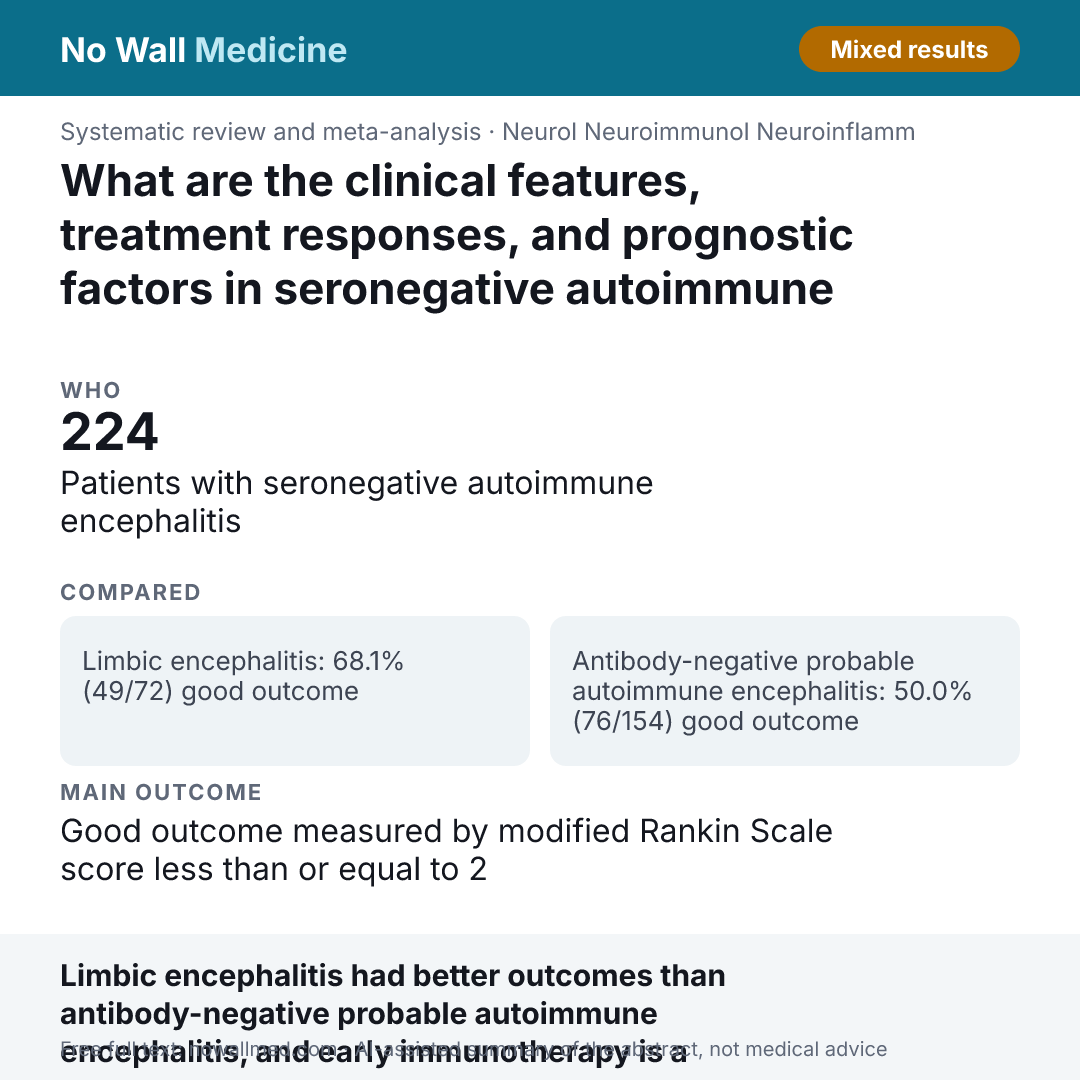
Limbic encephalitis patients had better outcomes than those with antibody-negative probable autoimmune encephalitis
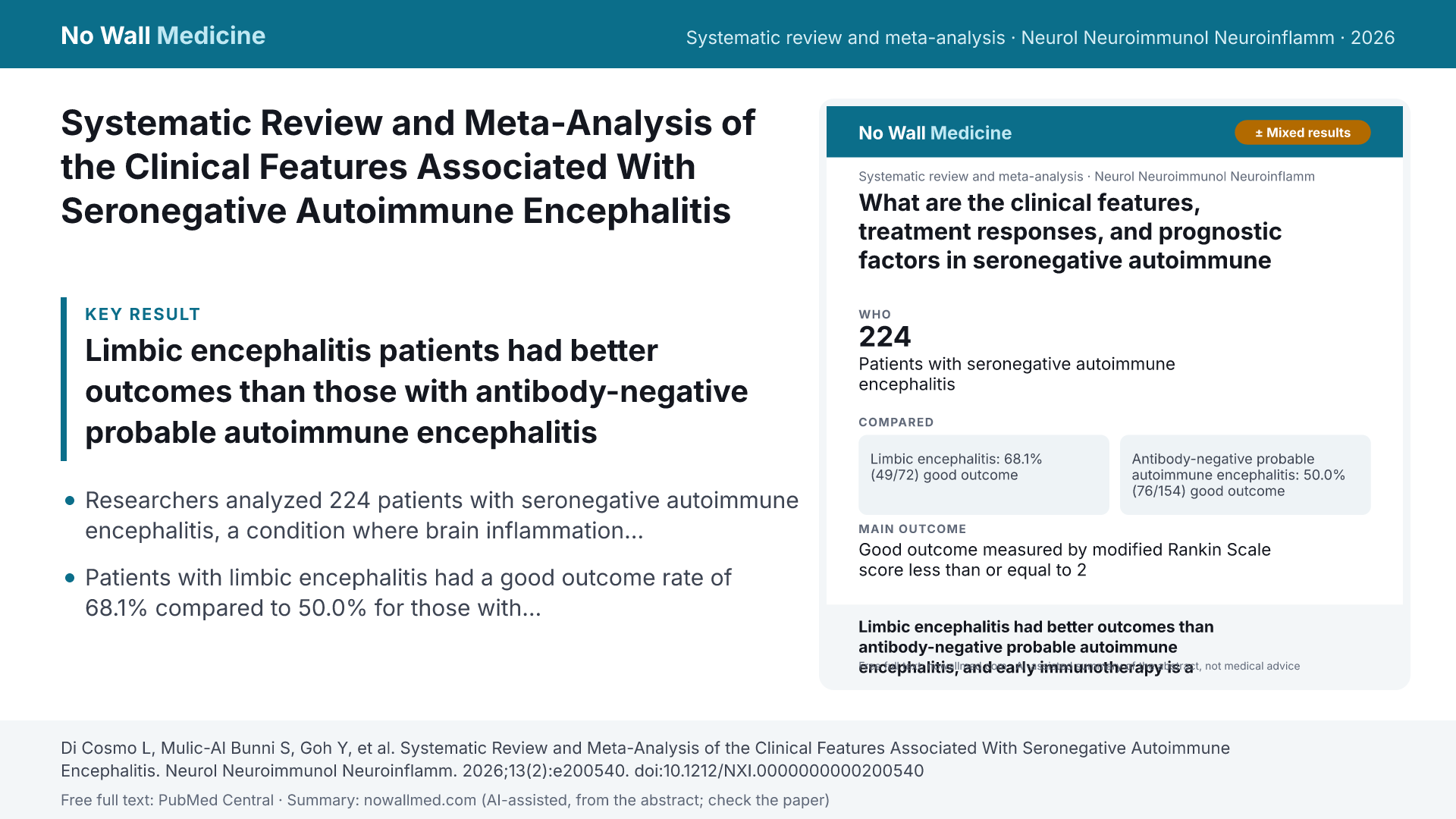
Systematic Review and Meta-Analysis of the Clinical Features Associated With Seronegative Autoimmune Encephalitis
Systematic review and meta-analysisMixed results
What are the clinical features, treatment responses, and prognostic factors in seronegative autoimmune encephalitis?
Who
224
Patients with seronegative autoimmune encephalitis
Compared
Limbic encephalitis: 68.1% (49/72) good outcome
Antibody-negative probable autoimmune encephalitis: 50.0% (76/154) good outcome
Main outcome
Good outcome measured by modified Rankin Scale score less than or equal to 2
Bottom line: Limbic encephalitis had better outcomes than antibody-negative probable autoimmune encephalitis, and early immunotherapy is a key modifiable factor.
Neurol Neuroimmunol Neuroinflamm · 2026-01-07 · Save PNG
Clinical question: What are the clinical features, treatment responses, and prognostic factors in seronegative autoimmune encephalitis?
Why it matters: Seronegative autoimmune encephalitis poses diagnostic and therapeutic challenges because it lacks definitive biomarkers and shows significant clinical variety.
Key points
- Researchers analyzed 224 patients with seronegative autoimmune encephalitis, a condition where brain inflammation occurs without detectable antibodies.
- Patients with limbic encephalitis had a good outcome rate of 68.1% compared to 50.0% for those with antibody-negative probable autoimmune encephalitis.
- Delayed immunotherapy, being older than 60 years, having an underlying tumor, or certain brain imaging findings were associated with poor prognosis.
Headline and key points written with AI from the paper’s abstract, with every number checked against it. Read the paper before relying on them.
Was this summary helpful?
Subject terms
Headline, design, result, key points, caveat and citation as plain text.
Cite this article
Di Cosmo L, Mulic-Al Bunni S, Goh Y, et al. Systematic Review and Meta-Analysis of the Clinical Features Associated With Seronegative Autoimmune Encephalitis. Neurol Neuroimmunol Neuroinflamm. 2026;13(2):e200540. doi:10.1212/NXI.0000000000200540
Spotted a mistake? Suggest a correction