Fatality rates for tularemia patients were low across aminoglycosides, fluoroquinolones, and tetracycline treatments
Systematic Review: Clinical Features, Antimicrobial Treatment, and Outcomes of Human Tularemia, 1993-2023
Systematic reviewBenefit found
What are the clinical features, antimicrobial treatments, and outcomes of human tularemia?
Who
870
870 cases of human tularemia · 35 countries
Compared
0.7%Aminoglycosides
0.9%Fluoroquinolones
1.2%Tetracyclines
Main outcome
Fatality rate
Bottom line: Aminoglycosides, fluoroquinolones, and tetracyclines are effective for tularemia, with ciprofloxacin potentially advantageous for pneumonic disease.
Clin Infect Dis · 2024-01-31Download image
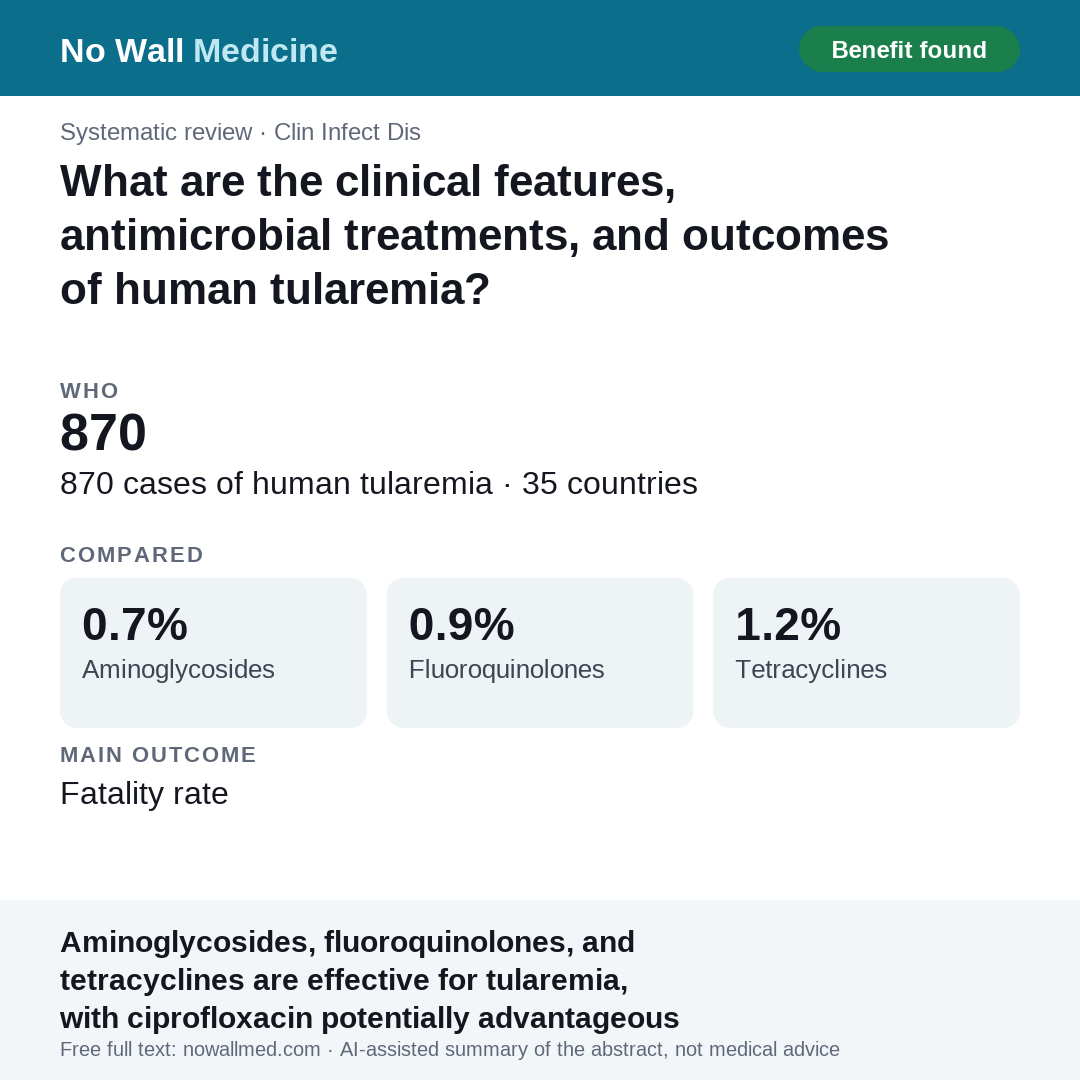
Clinical question: What are the clinical features, antimicrobial treatments, and outcomes of human tularemia?
Why it matters: Data regarding the relative effectiveness of different classes of antimicrobial drugs for treating tularemia are limited.
Key points
- Researchers analyzed 410 articles describing 870 cases of tularemia from 35 countries between 1993 and 2023.
- Fatality rates were 0.7% for aminoglycosides, 0.9% for fluoroquinolones, and 1.2% for tetracyclines.
- Patients with pneumonic disease treated with ciprofloxacin had no fatalities and lower rates of intubation or pleural effusion drainage.
Headline and key points written with AI from the paper’s abstract, with every number checked against it. Read the paper before relying on them.
Was this summary helpful?
Subject terms
Cite this article
Nelson CA, Winberg J, Bostic TD, Davis KM, Fleck-Derderian S. Systematic Review: Clinical Features, Antimicrobial Treatment, and Outcomes of Human Tularemia, 1993-2023. Clin Infect Dis. 2024. doi:10.1093/cid/ciad736
Spotted a mistake? Suggest a correction
Top studies every Monday
The week’s key trials and guidelines in your specialties, plus any topics you follow. By email, free.
Get the weekly digest