Systematic Review of Cerebral Phenotypes Associated With Monogenic Cerebral Small-Vessel Disease
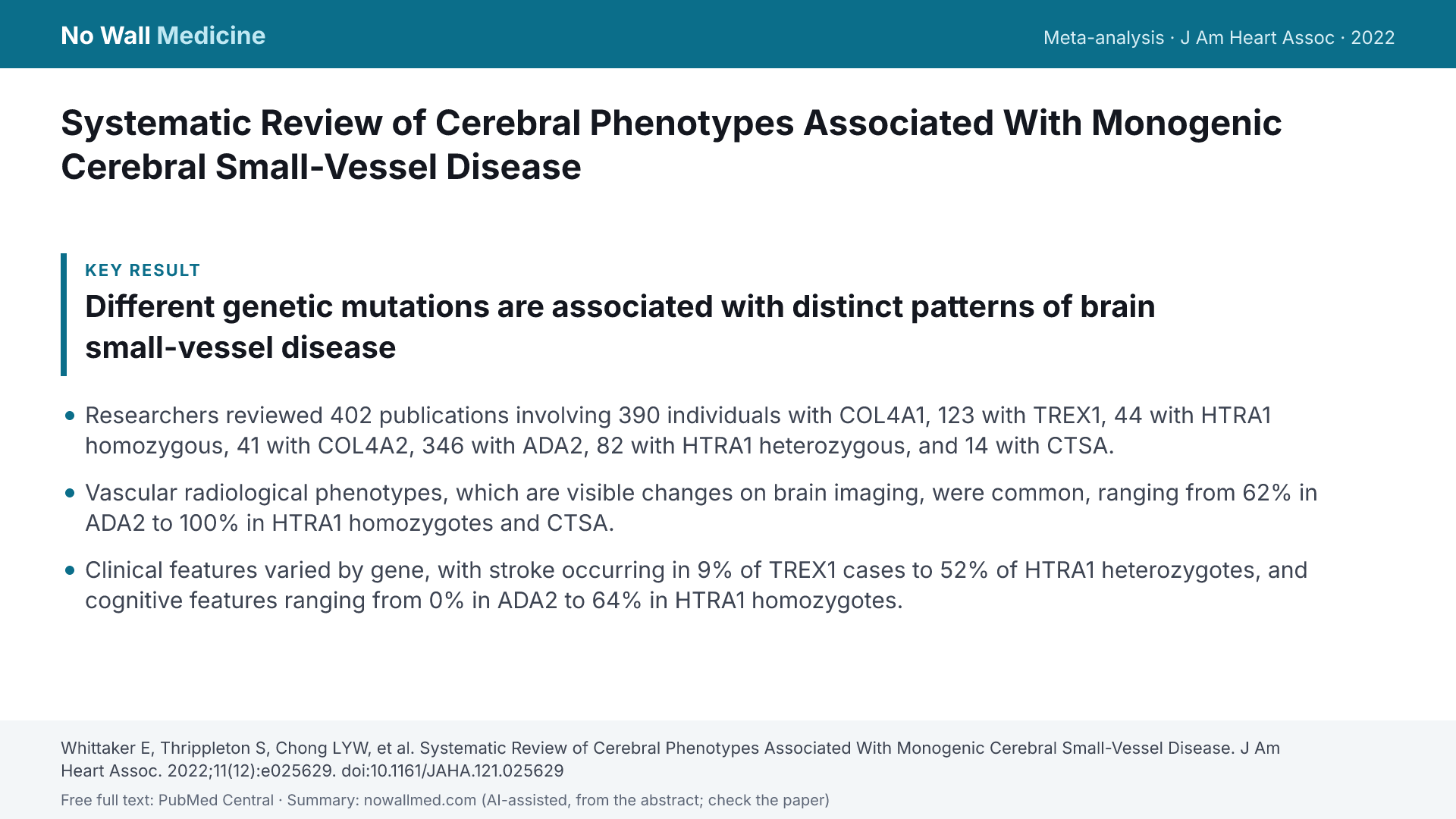
Key result: Different genetic mutations are associated with distinct patterns of brain small-vessel disease
Key points
- Researchers reviewed 402 publications involving 390 individuals with COL4A1, 123 with TREX1, 44 with HTRA1 homozygous, 41 with COL4A2, 346 with ADA2, 82 with HTRA1 heterozygous, and 14 with CTSA.
- Vascular radiological phenotypes, which are visible changes on brain imaging, were common, ranging from 62% in ADA2 to 100% in HTRA1 homozygotes and CTSA.
- Clinical features varied by gene, with stroke occurring in 9% of TREX1 cases to 52% of HTRA1 heterozygotes, and cognitive features ranging from 0% in ADA2 to 64% in HTRA1 homozygotes.
Why it matters: The specific cerebral phenotypes associated with less common monogenic causes of cerebral small-vessel disease, beyond the NOTCH3 gene, were not fully summarized.
Limitation the authors note: The results may be affected by age and biases inherent to case reports.
Discussion prompts
- Would these patients look like yours? Who was left out?
- Is the main outcome one that matters to patients?
- Is the difference large enough to change what you do?
Cite: Whittaker E, Thrippleton S, Chong LYW, et al. Systematic Review of Cerebral Phenotypes Associated With Monogenic Cerebral Small-Vessel Disease. J Am Heart Assoc. 2022;11(12):e025629. doi:10.1161/JAHA.121.025629
Free full text: PubMed Central · Summary and visual abstract: nowallmed.com/a/systematic-review-of-cerebral-phenotypes-associated-with-monogenic-gsukce/ (AI-assisted from the abstract; check the paper before relying on it).