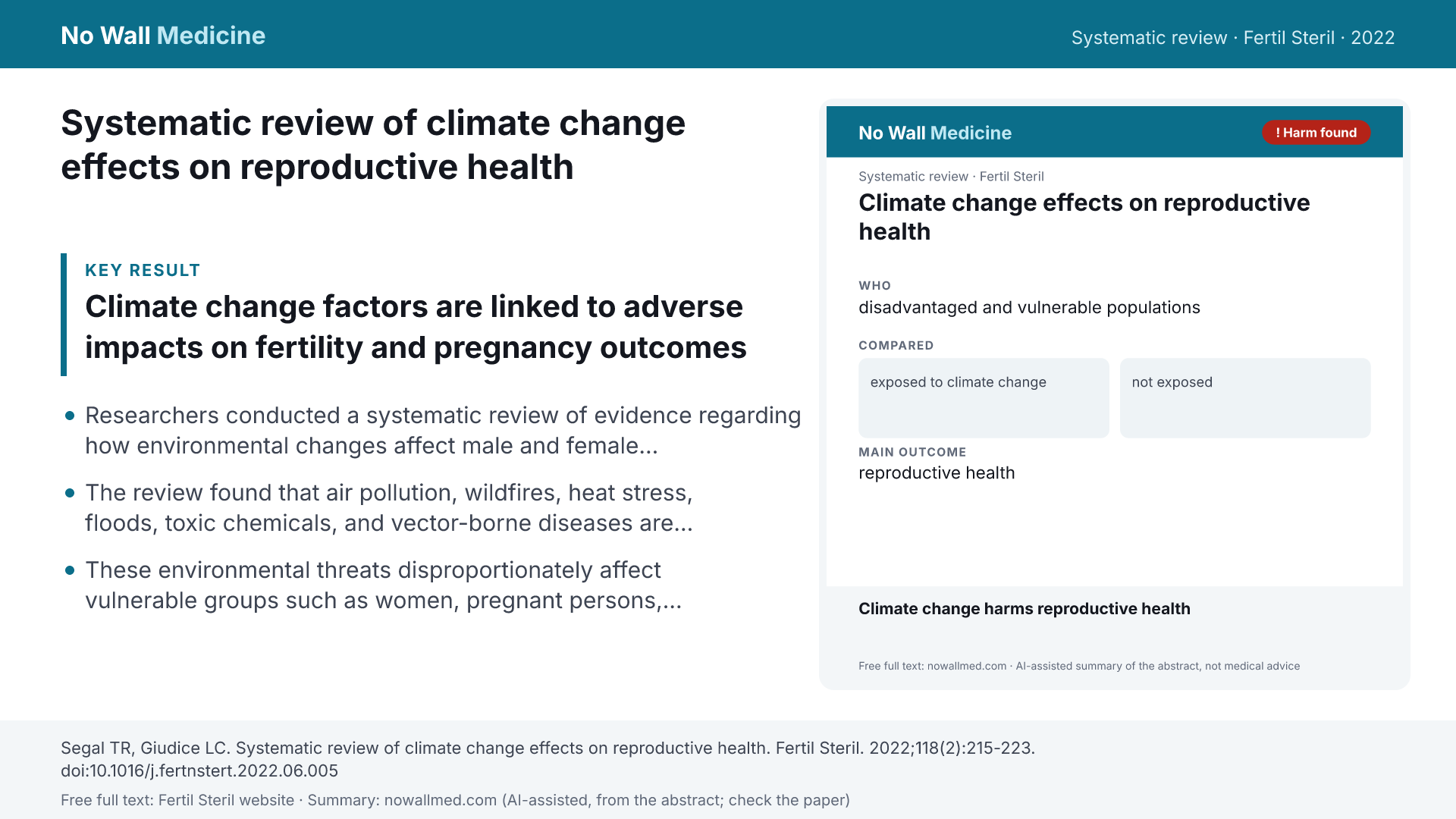
Climate change factors are linked to adverse impacts on fertility and pregnancy outcomes
Systematic review of climate change effects on reproductive health
Obstetrics & GynecologyAdult and pediatric
Systematic reviewHarm found
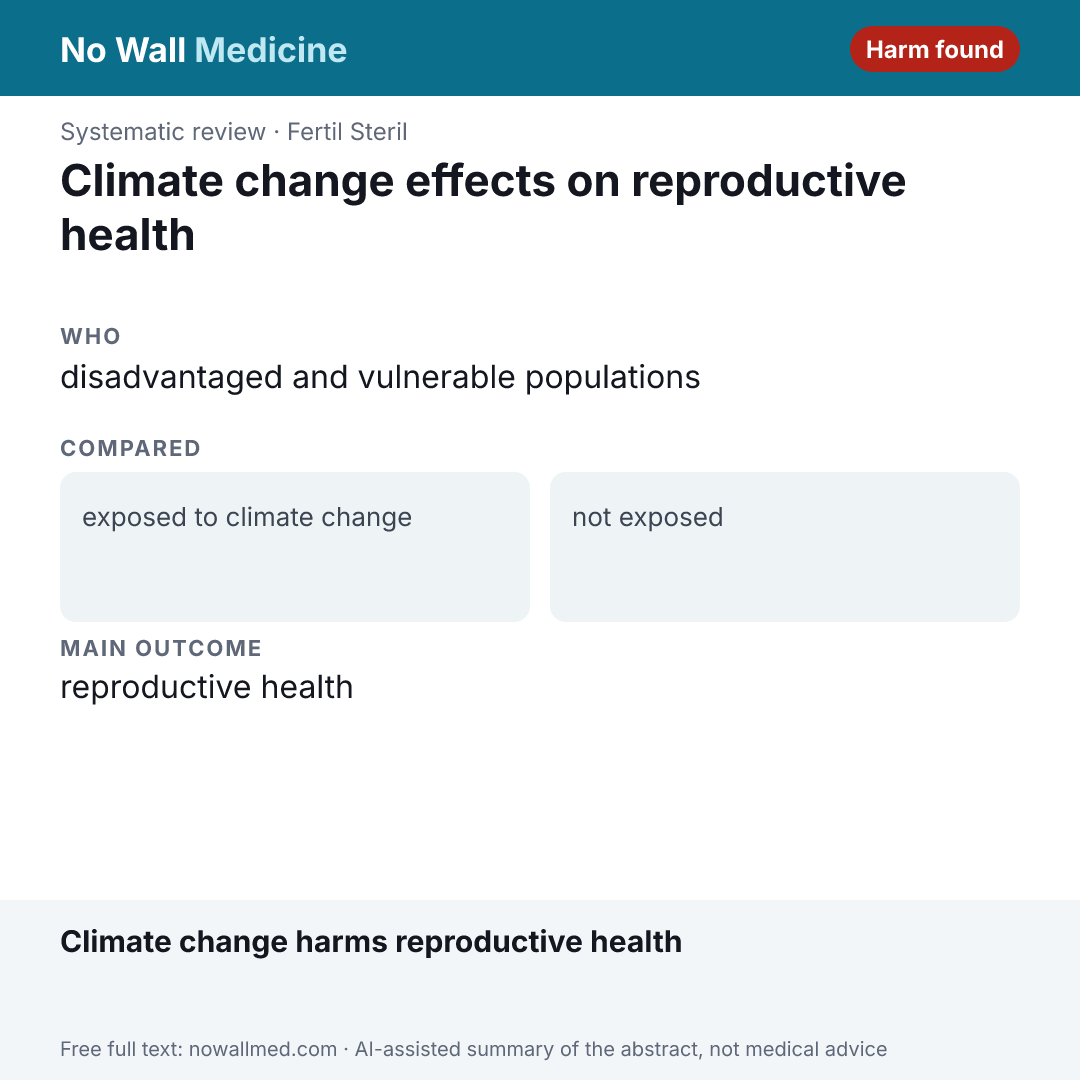
Climate change effects on reproductive health
Who
disadvantaged and vulnerable populations
Compared
exposed to climate change
not exposed
Main outcome
reproductive health
Bottom line: Climate change harms reproductive health
Fertil Steril · 2022-07-25 · Save PNG
Why it matters: The specific impacts of air pollution, wildfires, heat stress, floods, toxic chemicals, and vector-borne diseases on fertility and pregnancy outcomes needed to be synthesized.
Key points
- Researchers conducted a systematic review of evidence regarding how environmental changes affect male and female fertility, fetal development, and pregnancy outcomes.
- The review found that air pollution, wildfires, heat stress, floods, toxic chemicals, and vector-borne diseases are linked to negative reproductive health impacts.
- These environmental threats disproportionately affect vulnerable groups such as women, pregnant persons, young children, the elderly, and the disabled.
Headline and key points written with AI from the paper’s abstract, with every number checked against it. Read the paper before relying on them.
Was this summary helpful?
Subject terms
Headline, design, result, key points, caveat and citation as plain text.
Cite this article
Segal TR, Giudice LC. Systematic review of climate change effects on reproductive health. Fertil Steril. 2022;118(2):215-223. doi:10.1016/j.fertnstert.2022.06.005
Spotted a mistake? Suggest a correction