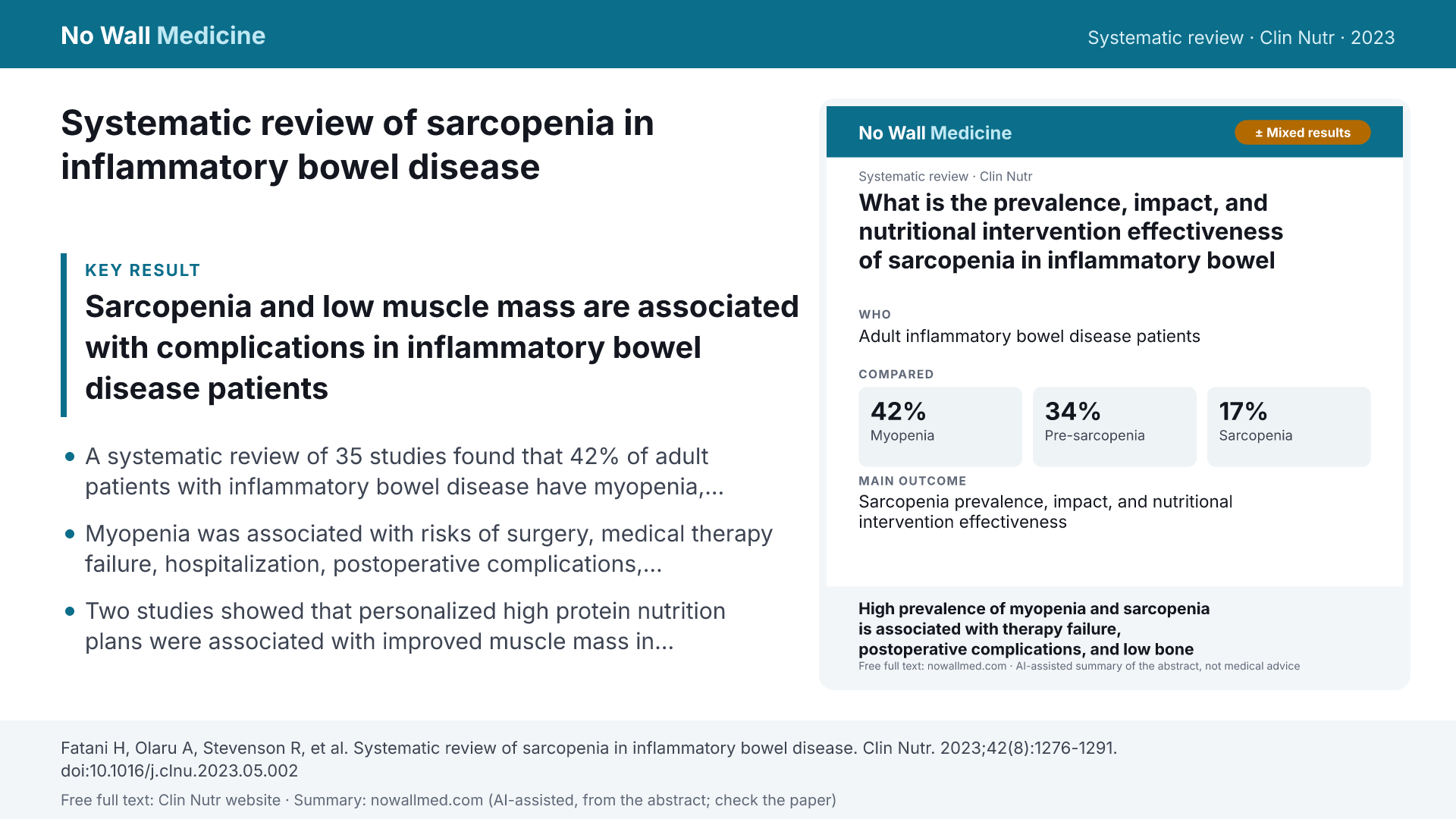
Sarcopenia and low muscle mass are associated with complications in inflammatory bowel disease patients
Systematic review of sarcopenia in inflammatory bowel disease
Systematic reviewMixed results
What is the prevalence, impact, and nutritional intervention effectiveness of sarcopenia in inflammatory bowel disease?
Who
Adult inflammatory bowel disease patients
Compared
42%Myopenia
34%Pre-sarcopenia
17%Sarcopenia
Main outcome
Sarcopenia prevalence, impact, and nutritional intervention effectiveness
Bottom line: High prevalence of myopenia and sarcopenia is associated with therapy failure, postoperative complications, and low bone mineral density.
Clin Nutr · 2023-06-02Download image
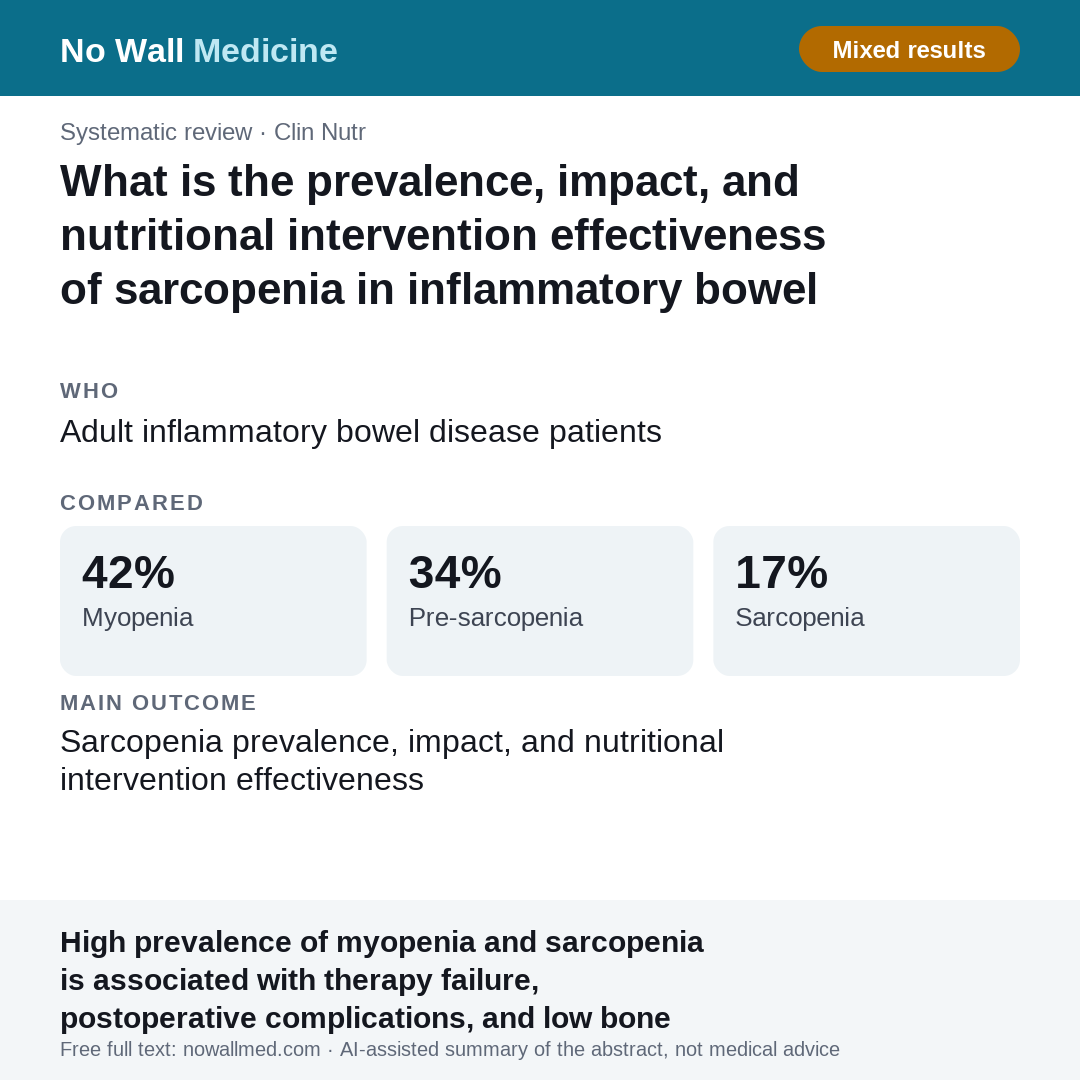
Clinical question: What is the prevalence, impact, and nutritional intervention effectiveness of sarcopenia in inflammatory bowel disease?
Why it matters: The prevalence of sarcopenia, its impact on patient outcomes, and the effectiveness of nutritional interventions in inflammatory bowel disease were not clearly established.
Key points
- A systematic review of 35 studies found that 42% of adult patients with inflammatory bowel disease have myopenia, 34% have pre-sarcopenia, and 17% have sarcopenia.
- Myopenia was associated with risks of surgery, medical therapy failure, hospitalization, postoperative complications, lower bone mineral density, and non-alcoholic fatty liver disease.
- Two studies showed that personalized high protein nutrition plans were associated with improved muscle mass in patients with inflammatory bowel disease.
Headline and key points written with AI from the paper’s abstract, with every number checked against it. Read the paper before relying on them.
Was this summary helpful?
Subject terms
Cite this article
Fatani H, Olaru A, Stevenson R, et al. Systematic review of sarcopenia in inflammatory bowel disease. Clin Nutr. 2023. doi:10.1016/j.clnu.2023.05.002
Spotted a mistake? Suggest a correction