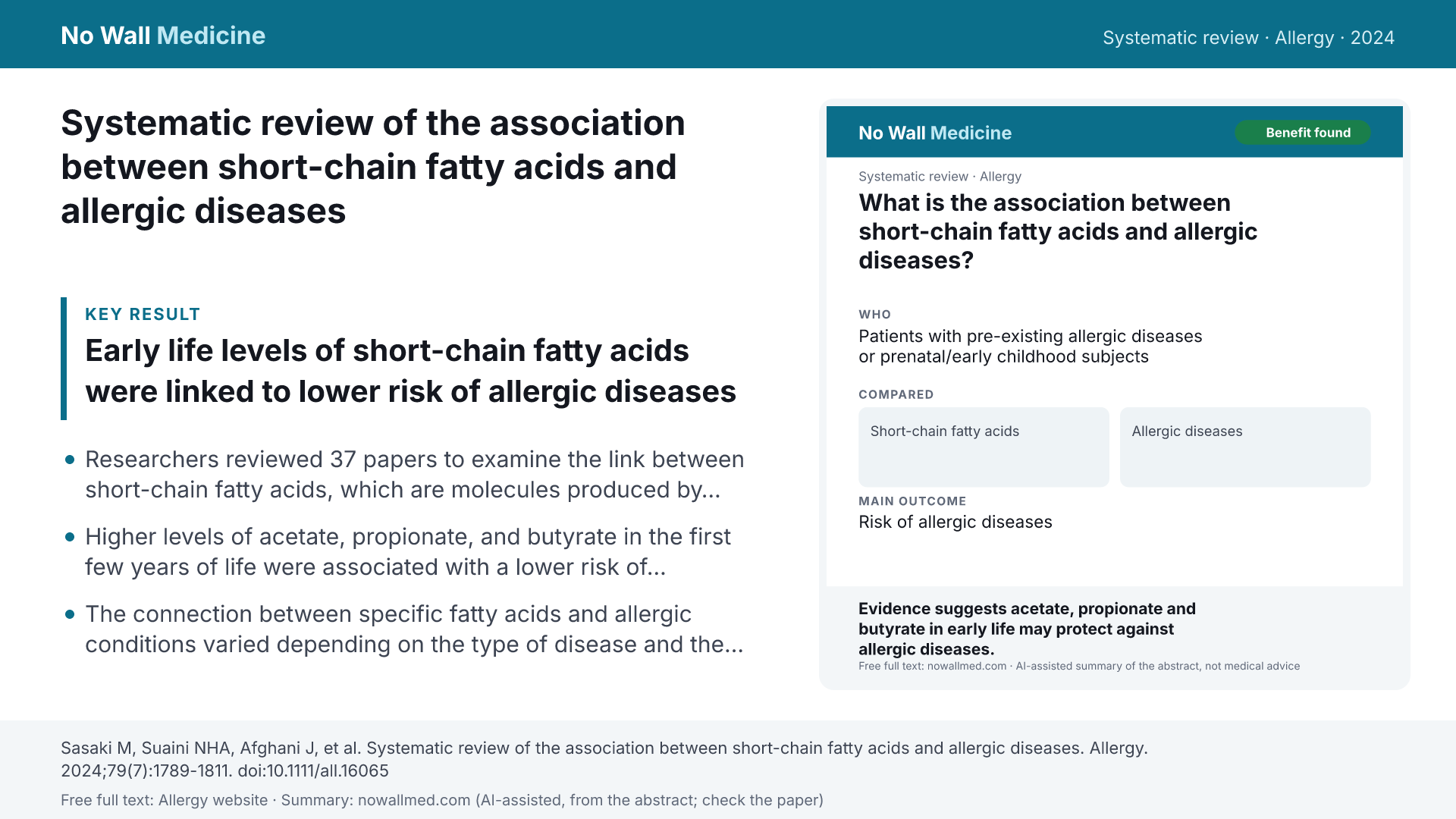
Early life levels of short-chain fatty acids were linked to lower risk of allergic diseases
Systematic review of the association between short-chain fatty acids and allergic diseases
Systematic reviewBenefit found
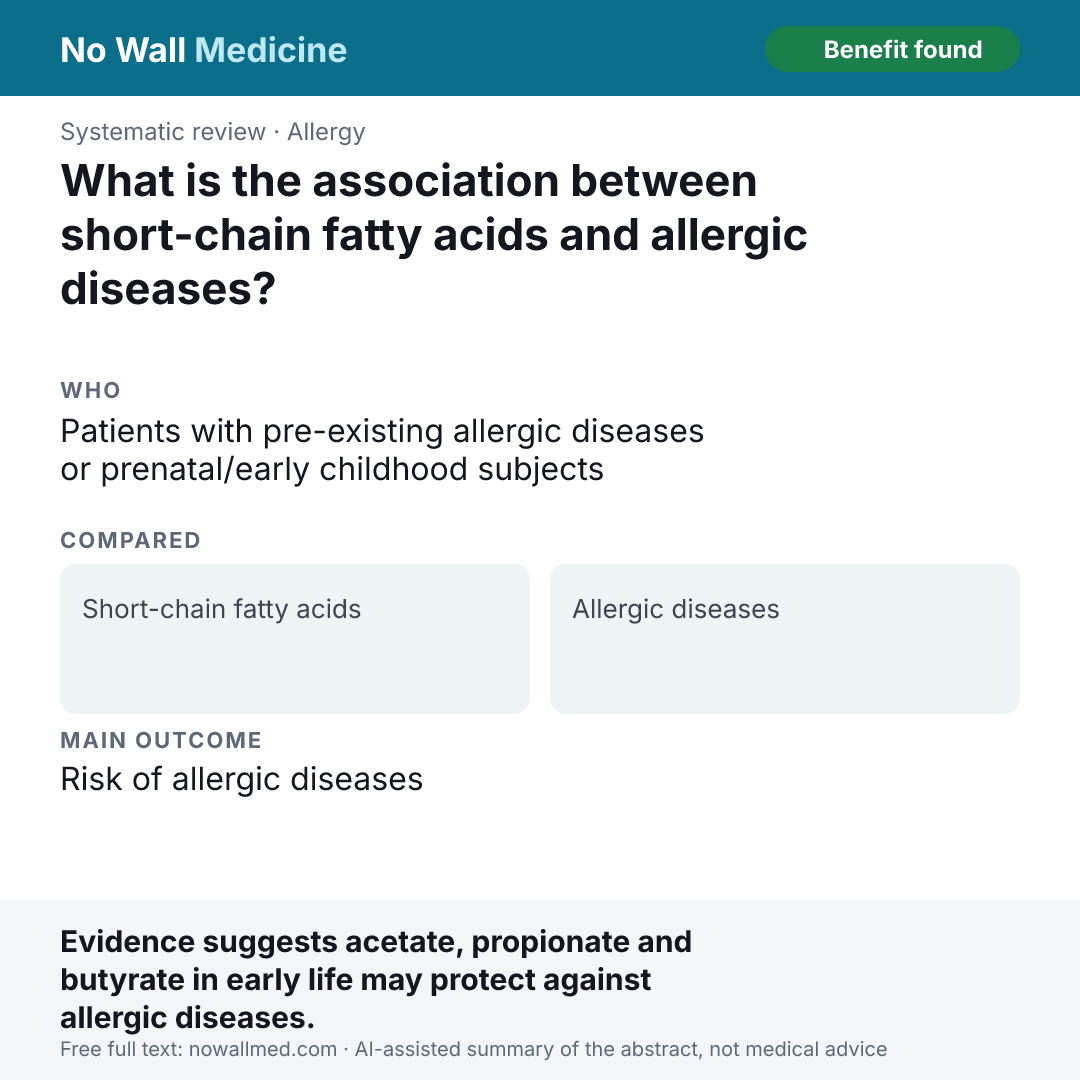
What is the association between short-chain fatty acids and allergic diseases?
Who
Patients with pre-existing allergic diseases or prenatal/early childhood subjects
Compared
Short-chain fatty acids
Allergic diseases
Main outcome
Risk of allergic diseases
Bottom line: Evidence suggests acetate, propionate and butyrate in early life may protect against allergic diseases.
Allergy · 2024-02-23 · Save PNG
Clinical question: What is the association between short-chain fatty acids and allergic diseases?
Key points
- Researchers reviewed 37 papers to examine the link between short-chain fatty acids, which are molecules produced by gut bacteria, and allergic diseases.
- Higher levels of acetate, propionate, and butyrate in the first few years of life were associated with a lower risk of atopic dermatitis, wheeze or asthma, and food allergy.
- The connection between specific fatty acids and allergic conditions varied depending on the type of disease and the age when they were measured.
Limitation the authors note: Study designs, populations, outcome definitions, analysis methods, and reporting of results varied between the included papers.
Headline and key points written with AI from the paper’s abstract, with every number checked against it. Read the paper before relying on them.
Was this summary helpful?
Subject terms
Headline, design, result, key points, caveat and citation as plain text.
Cite this article
Sasaki M, Suaini NHA, Afghani J, et al. Systematic review of the association between short-chain fatty acids and allergic diseases. Allergy. 2024;79(7):1789-1811. doi:10.1111/all.16065
Spotted a mistake? Suggest a correction