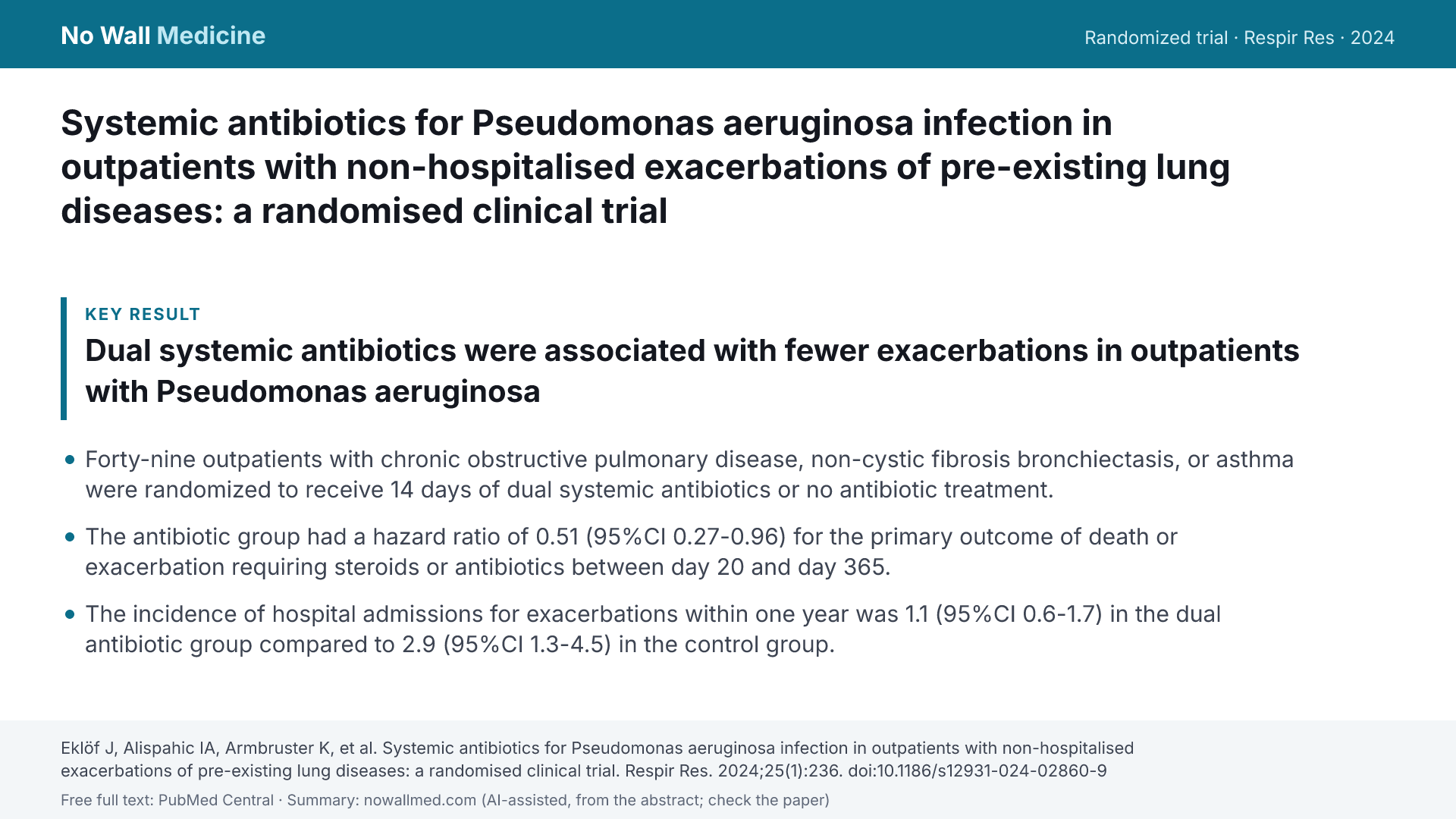
Dual systemic antibiotics were associated with fewer exacerbations in outpatients with Pseudomonas aeruginosa
Systemic antibiotics for Pseudomonas aeruginosa infection in outpatients with non-hospitalised exacerbations of pre-existing lung diseases: a randomised clinical trial
Why it matters: The effect of dual systemic antibiotic therapy against Pseudomonas aeruginosa in patients with pre-existing lung disease is unknown.
Key points
- Forty-nine outpatients with chronic obstructive pulmonary disease, non-cystic fibrosis bronchiectasis, or asthma were randomized to receive 14 days of dual systemic antibiotics or no antibiotic treatment.
- The antibiotic group had a hazard ratio of 0.51 (95%CI 0.27-0.96) for the primary outcome of death or exacerbation requiring steroids or antibiotics between day 20 and day 365.
- The incidence of hospital admissions for exacerbations within one year was 1.1 (95%CI 0.6-1.7) in the dual antibiotic group compared to 2.9 (95%CI 1.3-4.5) in the control group.
Limitation the authors note: The trial was stopped prematurely due to a lack of recruitment during the COVID-19 pandemic.
Headline and key points written with AI from the paper’s abstract, with every number checked against it. Read the paper before relying on them.
Was this summary helpful?
Subject terms
Cite this article
Eklöf J, Alispahic IA, Armbruster K, et al. Systemic antibiotics for Pseudomonas aeruginosa infection in outpatients with non-hospitalised exacerbations of pre-existing lung diseases: a randomised clinical trial. Respir Res. 2024. doi:10.1186/s12931-024-02860-9
Spotted a mistake? Suggest a correction