Systemic associations of pyoderma gangrenosum: a systematic review
Systematic reviewMixed results
What are the systemic disease associations of pyoderma gangrenosum in adults?
Who
Adults with pyoderma gangrenosum
Compared
Inflammatory bowel disease: n = 13
Haematological disorders: n = 6
Solid organ malignancy: n = 3
Arthritis: n = 3
Main outcome
Systemic disease associations and related clinical features
Bottom line: Pyoderma gangrenosum is associated with diverse conditions, most frequently inflammatory bowel disease, haematological disorders, malignancy, and arthritis.
Limitation: Larger prospective studies are needed to clarify causality and optimize management.
Skin Health Dis · 2026-05-26Download image
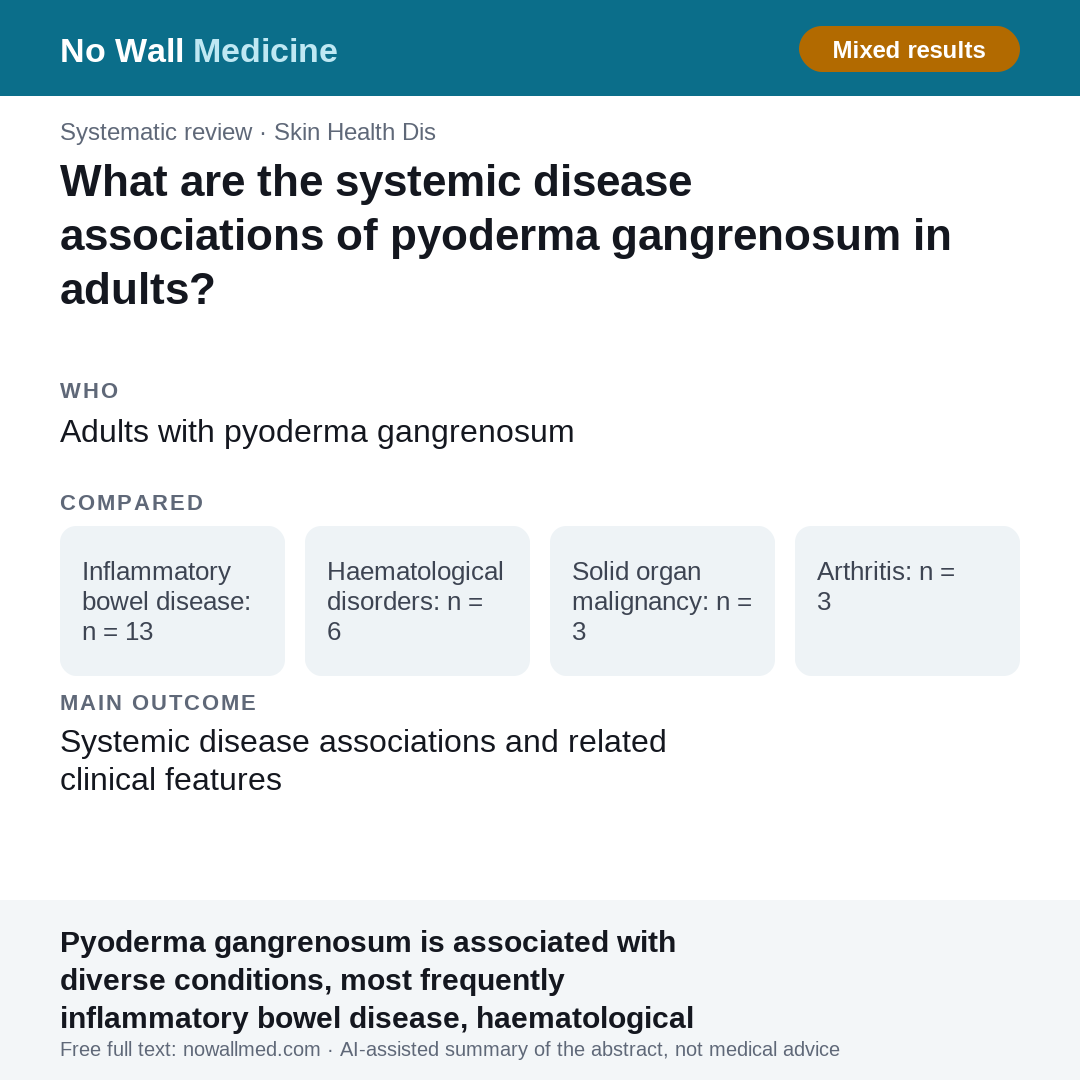
Clinical question: What are the systemic disease associations of pyoderma gangrenosum in adults?
Abstract
Background
Pyoderma gangrenosum (PG) is a rare neutrophilic dermatosis that may be associated with systemic diseases. Characterizing these associations is clinically relevant for diagnosis, prognosis and management. Objectives
To systematically review acquired systemic diseases associated with PG in adults and describe related clinical features and treatment approaches. Methods
We searched PubMed/MEDLINE, Embase and Scopus from January 2015 to May 2025. Eligible studies included observational studies, case reports and case series reporting systemic associations of PG in adults. Data extraction was performed independently by two reviewers and the risk of bias was assessed using the Joanna Briggs Institute checklists. Results
Nineteen observational studies and 18 case-based studies were included. The most frequent systemic associations were inflammatory bowel disease (n = 13), haematological disorders (n = 6), solid organ malignancy (n = 3) and arthritis (n = 3). Less common associations included vasculitides, autoimmune conditions, connective tissue diseases and organ--specific disorders. In the observational literature, only three studies reported PG subtypes, with the ulcerative form accounting for more than 85% of cases. Case-based literature highlighted patterns such as relapse-prone disease in patients with vasculitis and therapeutic responses to biologics in refractory cases. Conclusions
PG demonstrates diverse systemic associations, ranging from well-established links to rarer conditions. Observational studies strengthen evidence for common associations, while case-based literature provides insights into clinical patterns and emerging therapies. Larger prospective studies are needed to clarify causality and optimize management.
Cite this article
Nadarajah N, Ho Tiu C, Walton S. Systemic associations of pyoderma gangrenosum: a systematic review. Skin Health Dis. 2026. doi:10.1093/skinhd/vzag037
Spotted a mistake? Suggest a correction