Systemic Bevacizumab in Pediatric Recurrent Respiratory Papillomatosis
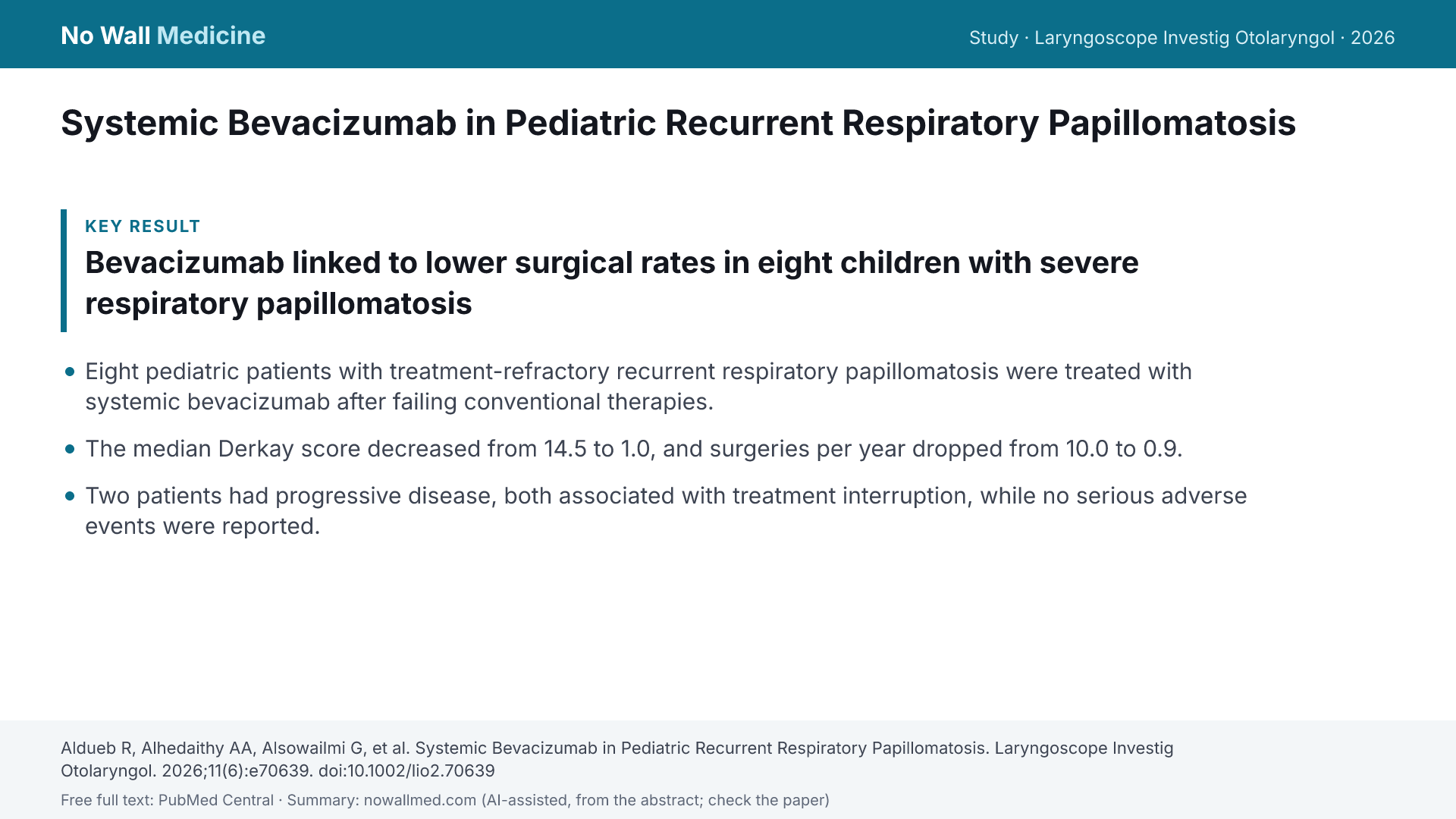
Key result: Bevacizumab linked to lower surgical rates in eight children with severe respiratory papillomatosis
Key points
- Eight pediatric patients with treatment-refractory recurrent respiratory papillomatosis were treated with systemic bevacizumab after failing conventional therapies.
- The median Derkay score decreased from 14.5 to 1.0, and surgeries per year dropped from 10.0 to 0.9.
- Two patients had progressive disease, both associated with treatment interruption, while no serious adverse events were reported.
Why it matters: Applies to pediatric patients with severe or refractory recurrent respiratory papillomatosis who have failed standard surgical and local adjuvant therapies.
Limitation the authors note: The study was a retrospective multicenter case series of eight patients, which limits the ability to draw causal conclusions.
Discussion prompts
- Would these patients look like yours? Who was left out?
- Is the main outcome one that matters to patients?
- Is the difference large enough to change what you do?
Cite: Aldueb R, Alhedaithy AA, Alsowailmi G, et al. Systemic Bevacizumab in Pediatric Recurrent Respiratory Papillomatosis. Laryngoscope Investig Otolaryngol. 2026;11(6):e70639. doi:10.1002/lio2.70639
Free full text: PubMed Central · Summary and visual abstract: nowallmed.com/a/systemic-bevacizumab-in-pediatric-recurrent-respiratory-1bod855/ (AI-assisted from the abstract; check the paper before relying on it).