Meta-analysis identifies immune system pathways involved in the progression of bronchopulmonary dysplasia
Systems-level insights into bronchopulmonary dysplasia from meta-analysis of genome-scale studies
Meta-analysis of genome-scale studiesBenefit found
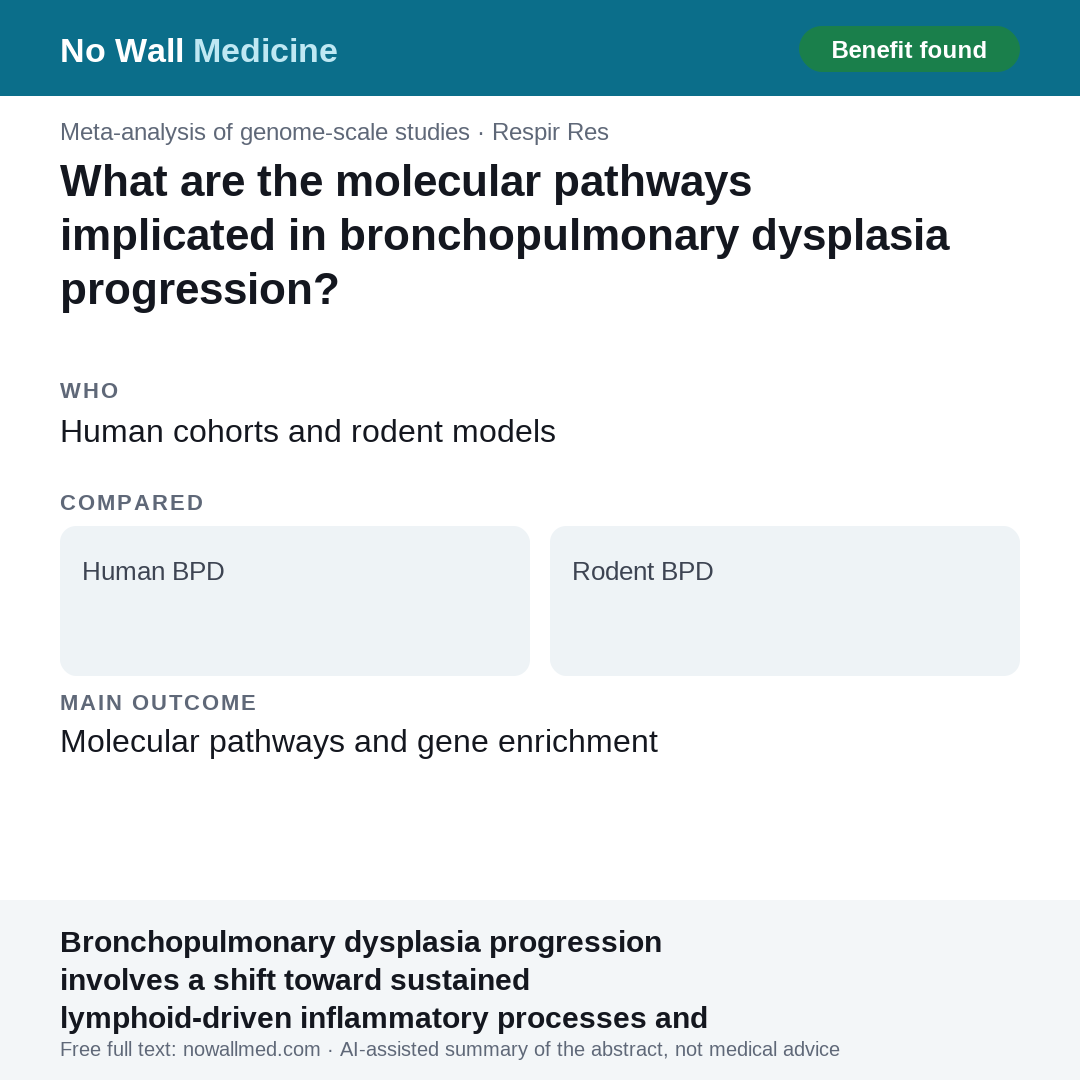
What are the molecular pathways implicated in bronchopulmonary dysplasia progression?
Who
Human cohorts and rodent models
Compared
Human BPD
Rodent BPD
Main outcome
Molecular pathways and gene enrichment
Bottom line: Bronchopulmonary dysplasia progression involves a shift toward sustained lymphoid-driven inflammatory processes and antigen presentation.
Respir Res · 2026-07-15Download image
Clinical question: What are the molecular pathways implicated in bronchopulmonary dysplasia progression?
Why it matters: Characterizing the cellular and molecular mechanisms driving bronchopulmonary dysplasia is critical because it remains the most common complication of prematurity.
Key points
- Researchers analyzed gene lists from human cohorts and rodent models using a meta-analysis by information content algorithm to identify molecular pathways in bronchopulmonary dysplasia.
- The analysis showed a consistent enrichment of genes involved in lymphocyte development and leukocyte-mediated antigen presentation, which is the process of cells presenting antigens to immune cells.
- While human and rodent datasets showed differences in tissue remodeling, they converged on shared inflammatory regulatory signals such as CD3E and IL1R2.
Headline and key points written with AI from the paper’s abstract, with every number checked against it. Read the paper before relying on them.
Topics
Cite this article
Happs C, Khanna P, Scoynes C, Muriungi N, Alexander AJT, Rogers JA. Systems-level insights into bronchopulmonary dysplasia from meta-analysis of genome-scale studies. Respir Res. 2026. doi:10.1186/s12931-026-03787-z
Spotted a mistake? Suggest a correction