Targeted therapies added to radiotherapy did not improve survival for children with brainstem tumors
Targeted therapies plus radiotherapy for diffuse intrinsic pontine glioma: the randomized phase 2 BIOMEDE trial
Randomized phase 2 trialNo clear difference
Does targeted therapy plus radiotherapy improve overall survival in diffuse intrinsic pontine glioma?
Who
233
Children with biopsy-proven diffuse intrinsic pontine glioma
Compared
9.7 monthsErlotinib plus radiotherapy (95% CI: 7.8-14.6)
9.9 monthsDasatinib plus radiotherapy (95% CI: 8.8-11.2)
11.9 monthsEverolimus plus radiotherapy (95% CI: 10.7-14.2)
10.8 monthsControl cohort (95% CI: 9.5-13.0)
Main outcome
overall survival
Bottom line: Targeted therapies plus radiotherapy did not improve overall survival compared to the control cohort in diffuse intrinsic pontine glioma.
Nat Med · 2026-04-24Download image
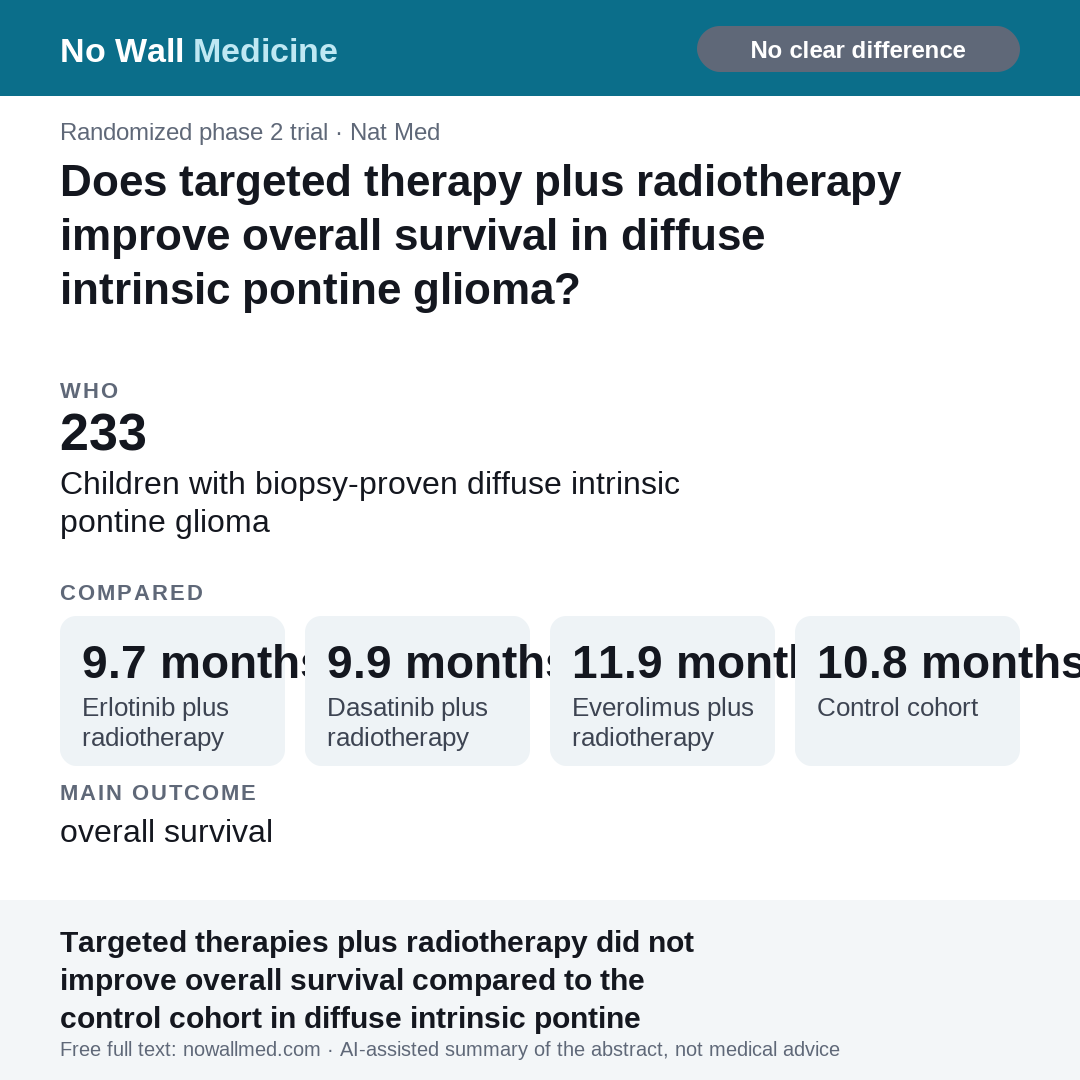
Clinical question: Does targeted therapy plus radiotherapy improve overall survival in diffuse intrinsic pontine glioma?
Why it matters: Doctors needed to determine if adding specific targeted drugs to radiotherapy could improve survival for children with diffuse intrinsic pontine glioma.
Key points
- Researchers studied 233 children with diffuse intrinsic pontine glioma, a pediatric brainstem tumor, comparing three targeted drugs combined with radiotherapy against a control group.
- The median overall survival was 10.8 months in the control group and did not differ significantly for erlotinib at 9.7 months, dasatinib at 9.9 months, or everolimus at 11.9 months.
- Everolimus was associated with significantly fewer side effects in the eyes, kidneys, skin, and gastrointestinal tract compared to the other drugs.
Headline and key points written with AI from the paper’s abstract, with every number checked against it. Read the paper before relying on them.
Topics
Spotted a mistake? Suggest a correction