Technology-supported physical activity shows limited evidence for increasing activity or physical literacy in young women
Technology-Supported Physical Activity and Its Potential as a Tool to Promote Young Women's Physical Activity and Physical Literacy: Systematic Review
Systematic reviewUnclear result
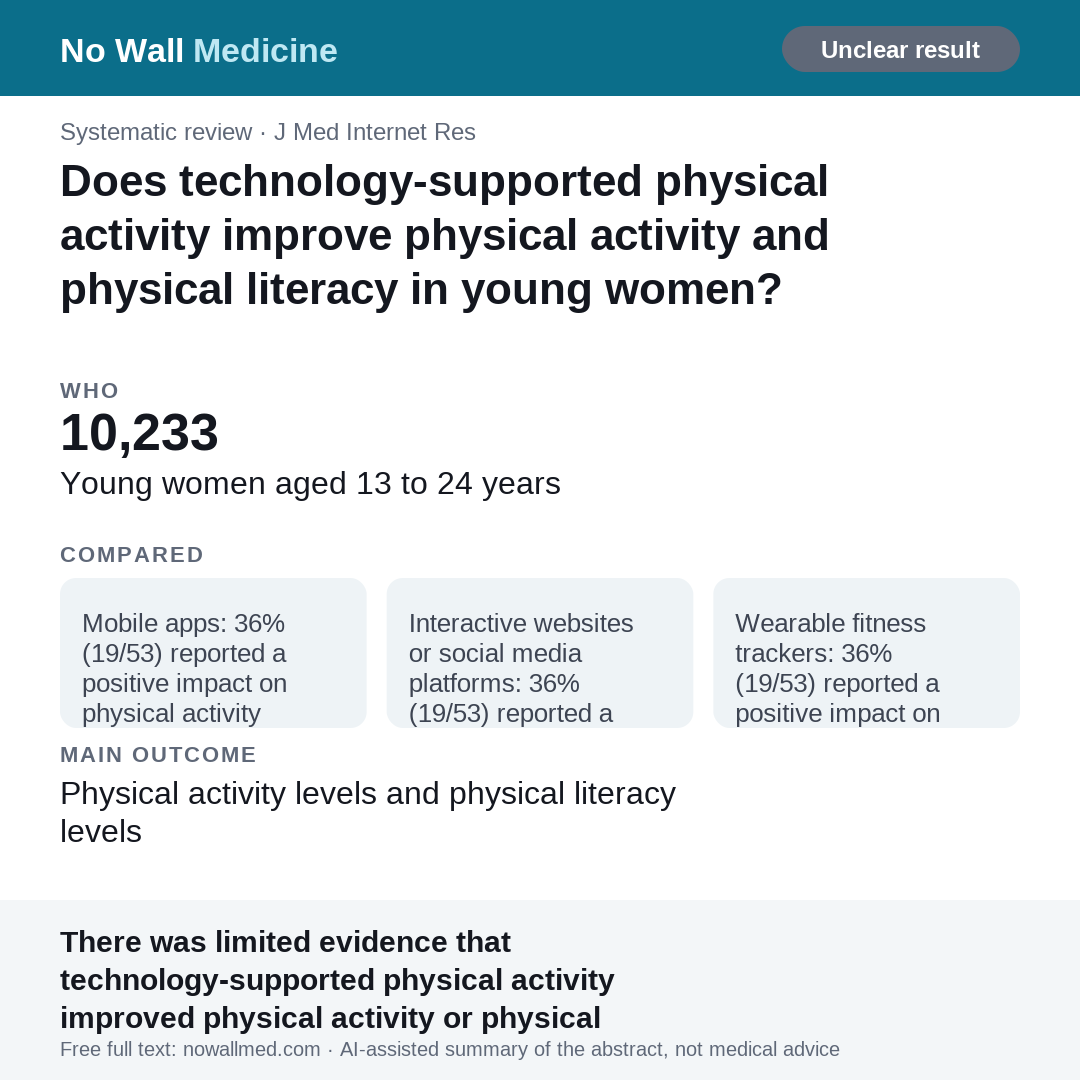
Does technology-supported physical activity improve physical activity and physical literacy in young women?
Who
10,233
Young women aged 13 to 24 years
Compared
Mobile apps: 36% (19/53) reported a positive impact on physical activity
Interactive websites or social media platforms: 36% (19/53) reported a positive impact on physical activity
Wearable fitness trackers: 36% (19/53) reported a positive impact on physical activity
Main outcome
Physical activity levels and physical literacy levels
Bottom line: There was limited evidence that technology-supported physical activity improved physical activity or physical literacy in young women.
Limitation: Evidence was limited by poor study quality, lack of theoretical frameworks, and little information on technology designs.
J Med Internet Res · 2024-10-18Download image
Clinical question: Does technology-supported physical activity improve physical activity and physical literacy in young women?
Why it matters: It is unknown if technology-supported physical activity can effectively increase physical activity levels and physical literacy among young women during transitional life periods.
Key points
- Researchers reviewed 23 studies involving 10,233 participants to examine how technology-supported physical activity relates to activity levels and physical literacy in women aged 13 to 24 years.
- Mobile apps were associated with positive physical activity outcomes in 60% of analyses, while interactive websites or social media platforms were associated with positive outcomes in 30% of analyses.
- The association between technology-supported physical activity and physical literacy, which refers to the skills that support physical activity, was weak in 29% of the analyses.
Limitation the authors note: The evidence was limited by poor study quality, a lack of theoretical frameworks, and insufficient information regarding the design of the technology used.
Headline and key points written with AI from the paper’s abstract, with every number checked against it. Read the paper before relying on them.
Topics
Cite this article
Watson-Mackie K, Arundell L, Lander N, McKay FH, Jerebine A, Venetsanou F. Technology-Supported Physical Activity and Its Potential as a Tool to Promote Young Women's Physical Activity and Physical Literacy: Systematic Review. J Med Internet Res. 2024. doi:10.2196/52302
Spotted a mistake? Suggest a correction
Top studies every Monday
The week’s key trials and guidelines in your specialties, by email. Free.
Get the weekly digest