Teledermatology in the COVID-19 pandemic: A systematic review
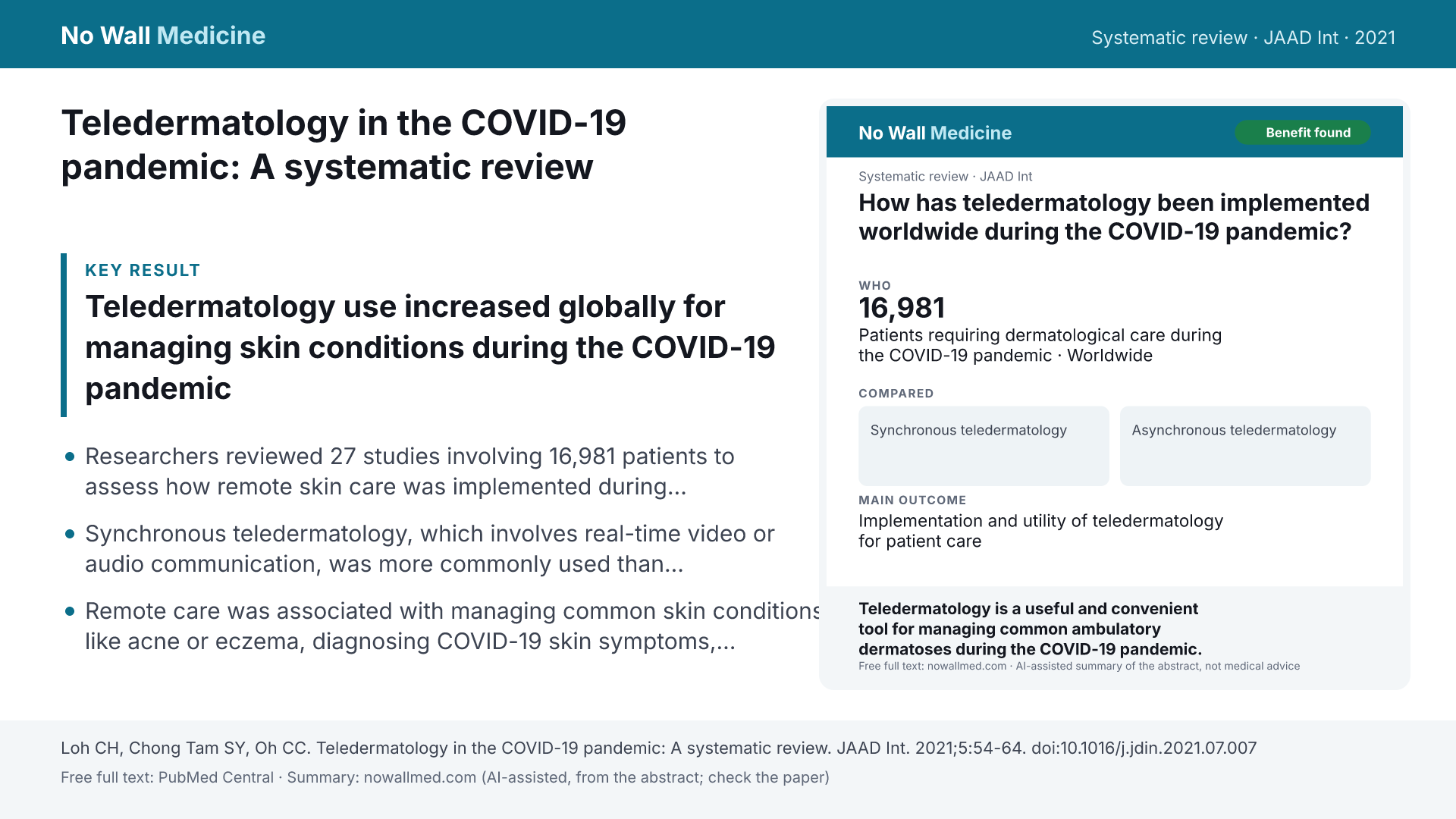
Key result: Teledermatology use increased globally for managing skin conditions during the COVID-19 pandemic
Systematic reviewBenefit found
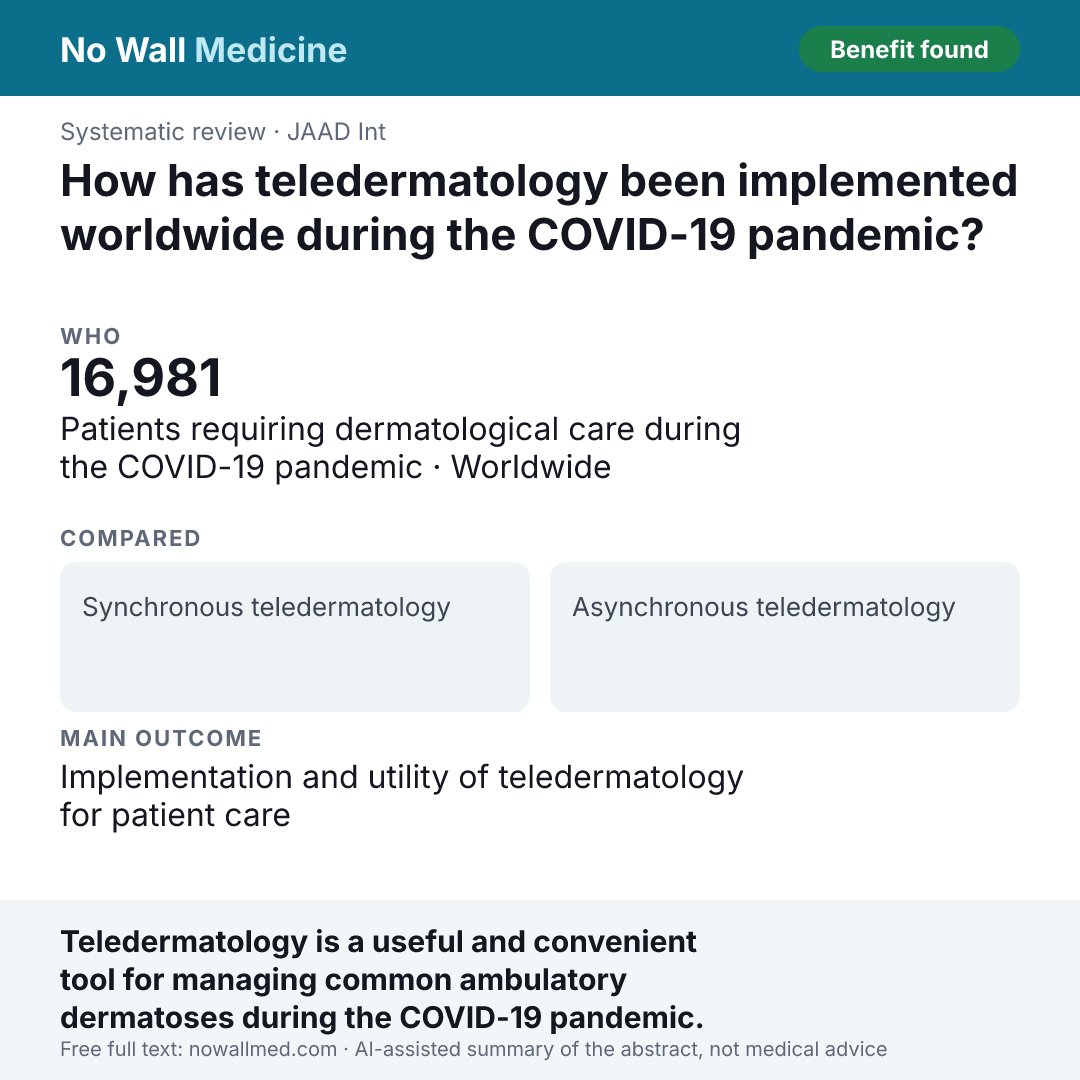
How has teledermatology been implemented worldwide during the COVID-19 pandemic?
Who
16,981
Patients requiring dermatological care during the COVID-19 pandemic · Worldwide
Compared
Synchronous teledermatology
Asynchronous teledermatology
Main outcome
Implementation and utility of teledermatology for patient care
Bottom line: Teledermatology is a useful and convenient tool for managing common ambulatory dermatoses during the COVID-19 pandemic.
Limitation: A pooled analysis of all relevant outcomes was not always possible due to heterogeneity.
JAAD Int · 2021-08-02 · Save PNG
Key points
- Researchers reviewed 27 studies involving 16,981 patients to assess how remote skin care was implemented during the pandemic.
- Synchronous teledermatology, which involves real-time video or audio communication, was more commonly used than asynchronous teledermatology, which uses stored images or messages.
- Remote care was associated with managing common skin conditions like acne or eczema, diagnosing COVID-19 skin symptoms, and following up on stable cancer-related skin issues.
Why it matters: The specific ways teledermatology was implemented and its utility for different skin conditions during the COVID-19 pandemic were not fully characterized.
Discussion prompts
- Would these patients look like yours? Who was left out?
- Is the main outcome one that matters to patients?
- Is the difference large enough to change what you do?
Cite: Loh CH, Chong Tam SY, Oh CC. Teledermatology in the COVID-19 pandemic: A systematic review. JAAD Int. 2021;5:54-64. doi:10.1016/j.jdin.2021.07.007
Free full text: PubMed Central · Summary and visual abstract: nowallmed.com/a/teledermatology-in-the-covid-19-pandemic-a-systematic-rayjwj/ (AI-assisted from the abstract; check the paper before relying on it).