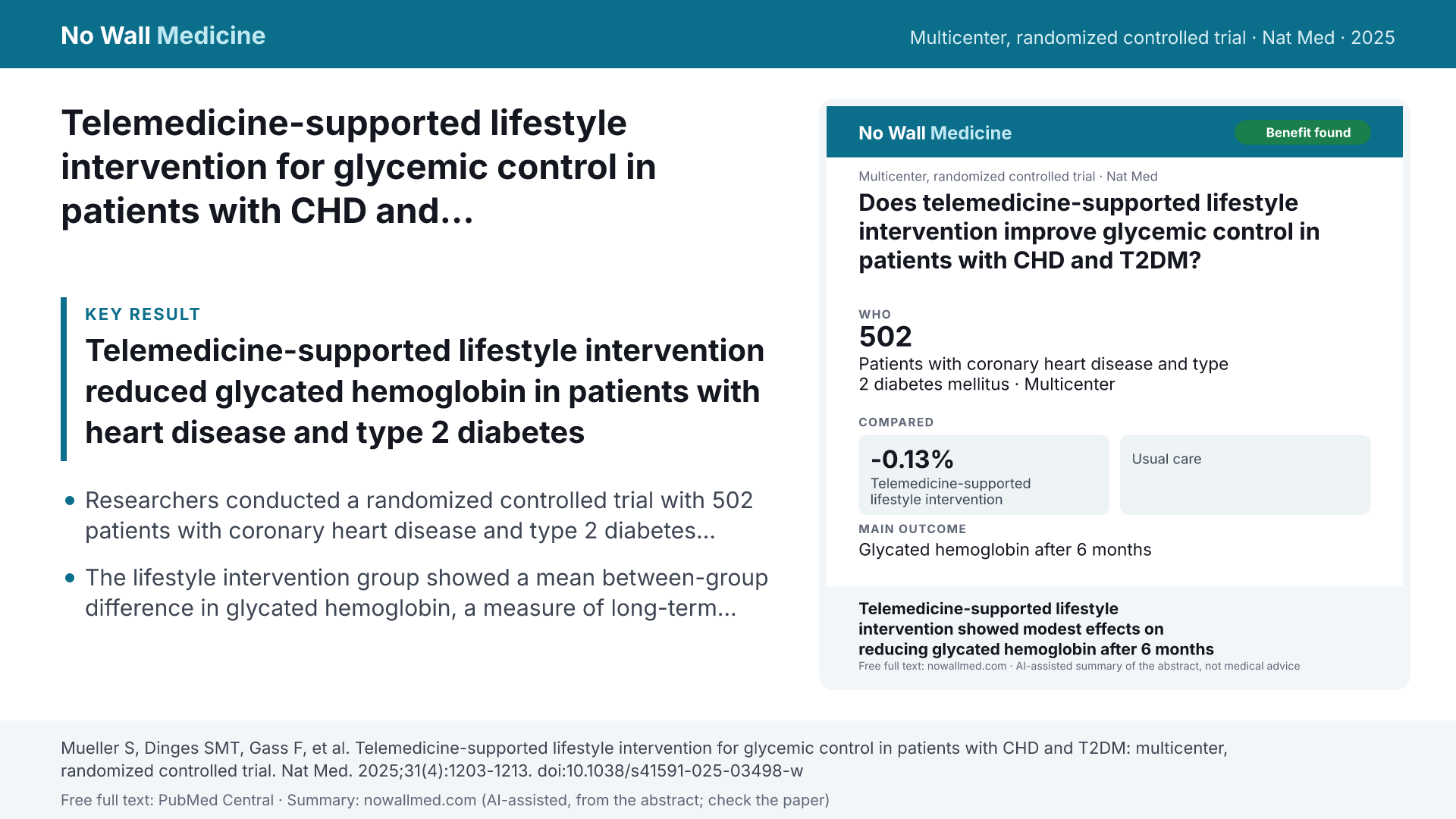
Telemedicine-supported lifestyle intervention reduced glycated hemoglobin in patients with heart disease and type 2 diabetes
Telemedicine-supported lifestyle intervention for glycemic control in patients with CHD and T2DM: multicenter, randomized controlled trial
Multicenter, randomized controlled trialBenefit found
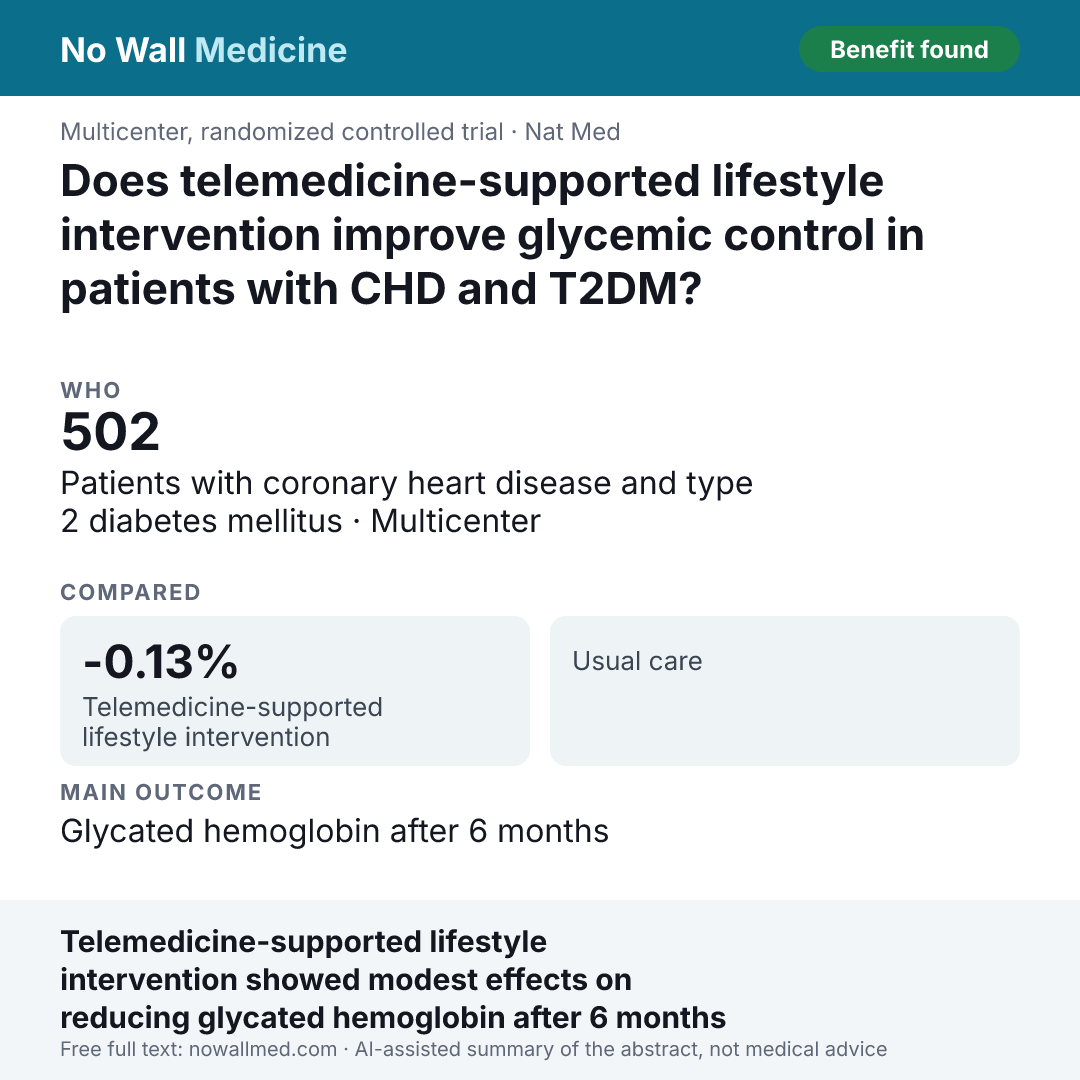
Does telemedicine-supported lifestyle intervention improve glycemic control in patients with CHD and T2DM?
Who
502
Patients with coronary heart disease and type 2 diabetes mellitus · Multicenter
Compared
-0.13%Telemedicine-supported lifestyle intervention (95% confidence interval, -0.25 to -0.01)
Usual care
Main outcome
Glycated hemoglobin after 6 months
Result: -0.13% (95% confidence interval, -0.25 to -0.01)
Bottom line: Telemedicine-supported lifestyle intervention showed modest effects on reducing glycated hemoglobin after 6 months in patients.
Limitation: No statistically significant between-group differences were observed at 12 months.
Nat Med · 2025-02-07 · Save PNG
Clinical question: Does telemedicine-supported lifestyle intervention improve glycemic control in patients with CHD and T2DM?
Why it matters: Lifestyle changes to manage cardiovascular risk factors are often transient in patients with coronary heart disease and type 2 diabetes.
Key points
- Researchers conducted a randomized controlled trial with 502 patients with coronary heart disease and type 2 diabetes to compare a home-based telemedicine lifestyle intervention against usual care.
- The lifestyle intervention group showed a mean between-group difference in glycated hemoglobin, a measure of long-term blood sugar, of -0.13% after 6 months.
- At 12 months, no statistically significant difference was observed between groups after individualized feedback and health literacy training were discontinued.
Headline and key points written with AI from the paper’s abstract, with every number checked against it. Read the paper before relying on them.
Was this summary helpful?
Subject terms
Headline, design, result, key points, caveat and citation as plain text.
Cite this article
Mueller S, Dinges SMT, Gass F, et al. Telemedicine-supported lifestyle intervention for glycemic control in patients with CHD and T2DM: multicenter, randomized controlled trial. Nat Med. 2025;31(4):1203-1213. doi:10.1038/s41591-025-03498-w
Spotted a mistake? Suggest a correction