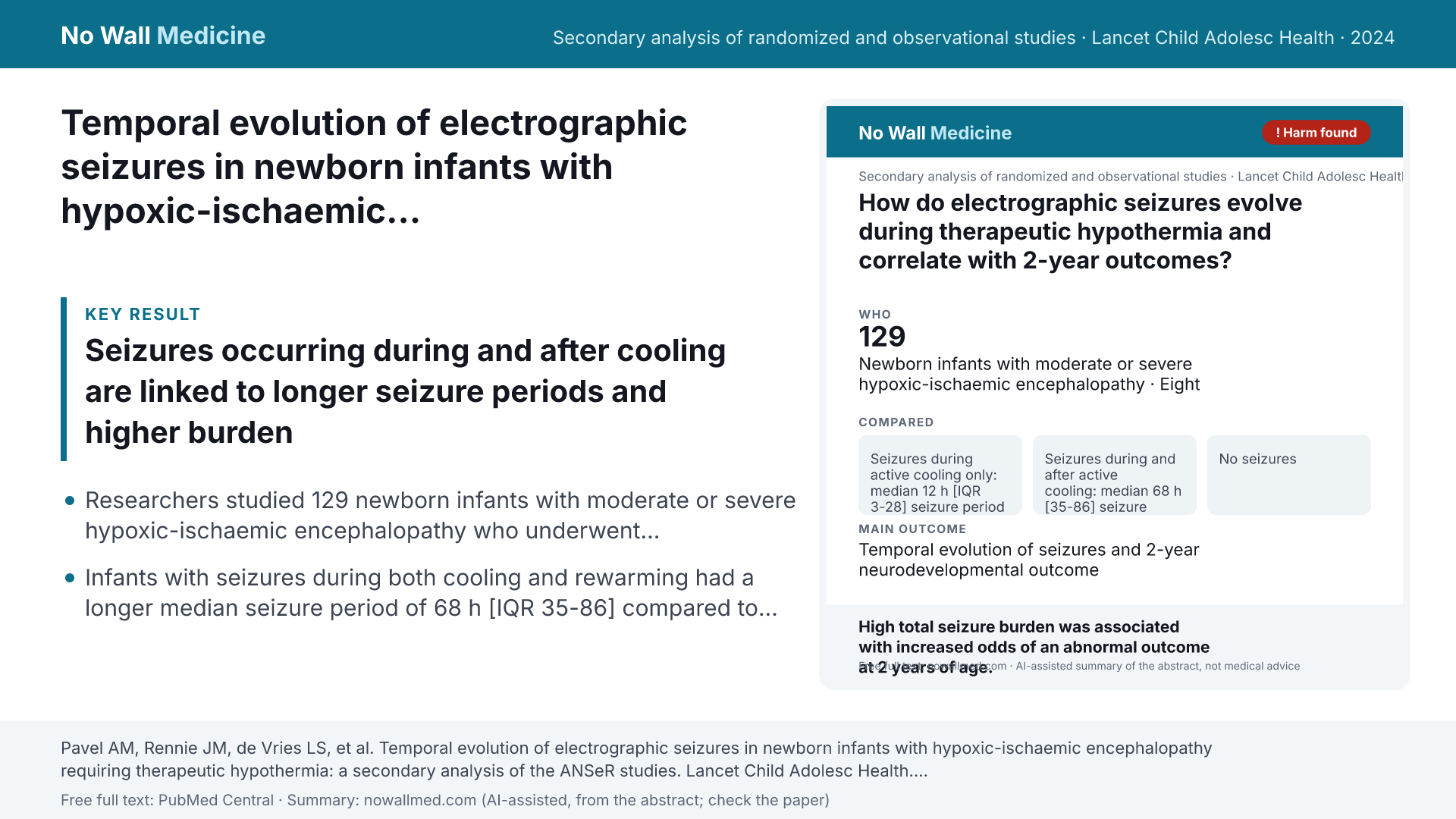
Temporal evolution of electrographic seizures in newborn infants with hypoxic-ischaemic encephalopathy requiring therapeutic hypothermia: a secondary analysis of the ANSeR studies
Key result: Seizures occurring during and after cooling are linked to longer seizure periods and higher burden
Key points
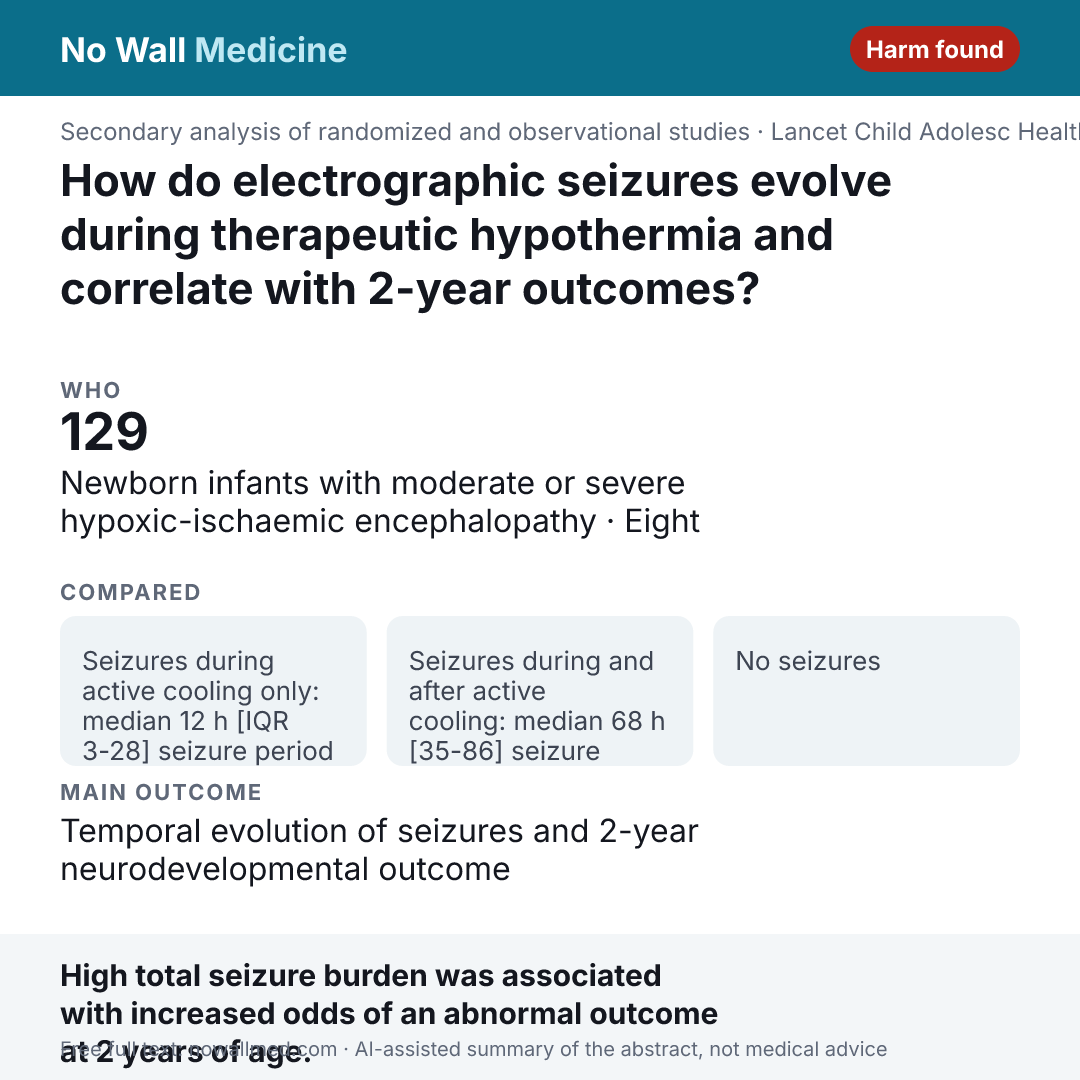
- Researchers studied 129 newborn infants with moderate or severe hypoxic-ischaemic encephalopathy who underwent therapeutic hypothermia, comparing those with seizures during cooling only to those with seizures during cooling and rewarming.
- Infants with seizures during both cooling and rewarming had a longer median seizure period of 68 h [IQR 35-86] compared to 12 h [IQR 3-28] for those with seizures during cooling only.
- High total seizure burden was associated with increased odds of an abnormal outcome at 2 years of age (odds ratio 1.007 [95% CI 1.000-1.014]).
Why it matters: Detailed information about the timing and evolution of electrographic seizures, which are seizures detected on an electroencephalogram, during the cooling and rewarming phases of therapeutic hypothermia is sparse.
Discussion prompts
- Would these patients look like yours? Who was left out?
- Is the main outcome one that matters to patients?
- Is the difference large enough to change what you do?
Cite: Pavel AM, Rennie JM, de Vries LS, et al. Temporal evolution of electrographic seizures in newborn infants with hypoxic-ischaemic encephalopathy requiring therapeutic hypothermia: a secondary analysis of the ANSeR studies. Lancet Child Adolesc Health. 2024;8(3):214-224. doi:10.1016/S2352-4642(23)00296-1
Free full text: PubMed Central · Summary and visual abstract: nowallmed.com/a/temporal-evolution-of-electrographic-seizures-in-newborn-infants-with-1pii7hy/ (AI-assisted from the abstract; check the paper before relying on it).