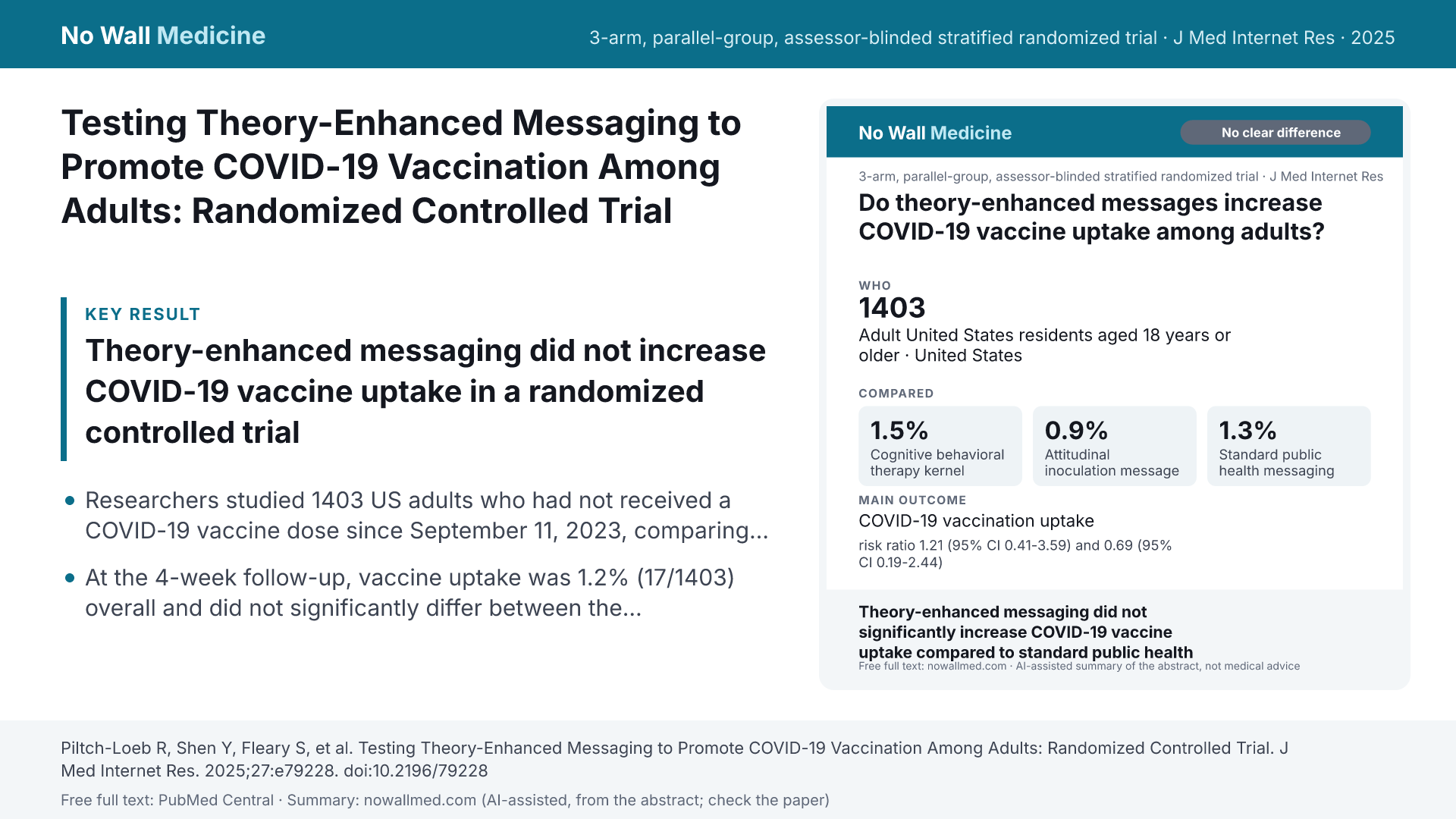
Theory-enhanced messaging did not increase COVID-19 vaccine uptake in a randomized controlled trial
Testing Theory-Enhanced Messaging to Promote COVID-19 Vaccination Among Adults: Randomized Controlled Trial
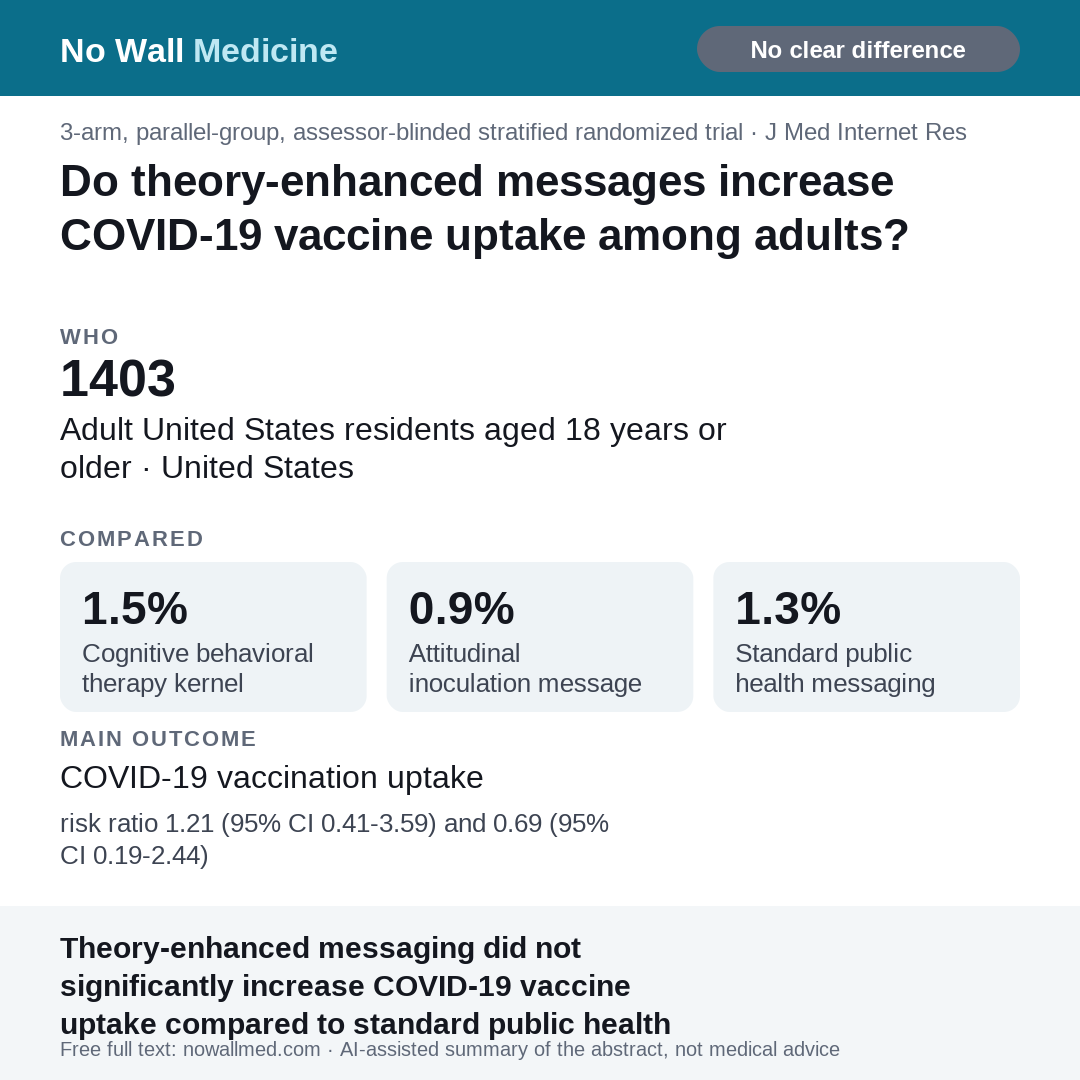
3-arm, parallel-group, assessor-blinded stratified randomized trialNo clear difference
Do theory-enhanced messages increase COVID-19 vaccine uptake among adults?
Who
1403
Adult United States residents aged 18 years or older · United States
Compared
1.5%Cognitive behavioral therapy kernel messaging (7/469)
0.9%Attitudinal inoculation message (4/466)
1.3%Standard public health messaging (6/468)
Main outcome
COVID-19 vaccination uptake
Result: risk ratio 1.21 (95% CI 0.41-3.59) and 0.69 (95% CI 0.19-2.44)
Bottom line: Theory-enhanced messaging did not significantly increase COVID-19 vaccine uptake compared to standard public health messaging.
J Med Internet Res · 2025-10-07Download image
Clinical question: Do theory-enhanced messages increase COVID-19 vaccine uptake among adults?
Why it matters: New communication strategies are being explored to address low COVID-19 vaccine uptake caused by factors like pandemic fatigue and reduced risk perception.
Key points
- Researchers studied 1403 US adults who had not received a COVID-19 vaccine dose since September 11, 2023, comparing two new messaging approaches to standard public health messages.
- At the 4-week follow-up, vaccine uptake was 1.2% (17/1403) overall and did not significantly differ between the cognitive behavioral therapy kernel arm (1.5%), the inoculation arm (0.9%), or the standard arm (1.3%).
- Vaccine uptake and willingness to receive a dose did not differ based on whether participants reported symptoms of anxiety or depression.
Headline and key points written with AI from the paper’s abstract, with every number checked against it. Read the paper before relying on them.
Was this summary helpful?
Subject terms
Cite this article
Piltch-Loeb R, Shen Y, Fleary S, Robertson M, Nuñez Sahr J, Penrose K. Testing Theory-Enhanced Messaging to Promote COVID-19 Vaccination Among Adults: Randomized Controlled Trial. J Med Internet Res. 2025. doi:10.2196/79228
Spotted a mistake? Suggest a correction
Top studies every Monday
The week’s key trials and guidelines in your specialties, plus any topics you follow. By email, free.
Get the weekly digest