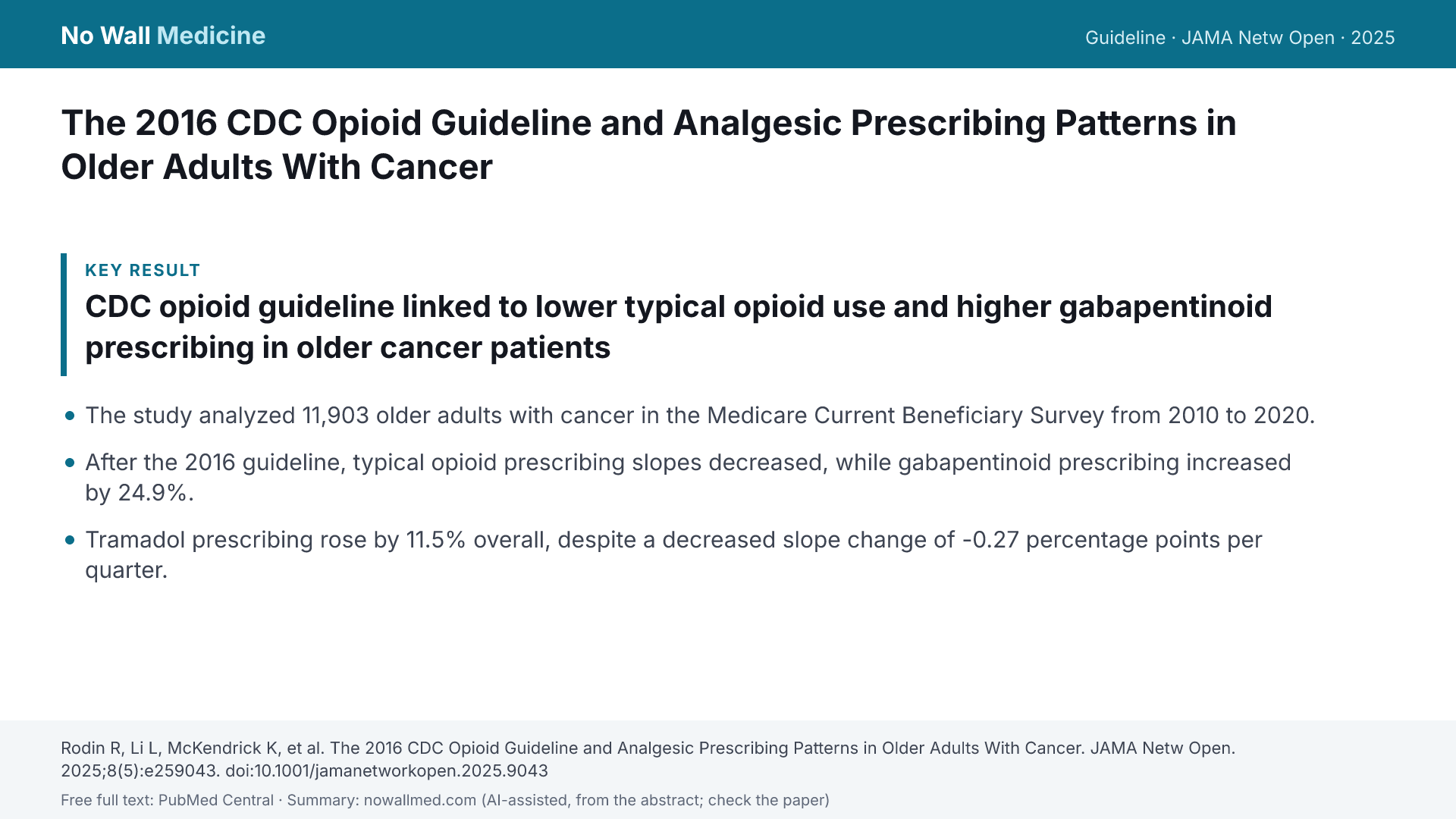
2016 CDC guideline was associated with decreased opioid prescribing and increased gabapentinoid use in older adults with cancer
The 2016 CDC Opioid Guideline and Analgesic Prescribing Patterns in Older Adults With Cancer
Why it matters: It is unknown if the 2016 CDC guidelines for chronic noncancer pain caused unintended changes in how doctors prescribe pain medication to older adults with cancer.
Key points
- Researchers analyzed 11,903 older adults with cancer, with a mean age of 79.4 years, using Medicare data from 2010 to 2020.
- Following the guideline, the prescribing slope for typical opioids decreased by -0.47 percentage points per quarter and buprenorphine by -0.01 percentage points per quarter.
- Gabapentinoid prescribing, which includes medications like gabapentin and pregabalin, increased by 24.9% after the guideline release.
Headline and key points written with AI from the paper’s abstract, with every number checked against it. Read the paper before relying on them.
Was this summary helpful?
Subject terms
Cite this article
Rodin R, Li L, McKendrick K, Harrison K, Hunt LJ, Muench U. The 2016 CDC Opioid Guideline and Analgesic Prescribing Patterns in Older Adults With Cancer. JAMA Netw Open. 2025. doi:10.1001/jamanetworkopen.2025.9043
Spotted a mistake? Suggest a correction
Top studies every Monday
The week’s key trials and guidelines in your specialties, plus any topics you follow. By email, free.
Get the weekly digest