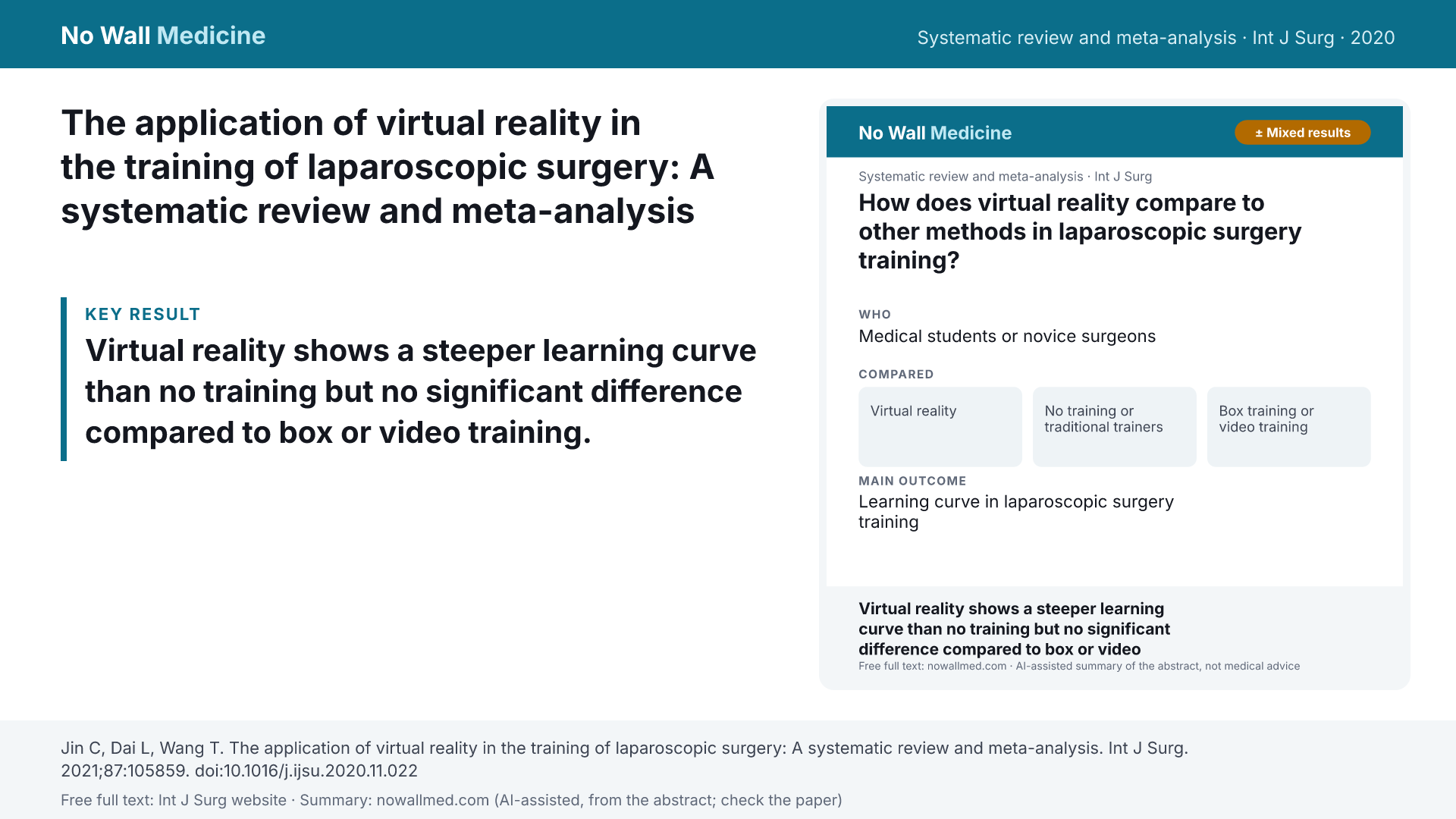
The application of virtual reality in the training of laparoscopic surgery: A systematic review and meta-analysis
Systematic review and meta-analysisMixed results
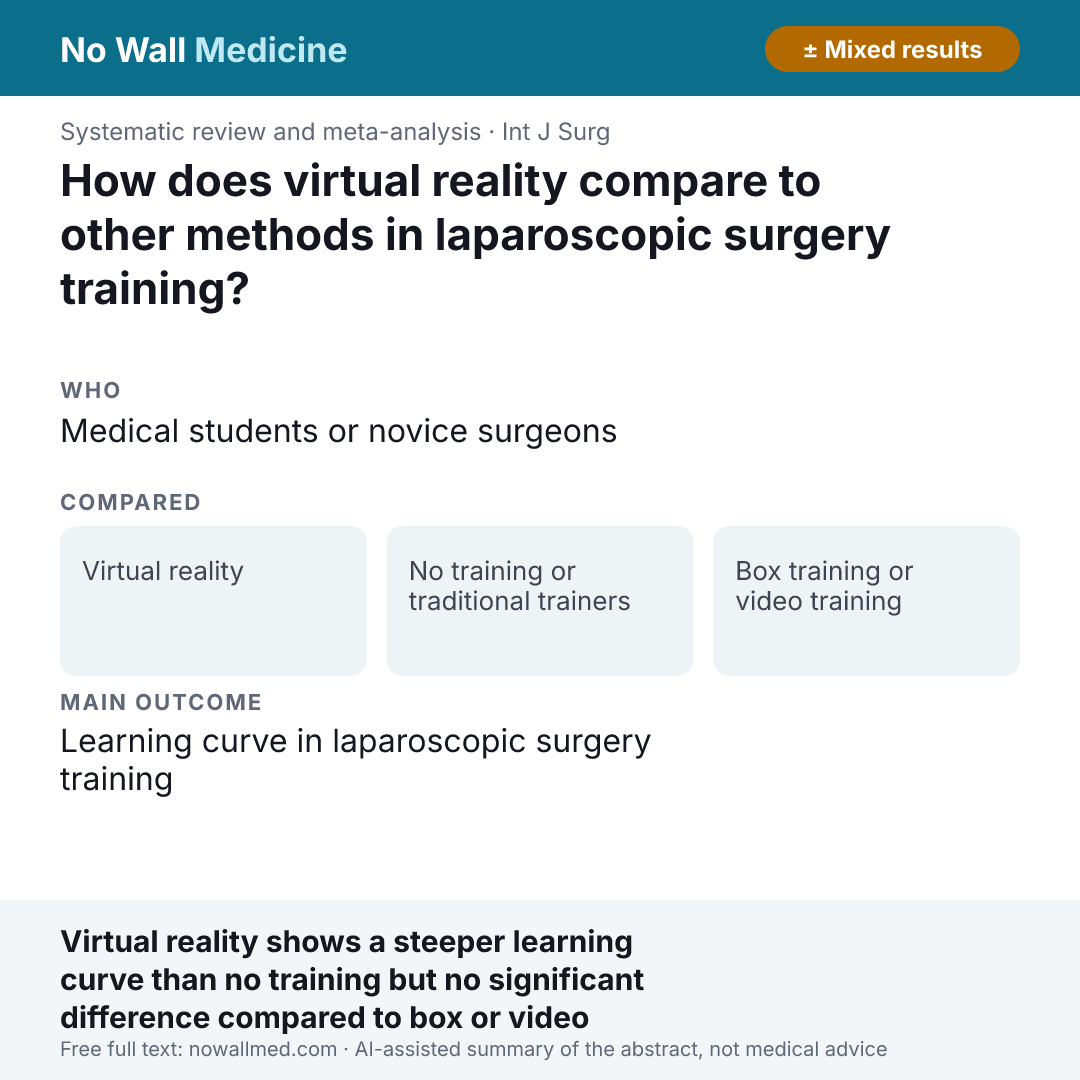
How does virtual reality compare to other methods in laparoscopic surgery training?
Who
Medical students or novice surgeons
Compared
Virtual reality
No training or traditional trainers
Box training or video training
Main outcome
Learning curve in laparoscopic surgery training
Bottom line: Virtual reality shows a steeper learning curve than no training but no significant difference compared to box or video training.
Int J Surg · 2020-12-09 · Save PNG
Clinical question: How does virtual reality compare to other methods in laparoscopic surgery training?
Abstract
Background
Virtual reality becomes popular in laparoscopic surgery especially in the training process. An assessment on the learning curve of virtual reality compared to other methods of training or no training needed to be carried out. Materials and methods
A systematic literature search between 2000 and 2020 was performed through PubMed, Cochrane library's Central, Embase, Clinicaltrials.gov, and Web of Science. All randomized controlled studies included kept the consistency of participants at the baseline and set the same time or repetitions of training. This systematic review and meta-analysis was under the guidance of the Preferred Reporting Items for Systematic Reviews and Meta-Analyses (PRISMA) and Assessing the methodological quality of systematic reviews(AMSTAR). Results
Twenty-three randomized controlled studies and five non-randomized concurrent controlled studies were included among 2692 searched studies. Virtual reality was recommended to be applied among no experience medical students or novice surgeons in the laparoscopic training. It had steeper learning curve compared to no training and traditional trainers. While there was no significant difference between virtual reality and box training or video training in the aspect of learning curve. Moreover, it seemed effective to improve the initial stage of learning curve in actual surgery. Conclusion
Virtual reality was not the first choice to be applied into laparoscopic training and it had its applicable surgeons or medical students. The superiority of virtual reality in the skill transfer from training room into operating room needed to be confirmed and complemented with further analyses. More importantly, the cost-effectiveness of virtual reality in the training process and patient safety were badly in need of discussion.
Subject terms
Headline, design, result, key points, caveat and citation as plain text.
Cite this article
Jin C, Dai L, Wang T. The application of virtual reality in the training of laparoscopic surgery: A systematic review and meta-analysis. Int J Surg. 2021;87:105859. doi:10.1016/j.ijsu.2020.11.022
Spotted a mistake? Suggest a correction