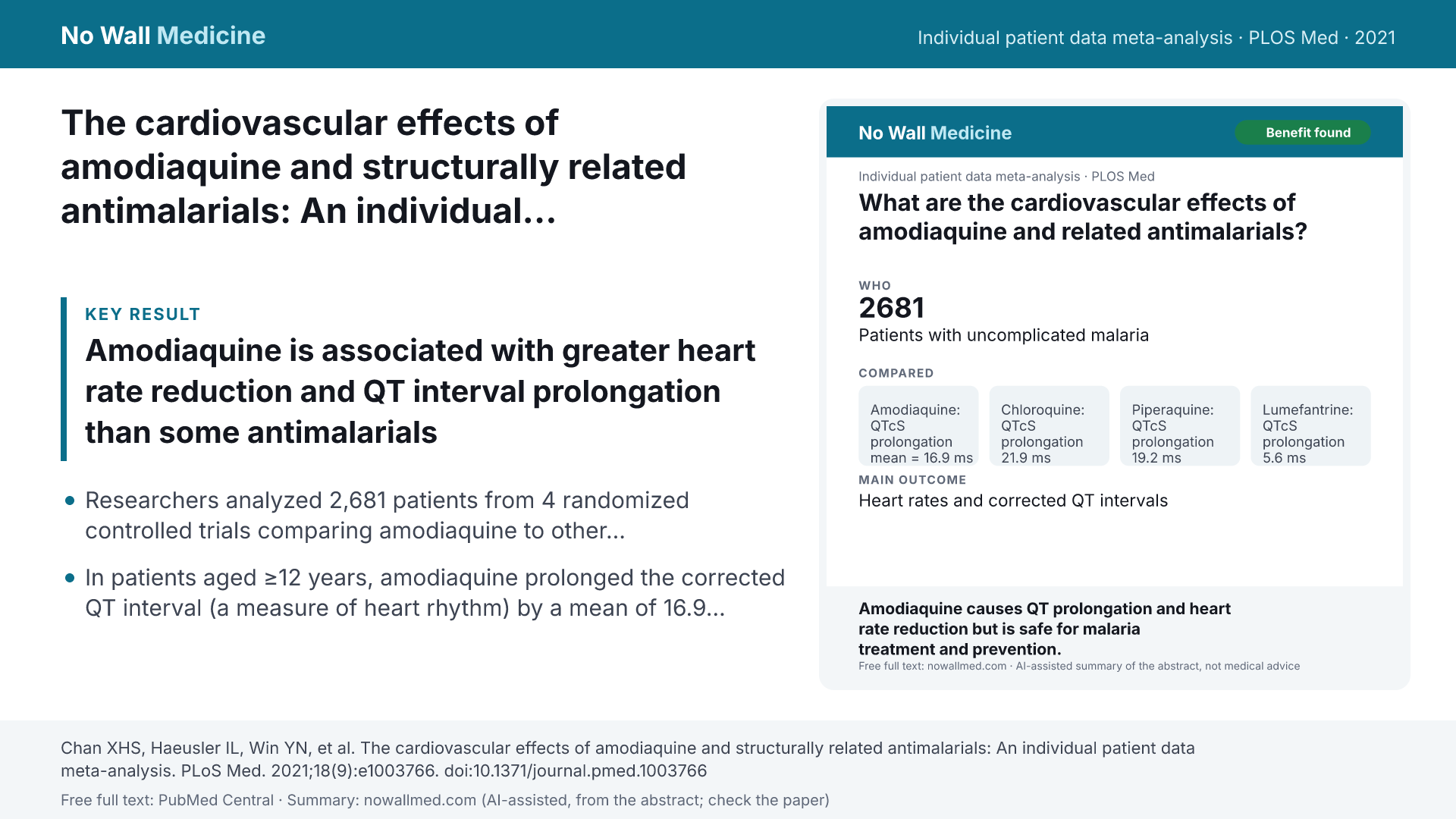
Amodiaquine is associated with greater heart rate reduction and QT interval prolongation than some antimalarials
The cardiovascular effects of amodiaquine and structurally related antimalarials: An individual patient data meta-analysis
Individual patient data meta-analysisBenefit found
What are the cardiovascular effects of amodiaquine and related antimalarials?
Who
2681
Patients with uncomplicated malaria
Compared
Amodiaquine: QTcS prolongation mean = 16.9 ms
Chloroquine: QTcS prolongation 21.9 ms
Piperaquine: QTcS prolongation 19.2 ms
Lumefantrine: QTcS prolongation 5.6 ms
Main outcome
Heart rates and corrected QT intervals
Bottom line: Amodiaquine causes QT prolongation and heart rate reduction but is safe for malaria treatment and prevention.
Limitation: Unavailability of individual patient-level adverse event data for most included participants
PLOS Med · 2021-09-07 · Save PNG
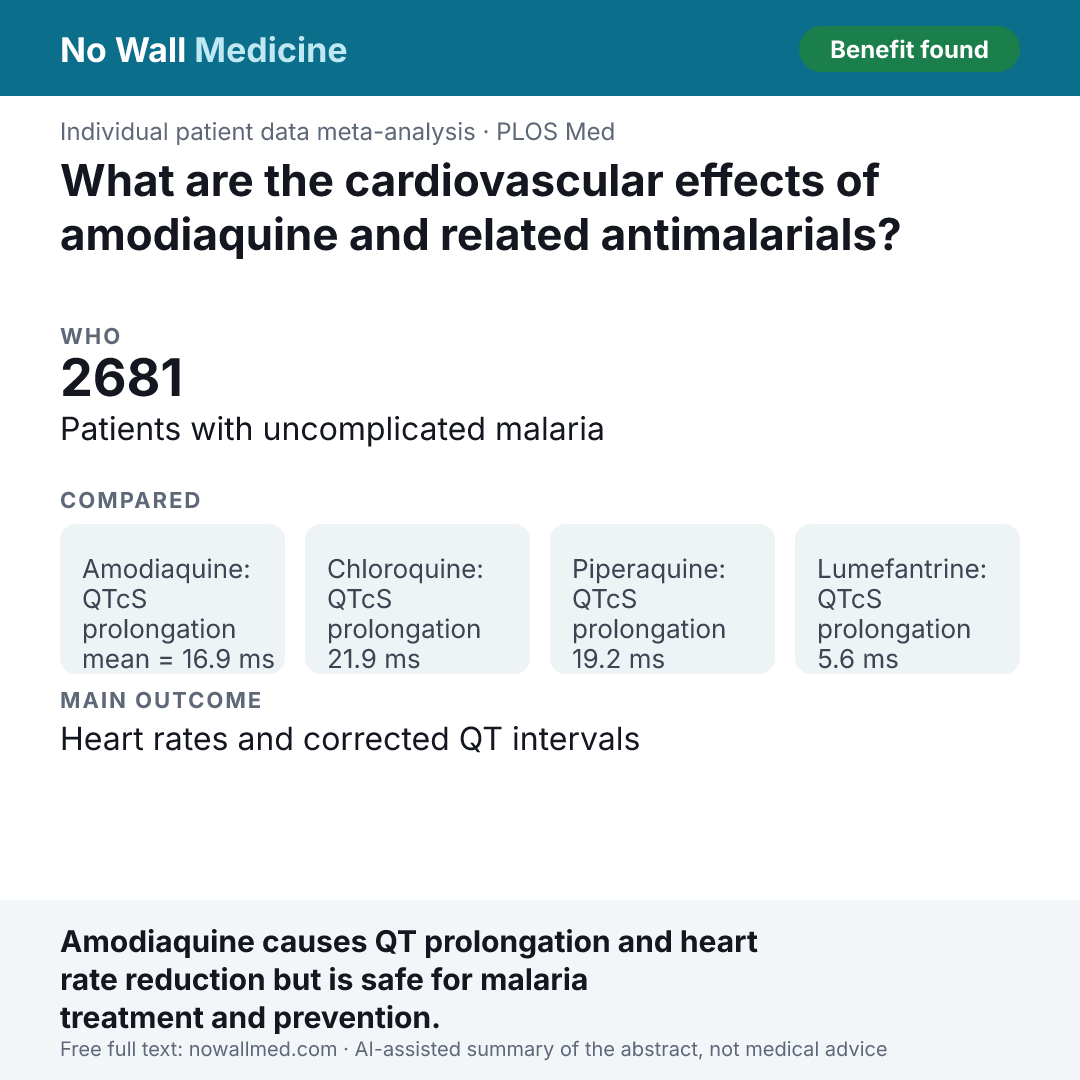
Clinical question: What are the cardiovascular effects of amodiaquine and related antimalarials?
Why it matters: The cardiovascular effects of amodiaquine and related antimalarial drugs are not well characterized to support risk minimization measures.
Key points
- Researchers analyzed 2,681 patients from 4 randomized controlled trials comparing amodiaquine to other antimalarials like chloroquine, lumefantrine, piperaquine, and pyronaridine.
- In patients aged ≥12 years, amodiaquine prolonged the corrected QT interval (a measure of heart rhythm) by a mean of 16.9 ms, which was less than chloroquine (21.9 ms) and piperaquine (19.2 ms).
- Amodiaquine was associated with a mean heart rate reduction of 15.2 beats per minute in patients aged ≥12 years and a higher risk of sinus bradycardia (slow heart rate) than lumefantrine and chloroquine.
Limitation the authors note: Individual patient-level adverse event data were unavailable for most included participants.
Headline and key points written with AI from the paper’s abstract, with every number checked against it. Read the paper before relying on them.
Was this summary helpful?
Subject terms
Headline, design, result, key points, caveat and citation as plain text.
Cite this article
Chan XHS, Haeusler IL, Win YN, et al. The cardiovascular effects of amodiaquine and structurally related antimalarials: An individual patient data meta-analysis. PLoS Med. 2021;18(9):e1003766. doi:10.1371/journal.pmed.1003766
Spotted a mistake? Suggest a correction