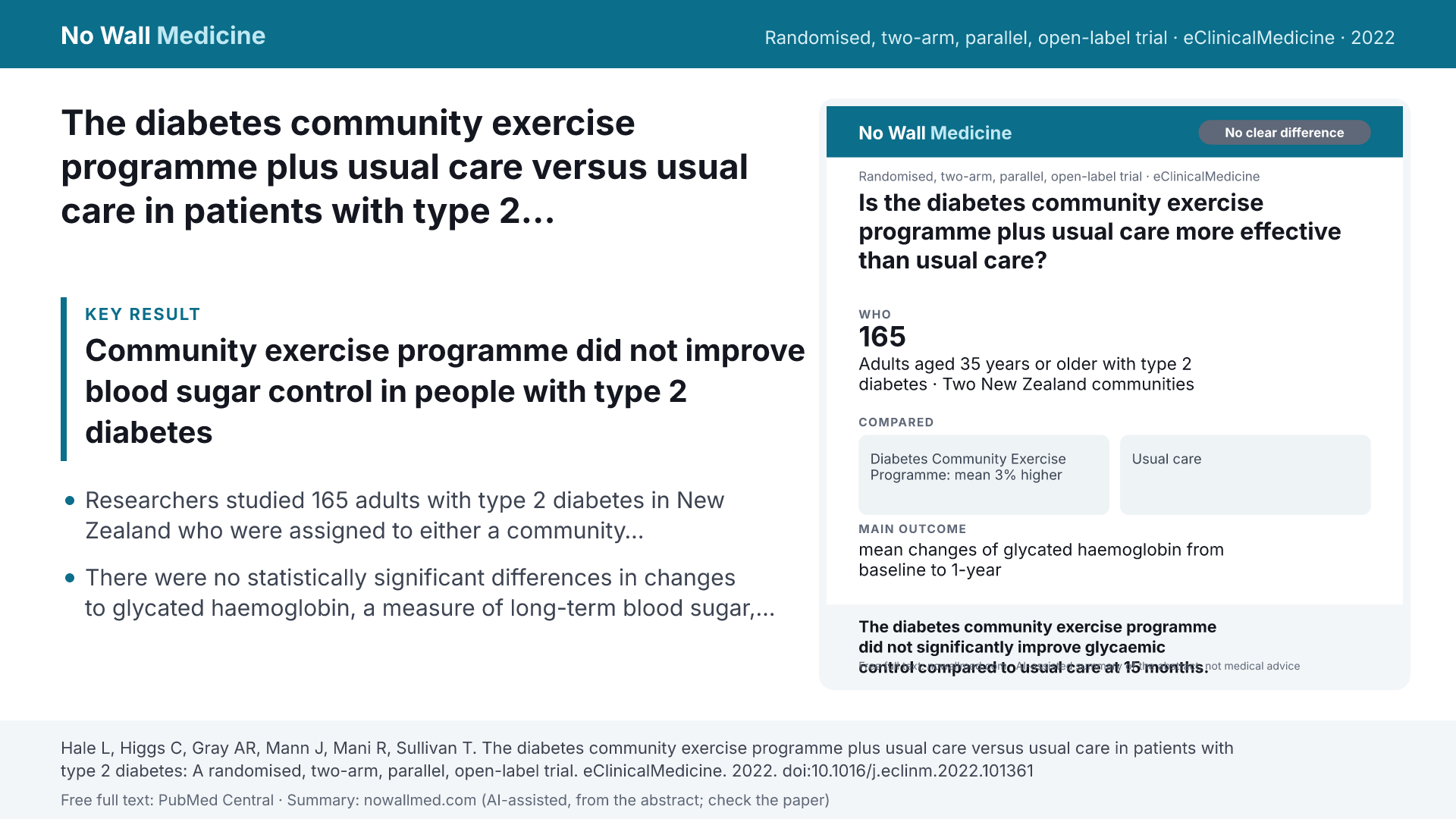
The diabetes community exercise programme plus usual care versus usual care in patients with type 2 diabetes: A randomised, two-arm, parallel, open-label trial
Key result: Community exercise programme did not improve blood sugar control in people with type 2 diabetes
Key points
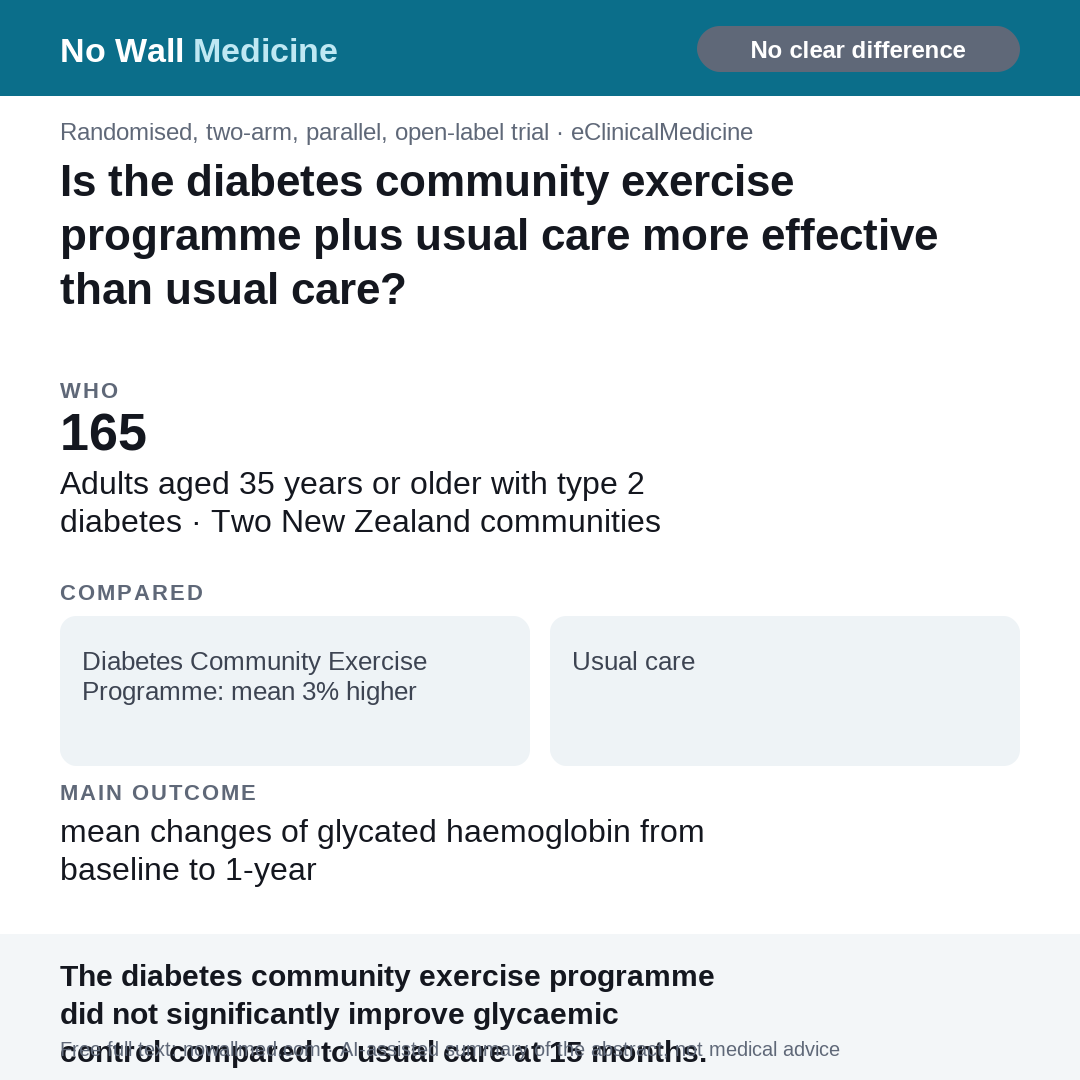
- Researchers studied 165 adults with type 2 diabetes in New Zealand who were assigned to either a community exercise programme or usual care.
- There were no statistically significant differences in changes to glycated haemoglobin, a measure of long-term blood sugar, at 15 months (p = 0.23).
- The group receiving the exercise programme had a mean glycated haemoglobin change that was 3% higher than the control group (95% CI 2% lower to 8% higher).
Why it matters: It was unknown whether the Diabetes Community Exercise Programme could improve glycaemic control in people with type 2 diabetes, particularly among Māori, Pacific, and deprived populations.
Discussion prompts
- Would these patients look like yours? Who was left out?
- Is the main outcome one that matters to patients?
- Is the difference large enough to change what you do?
Cite: Hale L, Higgs C, Gray AR, Mann J, Mani R, Sullivan T. The diabetes community exercise programme plus usual care versus usual care in patients with type 2 diabetes: A randomised, two-arm, parallel, open-label trial. eClinicalMedicine. 2022. doi:10.1016/j.eclinm.2022.101361
Free full text: PubMed Central · Summary and visual abstract: nowallmed.com/a/the-diabetes-community-exercise-programme-plus-usual-care-versus-3qsj6h/ (AI-assisted from the abstract; check the paper before relying on it).