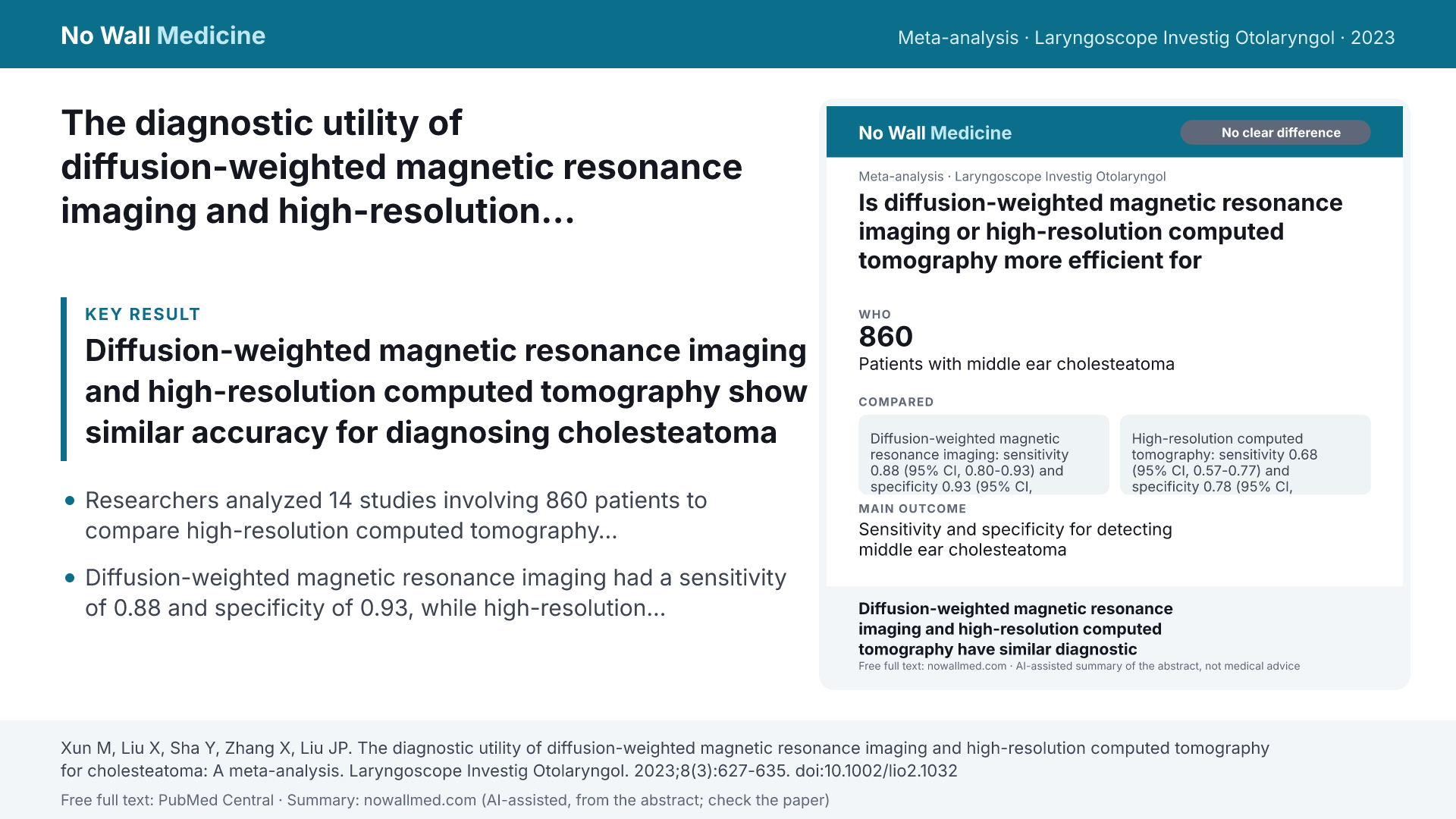
Diffusion-weighted magnetic resonance imaging and high-resolution computed tomography show similar accuracy for diagnosing cholesteatoma
The diagnostic utility of diffusion-weighted magnetic resonance imaging and high-resolution computed tomography for cholesteatoma: A meta-analysis
Meta-analysisNo clear difference
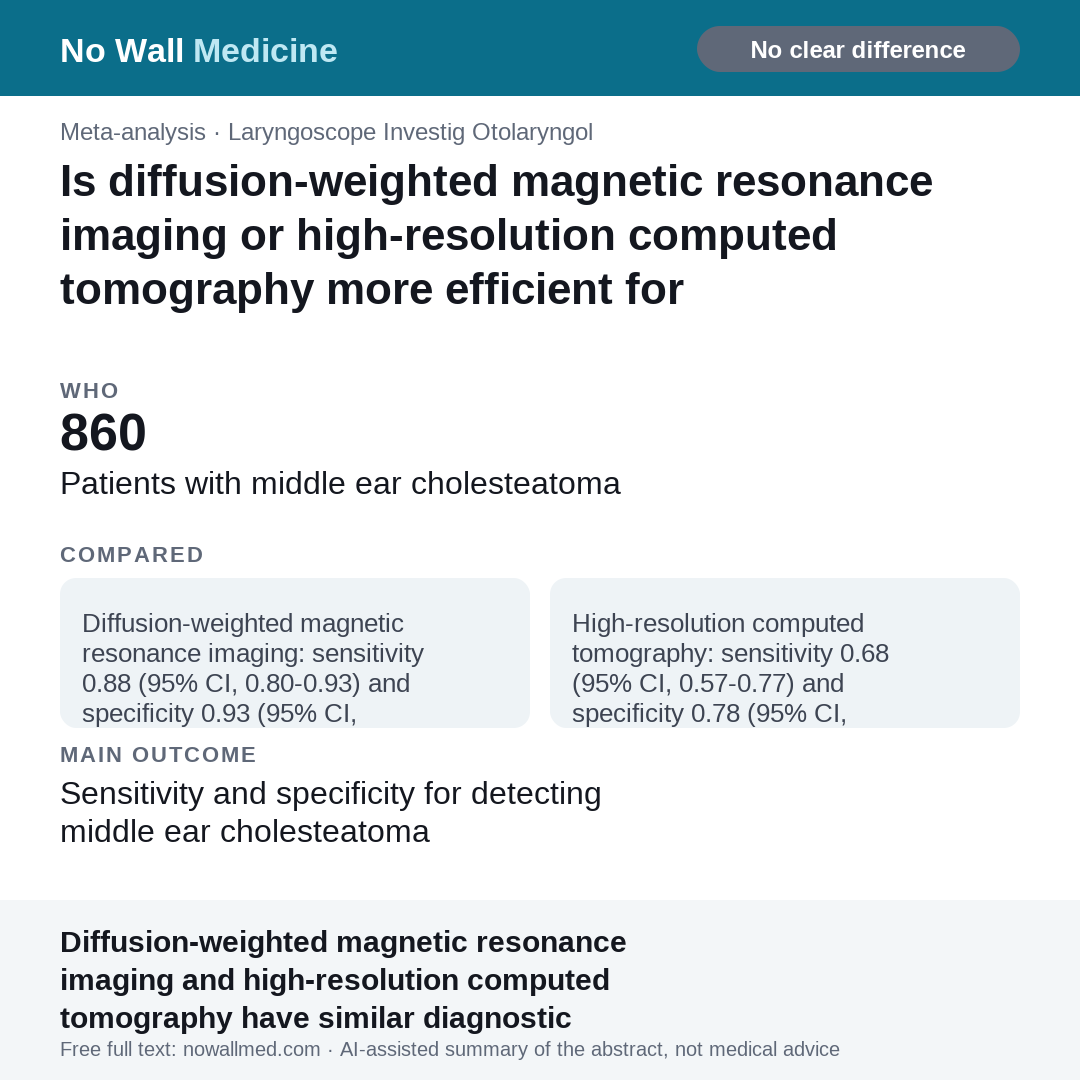
Is diffusion-weighted magnetic resonance imaging or high-resolution computed tomography more efficient for cholesteatoma diagnosis?
Who
860
Patients with middle ear cholesteatoma
Compared
Diffusion-weighted magnetic resonance imaging: sensitivity 0.88 (95% CI, 0.80-0.93) and specificity 0.93 (95% CI, 0.86-0.97)
High-resolution computed tomography: sensitivity 0.68 (95% CI, 0.57-0.77) and specificity 0.78 (95% CI, 0.60-0.90)
Main outcome
Sensitivity and specificity for detecting middle ear cholesteatoma
Bottom line: Diffusion-weighted magnetic resonance imaging and high-resolution computed tomography have similar diagnostic sensitivity and specificity for detecting cholesteatoma.
Laryngoscope Investig Otolaryngol · 2023-04-05Download image
Clinical question: Is diffusion-weighted magnetic resonance imaging or high-resolution computed tomography more efficient for cholesteatoma diagnosis?
Why it matters: It is unclear whether diffusion-weighted magnetic resonance imaging or high-resolution computed tomography is more efficient for diagnosing middle ear cholesteatoma in clinical practice.
Key points
- Researchers analyzed 14 studies involving 860 patients to compare high-resolution computed tomography and diffusion-weighted magnetic resonance imaging for detecting middle ear cholesteatoma.
- Diffusion-weighted magnetic resonance imaging had a sensitivity of 0.88 and specificity of 0.93, while high-resolution computed tomography had a sensitivity of 0.68 and specificity of 0.78.
- The differences in sensitivity and specificity between the two imaging methods were not statistically significant.
Headline and key points written with AI from the paper’s abstract, with every number checked against it. Read the paper before relying on them.
Was this summary helpful?
Cite this article
Xun M, Liu X, Sha Y, Zhang X, Liu JP. The diagnostic utility of diffusion-weighted magnetic resonance imaging and high-resolution computed tomography for cholesteatoma: A meta-analysis. Laryngoscope Investig Otolaryngol. 2023. doi:10.1002/lio2.1032
Spotted a mistake? Suggest a correction
Top studies every Monday
The week’s key trials and guidelines in your specialties, plus any topics you follow. By email, free.
Get the weekly digest