Preclinical and clinical evidence suggests the habenula brain structure is disrupted in depression
The disappointment centre of the brain gets exciting: a systematic review of habenula dysfunction in depression
Systematic reviewBenefit found
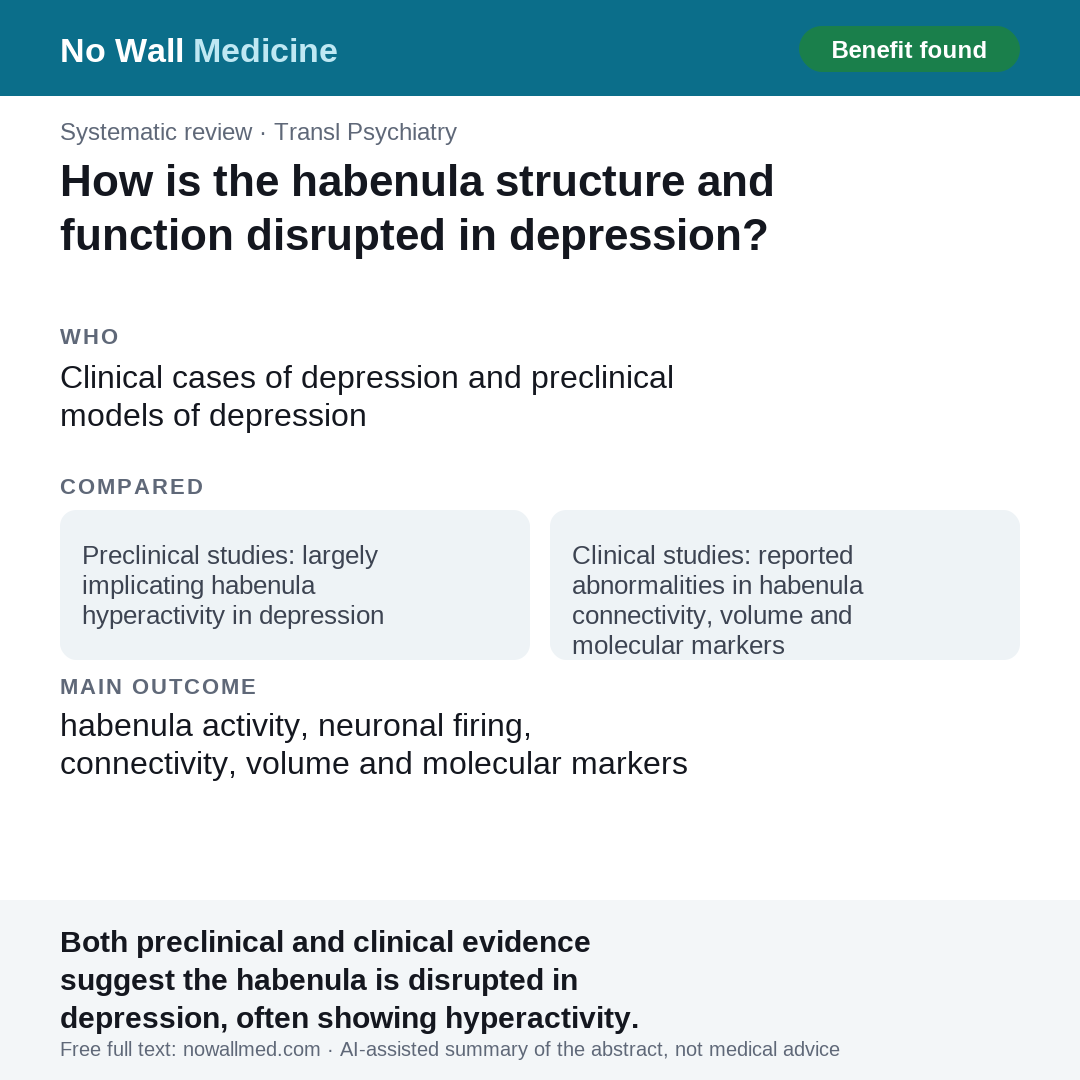
How is the habenula structure and function disrupted in depression?
Who
Clinical cases of depression and preclinical models of depression
Compared
Preclinical studies: largely implicating habenula hyperactivity in depression
Clinical studies: reported abnormalities in habenula connectivity, volume and molecular markers
Main outcome
habenula activity, neuronal firing, connectivity, volume and molecular markers
Bottom line: Both preclinical and clinical evidence suggest the habenula is disrupted in depression, often showing hyperactivity.
Limitation: progress is limited by a lack of detailed molecular analyses and limited imaging resolution
Transl Psychiatry · 2024-12-19Download image
Clinical question: How is the habenula structure and function disrupted in depression?
Why it matters: The molecular basis of habenula dysfunction in depression is unknown and it is unclear how preclinical findings translate to clinical settings.
Key points
- Researchers reviewed 63 preclinical studies and 24 clinical studies to examine the habenula, a brain structure connecting the limbic forebrain to monoamine centers.
- Preclinical findings implicated habenula hyperactivity in depression, while clinical studies reported abnormalities in connectivity, volume, and molecular markers.
- In preclinical studies, 11% included both males and females, and 71% of those reported significant differences between the sexes in at least one measure.
Limitation the authors note: Progress in clinical studies is limited by a lack of detailed molecular analyses and limited imaging resolution.
Headline and key points written with AI from the paper’s abstract, with every number checked against it. Read the paper before relying on them.
Was this summary helpful?
Subject terms
Cite this article
Cameron S, Weston-Green K, Newell KA. The disappointment centre of the brain gets exciting: a systematic review of habenula dysfunction in depression. Transl Psychiatry. 2024. doi:10.1038/s41398-024-03199-x
Spotted a mistake? Suggest a correction
Top studies every Monday
The week’s key trials and guidelines in your specialties, plus any topics you follow. By email, free.
Get the weekly digest