The E. coli CNF1 toxin induces fetal reprogramming of intestinal stem cells and a serrated colorectal cancer transcriptional signature in organoids
Key result: E. coli CNF1 toxin linked to fetal-like stem cell changes in gut organoids
Key points
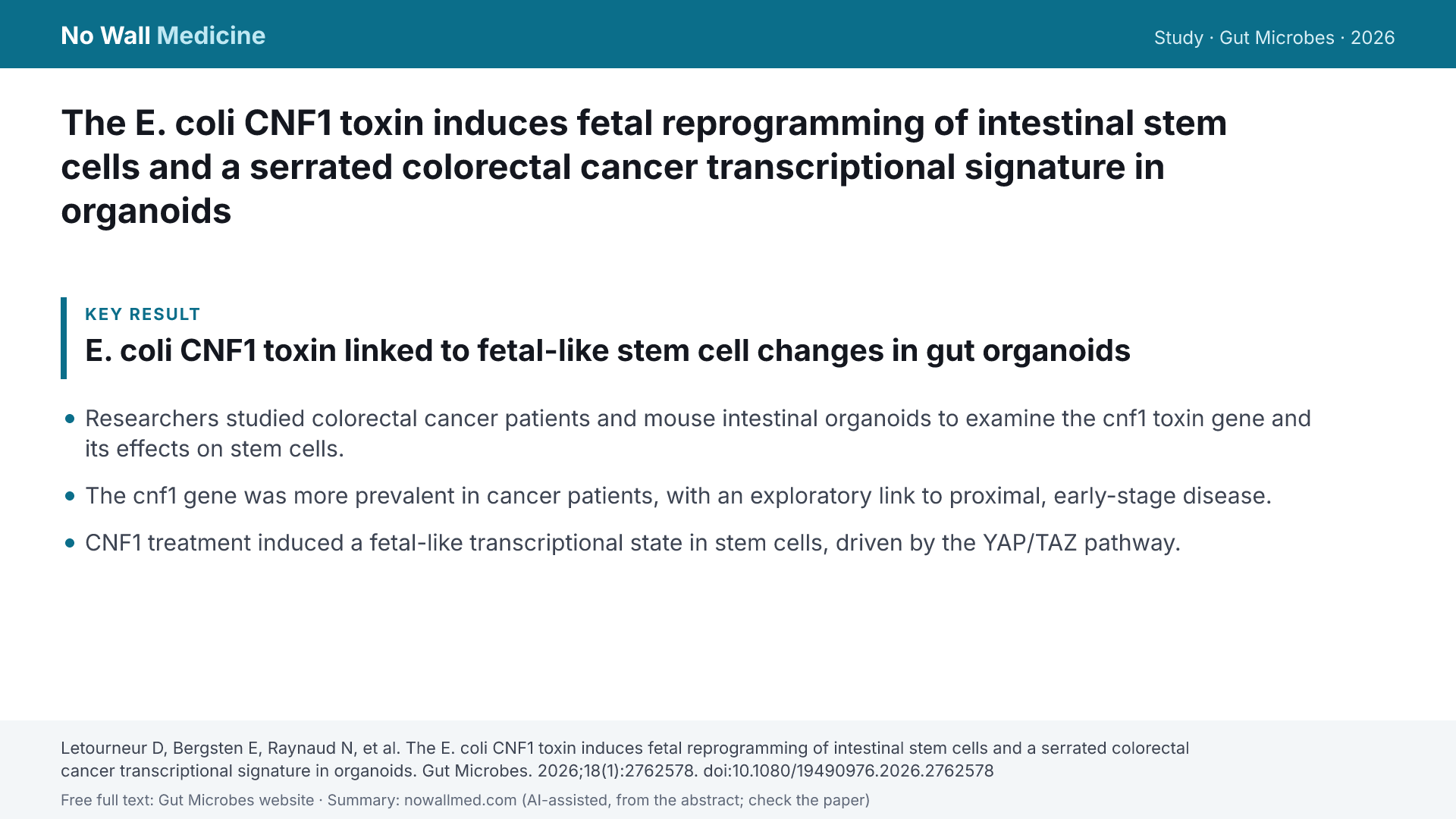
- Researchers studied colorectal cancer patients and mouse intestinal organoids to examine the cnf1 toxin gene and its effects on stem cells.
- The cnf1 gene was more prevalent in cancer patients, with an exploratory link to proximal, early-stage disease.
- CNF1 treatment induced a fetal-like transcriptional state in stem cells, driven by the YAP/TAZ pathway.
Why it matters: Mechanistic insights are needed to understand how gut microbiota pathobionts contribute to colorectal cancer tumorigenesis.
Discussion prompts
- Would these patients look like yours? Who was left out?
- Is the main outcome one that matters to patients?
- Is the difference large enough to change what you do?
Cite: Letourneur D, Bergsten E, Raynaud N, et al. The E. coli CNF1 toxin induces fetal reprogramming of intestinal stem cells and a serrated colorectal cancer transcriptional signature in organoids. Gut Microbes. 2026. doi:10.1080/19490976.2026.2762578
Free full text: Gut Microbes website · Summary and visual abstract: nowallmed.com/a/the-e-coli-cnf1-toxin-induces-fetal-reprogramming-of-intestinal-stem-coajf2/ (AI-assisted from the abstract; check the paper before relying on it).