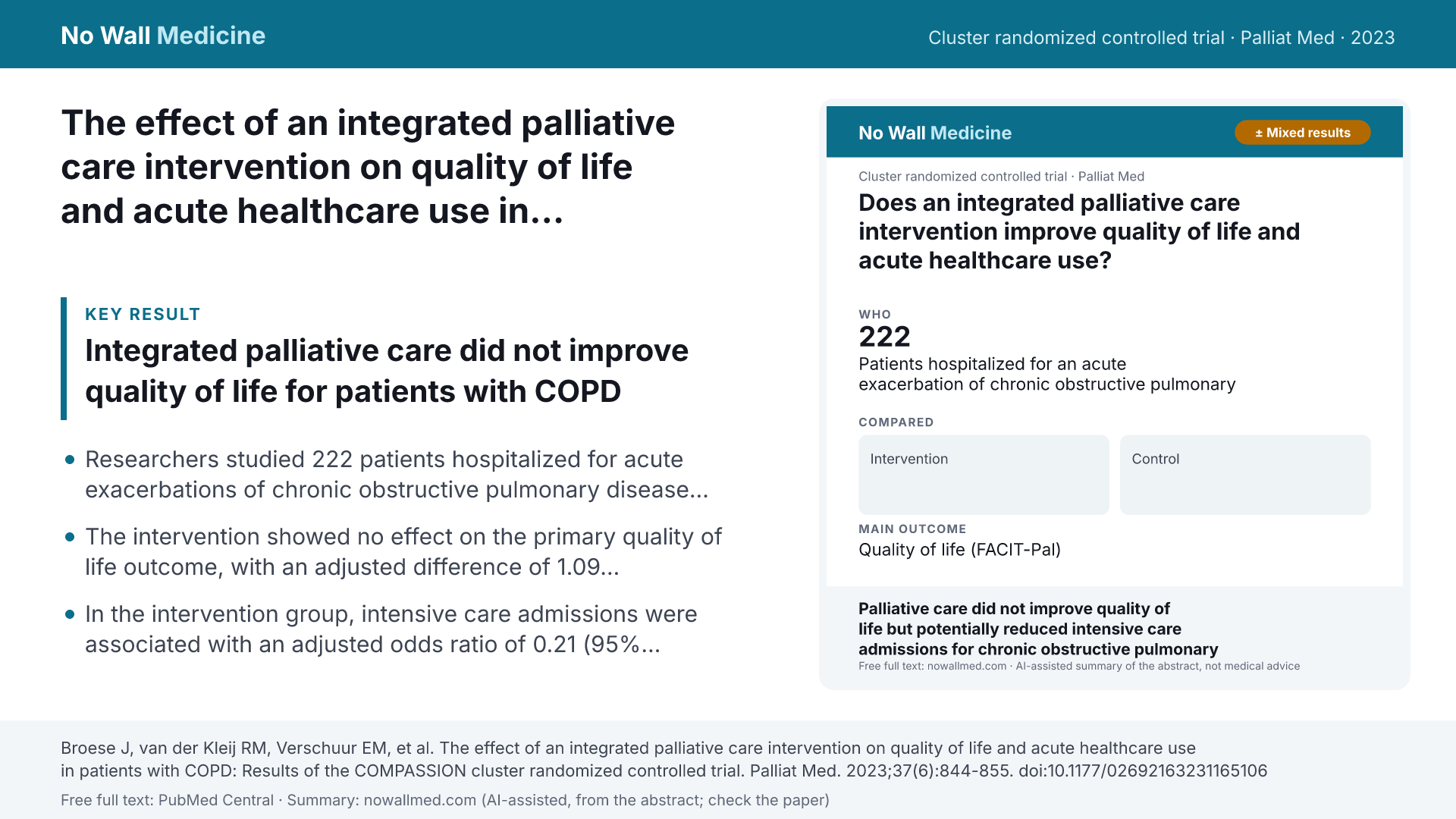
Integrated palliative care did not improve quality of life for patients with COPD
The effect of an integrated palliative care intervention on quality of life and acute healthcare use in patients with COPD: Results of the COMPASSION cluster randomized controlled trial
Cluster randomized controlled trialMixed results
Does an integrated palliative care intervention improve quality of life and acute healthcare use?
Who
222
Patients hospitalized for an acute exacerbation of chronic obstructive pulmonary disease · Eight hospital regions in the Netherlands
Compared
Intervention
Control
Main outcome
Quality of life (FACIT-Pal)
Result: adjusted difference: 1.09 (95% confidence interval: -5.44 to 7.60)
Bottom line: Palliative care did not improve quality of life but potentially reduced intensive care admissions for chronic obstructive pulmonary disease.
Limitation: COVID-19 pandemic led to suboptimal implementation and insufficient power.
Palliat Med · 2023-03-31Download image
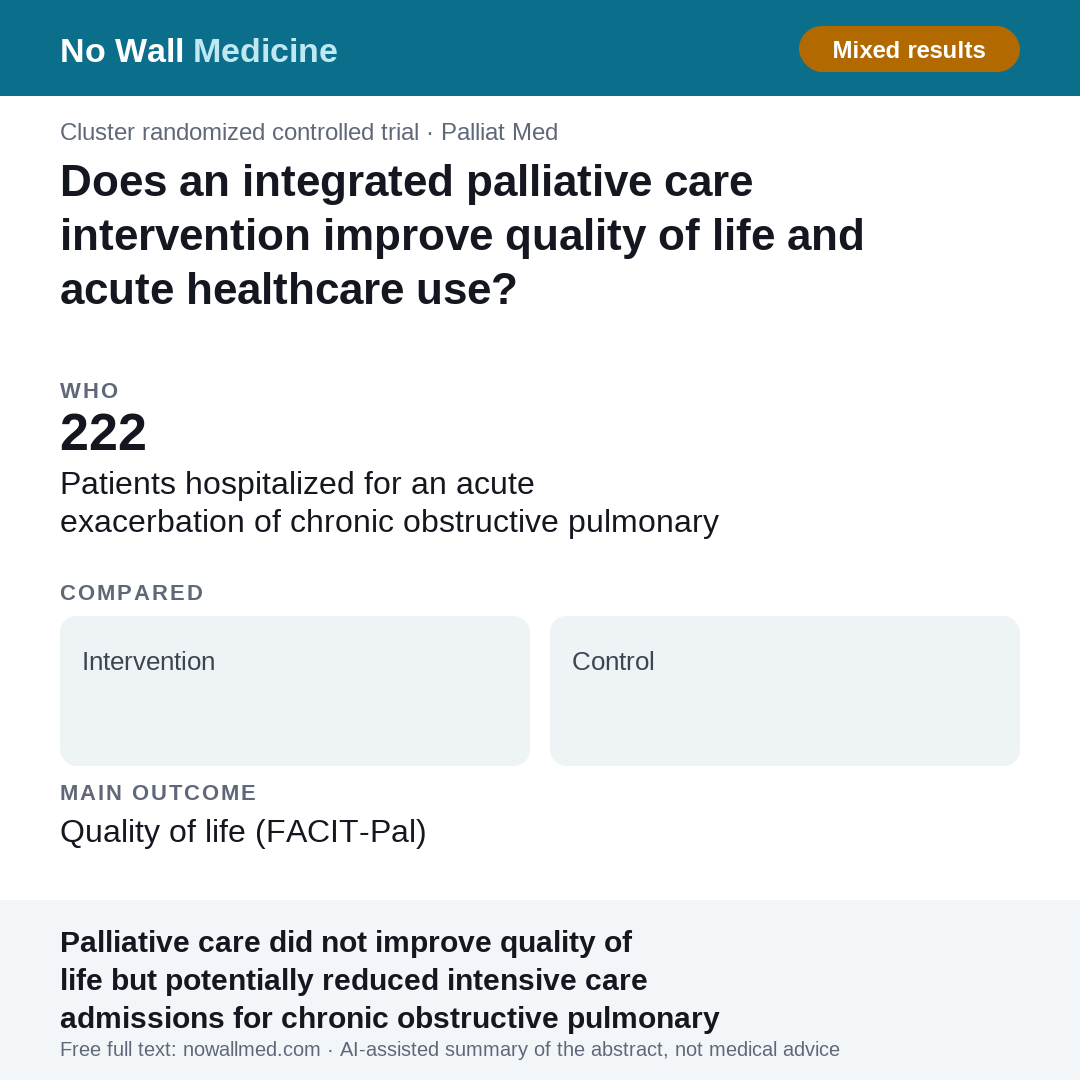
Clinical question: Does an integrated palliative care intervention improve quality of life and acute healthcare use?
Why it matters: It is unknown if integrating palliative care components into routine care for patients with chronic obstructive pulmonary disease improves quality of life or acute healthcare use.
Key points
- Researchers studied 222 patients hospitalized for acute exacerbations of chronic obstructive pulmonary disease (COPD) in eight hospital regions in the Netherlands.
- The intervention showed no effect on the primary quality of life outcome, with an adjusted difference of 1.09 (95% confidence interval: -5.44 to 7.60).
- In the intervention group, intensive care admissions were associated with an adjusted odds ratio of 0.21 (95% confidence interval: 0.03-0.81).
Limitation the authors note: The consequences of the COVID-19 pandemic led to suboptimal implementation and insufficient power, which may have affected the findings.
Headline and key points written with AI from the paper’s abstract, with every number checked against it. Read the paper before relying on them.
Was this summary helpful?
Subject terms
Cite this article
Broese J, van der Kleij RM, Verschuur EM, et al. The effect of an integrated palliative care intervention on quality of life and acute healthcare use in patients with COPD: Results of the COMPASSION cluster randomized controlled trial. Palliat Med. 2023. doi:10.1177/02692163231165106
Spotted a mistake? Suggest a correction