Systemic lidocaine was associated with lower opioid use after ambulatory surgery in a meta-analysis
The effect of systemic lidocaine on post-operative opioid consumption in ambulatory surgical patients: a meta-analysis of randomized controlled trials
Meta-analysis of randomized controlled trialsMixed results
Does systemic lidocaine reduce postoperative opioid consumption in ambulatory surgical patients?
Who
297
Ambulatory surgical patients
Compared
Systemic lidocaine
Control
Main outcome
Postoperative opioid consumption
Result: weighted mean difference -4.23 (-7.3 to 1.2, P = 0.007) at PACU; -1.91 (-3.80 to -0.03, P = 0.04) at 24 h
Bottom line: Systemic lidocaine provides a moderate opioid-sparing effect in the post-anesthesia care unit but has limited effect at 24 hours.
Limitation: Clinical trials with larger sample sizes are necessary to further confirm the short-term analgesic benefit.
Perioper Med · 2021-04-13 · Save PNG
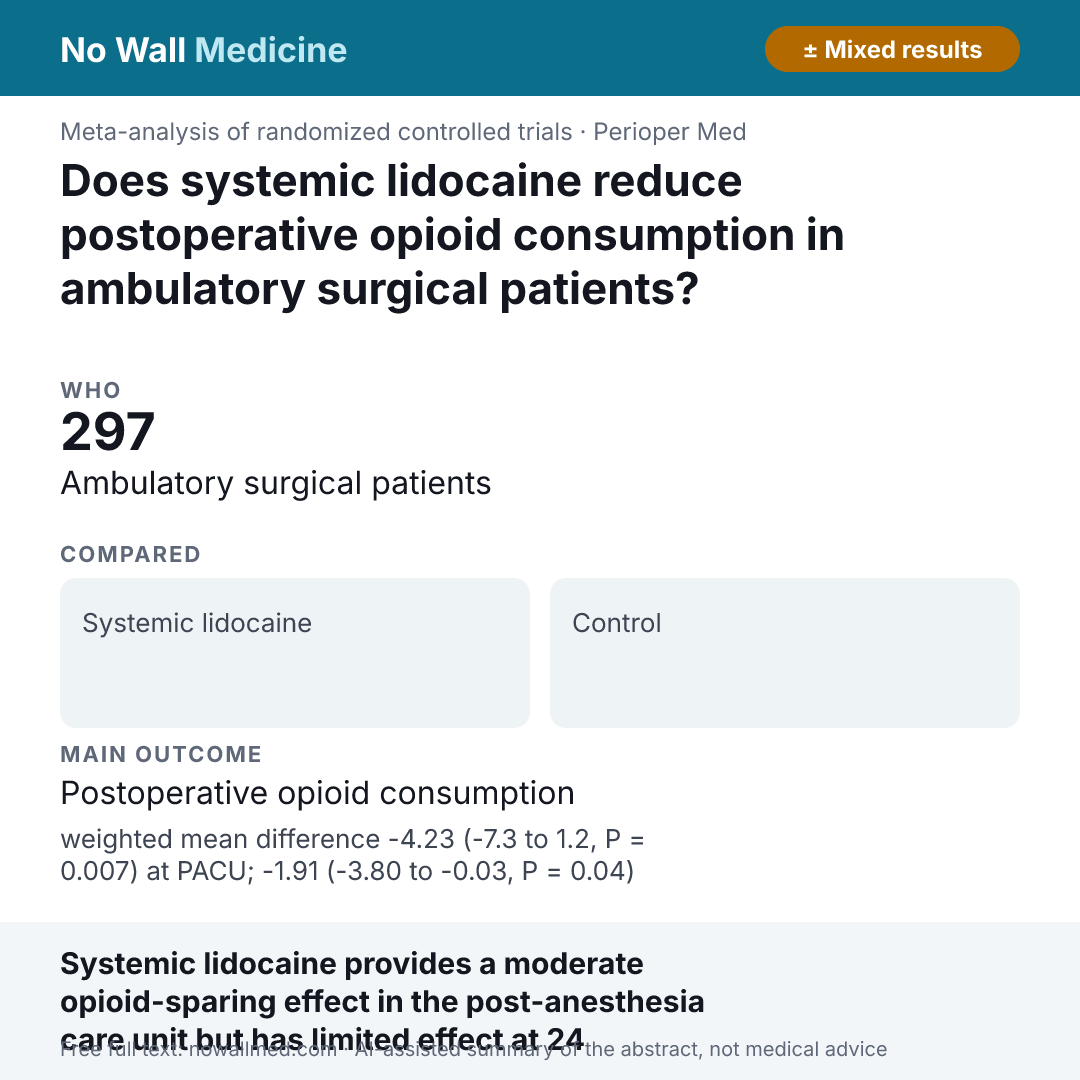
Clinical question: Does systemic lidocaine reduce postoperative opioid consumption in ambulatory surgical patients?
Why it matters: The effectiveness of systemic lidocaine as part of multimodal analgesia, or using multiple types of pain relief methods, for ambulatory surgery patients was unclear due to mixed results.
Key points
- Researchers analyzed five randomized controlled trials involving 297 patients to evaluate the effects of systemic lidocaine on pain and recovery after outpatient surgery.
- Systemic lidocaine was associated with a weighted mean difference of -4.23 mg intravenous morphine equivalents in the post-anesthesia care unit and -1.91 mg at 24 h.
- There were no differences in postoperative pain control, time to hospital discharge, or nausea and vomiting, and the incidence of self-limiting adverse events was 0.007.
Limitation the authors note: Clinical trials with larger sample sizes are necessary to further confirm the short-term analgesic benefit of systemic lidocaine following ambulatory surgery.
Headline and key points written with AI from the paper’s abstract, with every number checked against it. Read the paper before relying on them.
Was this summary helpful?
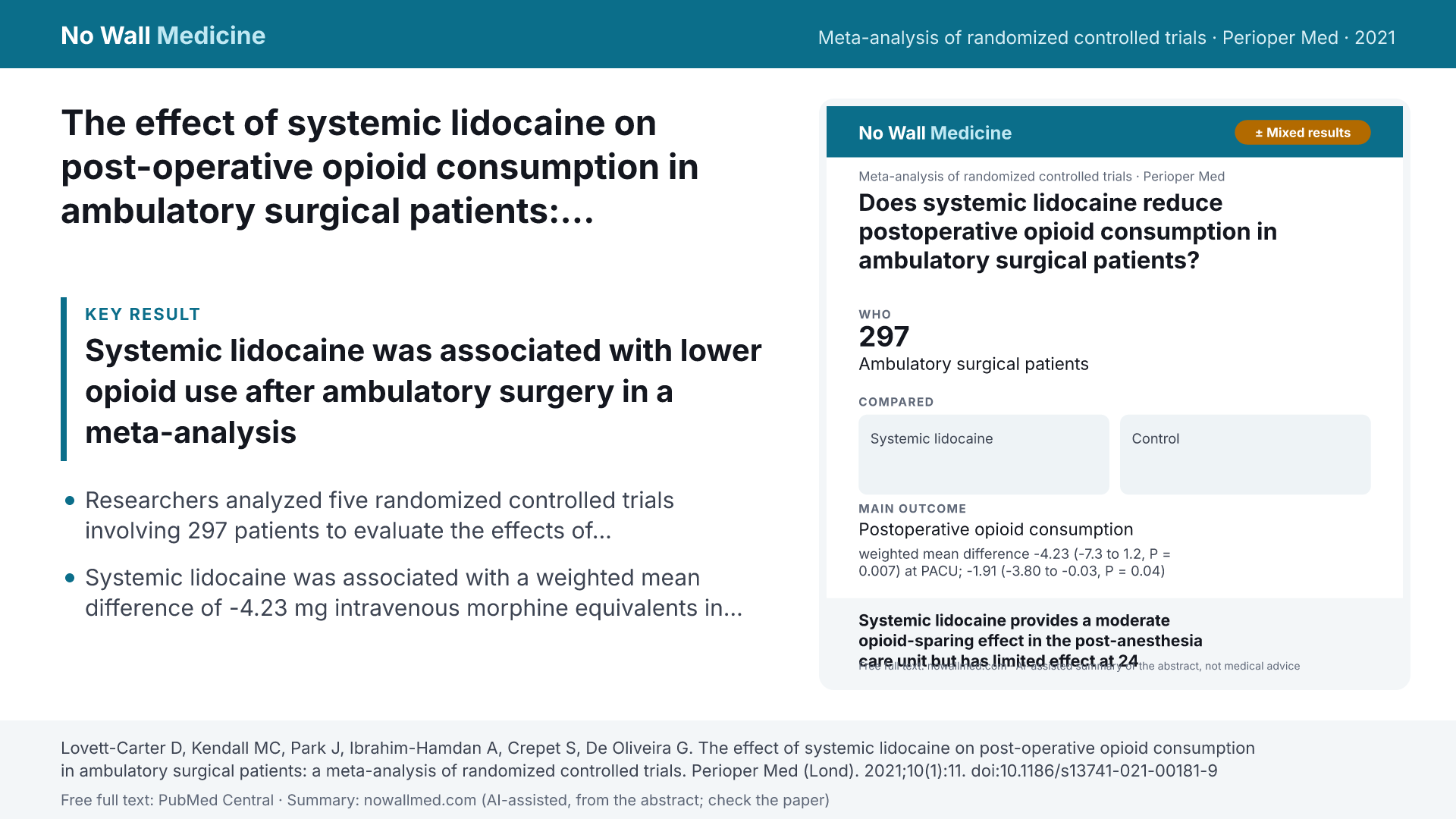
Headline, design, result, key points, caveat and citation as plain text.
Cite this article
Lovett-Carter D, Kendall MC, Park J, Ibrahim-Hamdan A, Crepet S, De Oliveira G. The effect of systemic lidocaine on post-operative opioid consumption in ambulatory surgical patients: a meta-analysis of randomized controlled trials. Perioper Med (Lond). 2021;10(1):11. doi:10.1186/s13741-021-00181-9
Spotted a mistake? Suggest a correction