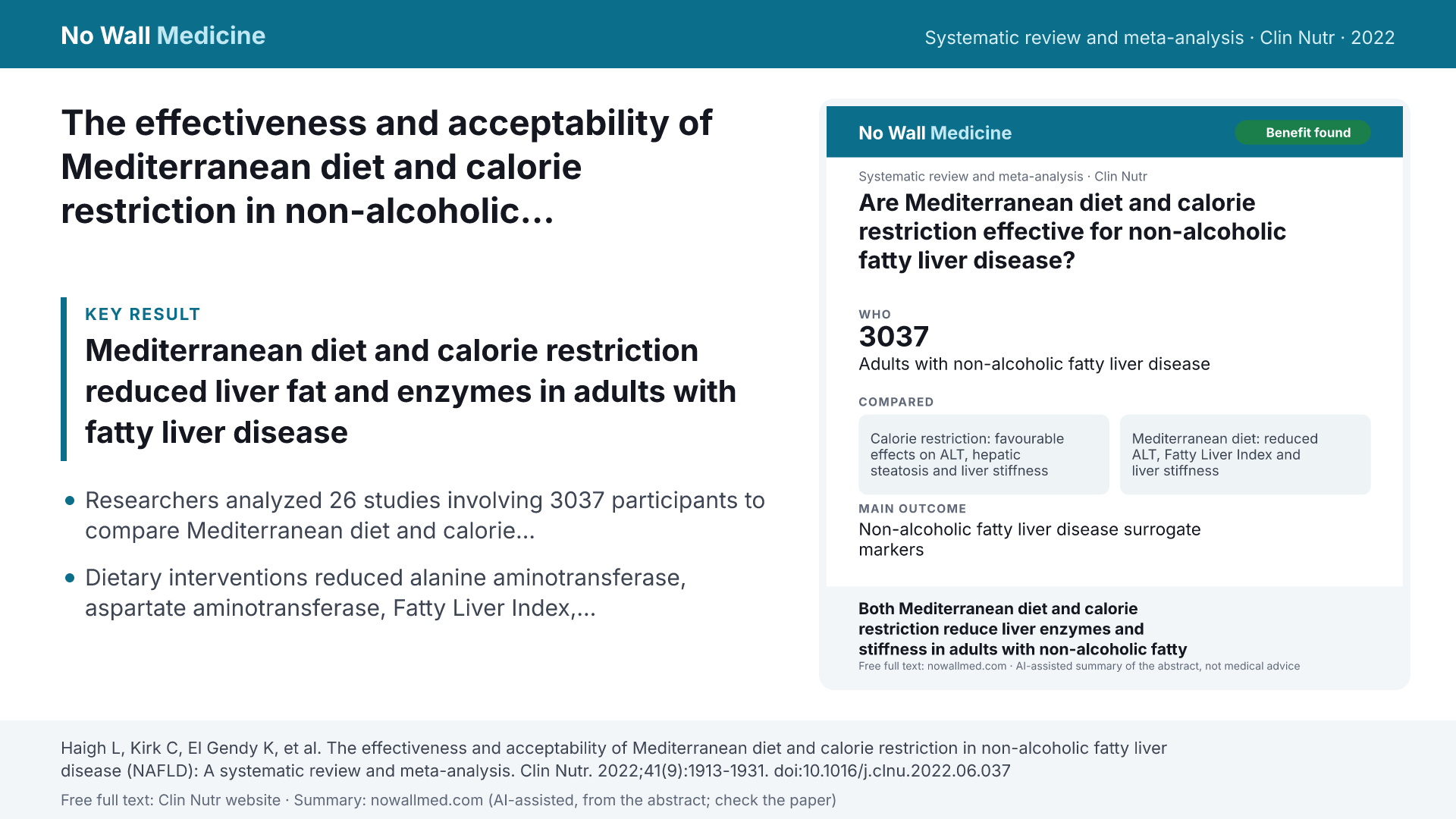
Mediterranean diet and calorie restriction reduced liver fat and enzymes in adults with fatty liver disease
The effectiveness and acceptability of Mediterranean diet and calorie restriction in non-alcoholic fatty liver disease (NAFLD): A systematic review and meta-analysis
Systematic review and meta-analysisBenefit found
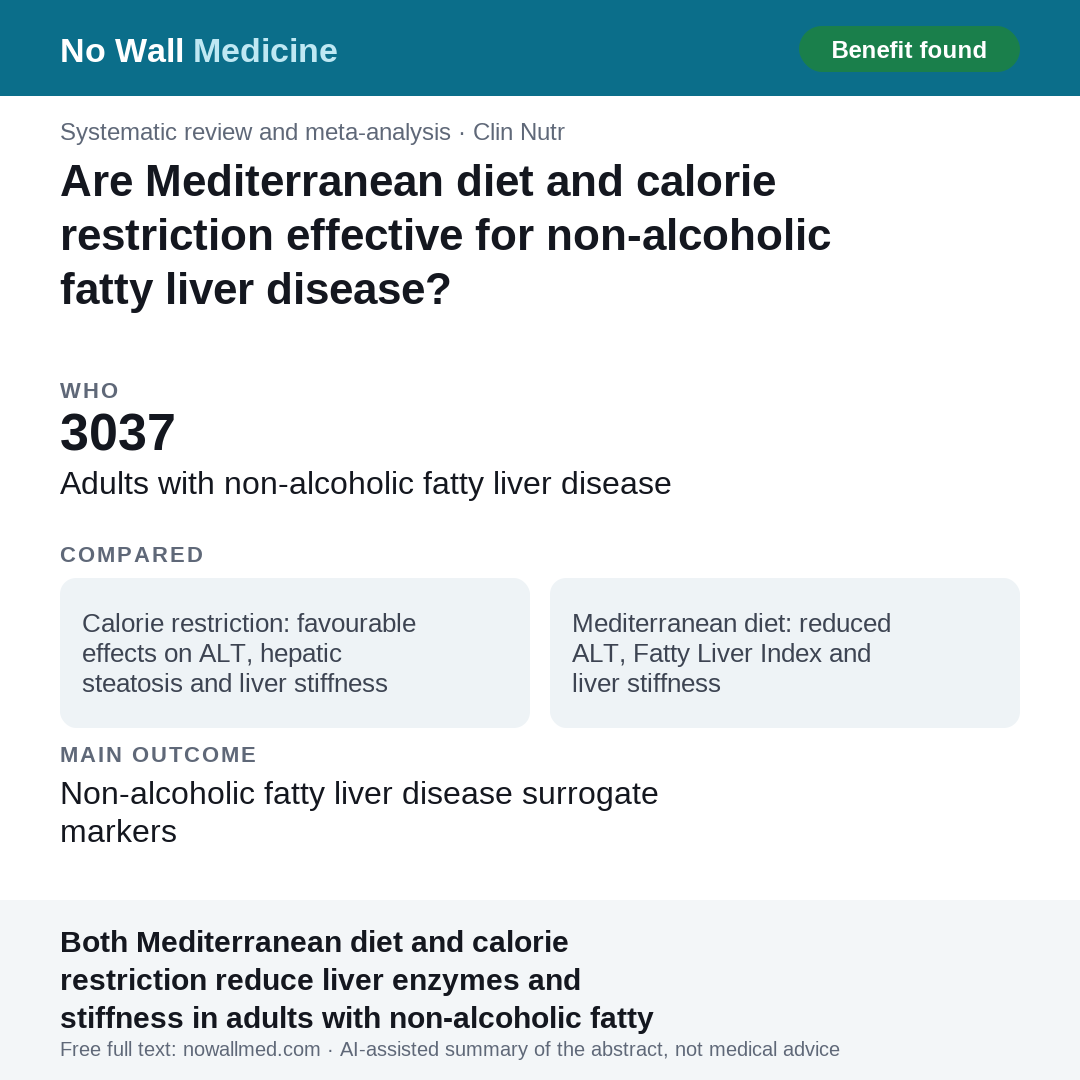
Are Mediterranean diet and calorie restriction effective for non-alcoholic fatty liver disease?
Who
3037
Adults with non-alcoholic fatty liver disease
Compared
Calorie restriction: favourable effects on ALT, hepatic steatosis and liver stiffness
Mediterranean diet: reduced ALT, Fatty Liver Index and liver stiffness
Main outcome
Non-alcoholic fatty liver disease surrogate markers
Bottom line: Both Mediterranean diet and calorie restriction reduce liver enzymes and stiffness in adults with non-alcoholic fatty liver disease.
Limitation: Studies were heterogeneous regarding intervention components, assessment of liver status and diet outcomes.
Clin Nutr · 2022-07-02Download image
Clinical question: Are Mediterranean diet and calorie restriction effective for non-alcoholic fatty liver disease?
Key points
- Researchers analyzed 26 studies involving 3037 participants to compare Mediterranean diet and calorie restriction interventions for non-alcoholic fatty liver disease.
- Dietary interventions reduced alanine aminotransferase, aspartate aminotransferase, Fatty Liver Index, hepatic steatosis, and liver stiffness.
- Calorie restriction showed a dose-response relationship with liver function and weight loss, while the Mediterranean diet reduced alanine aminotransferase, Fatty Liver Index, and liver stiffness.
Limitation the authors note: Further studies are needed to robustly evaluate the effects of interventions on dietary intake, acceptability, sustainability, quality of life, and other patient-related outcomes.
Headline and key points written with AI from the paper’s abstract, with every number checked against it. Read the paper before relying on them.
Was this summary helpful?
Subject terms
Headline, design, result, key points, caveat and citation as plain text.
Cite this article
Haigh L, Kirk C, El Gendy K, et al. The effectiveness and acceptability of Mediterranean diet and calorie restriction in non-alcoholic fatty liver disease (NAFLD): A systematic review and meta-analysis. Clin Nutr. 2022. doi:10.1016/j.clnu.2022.06.037
Spotted a mistake? Suggest a correction