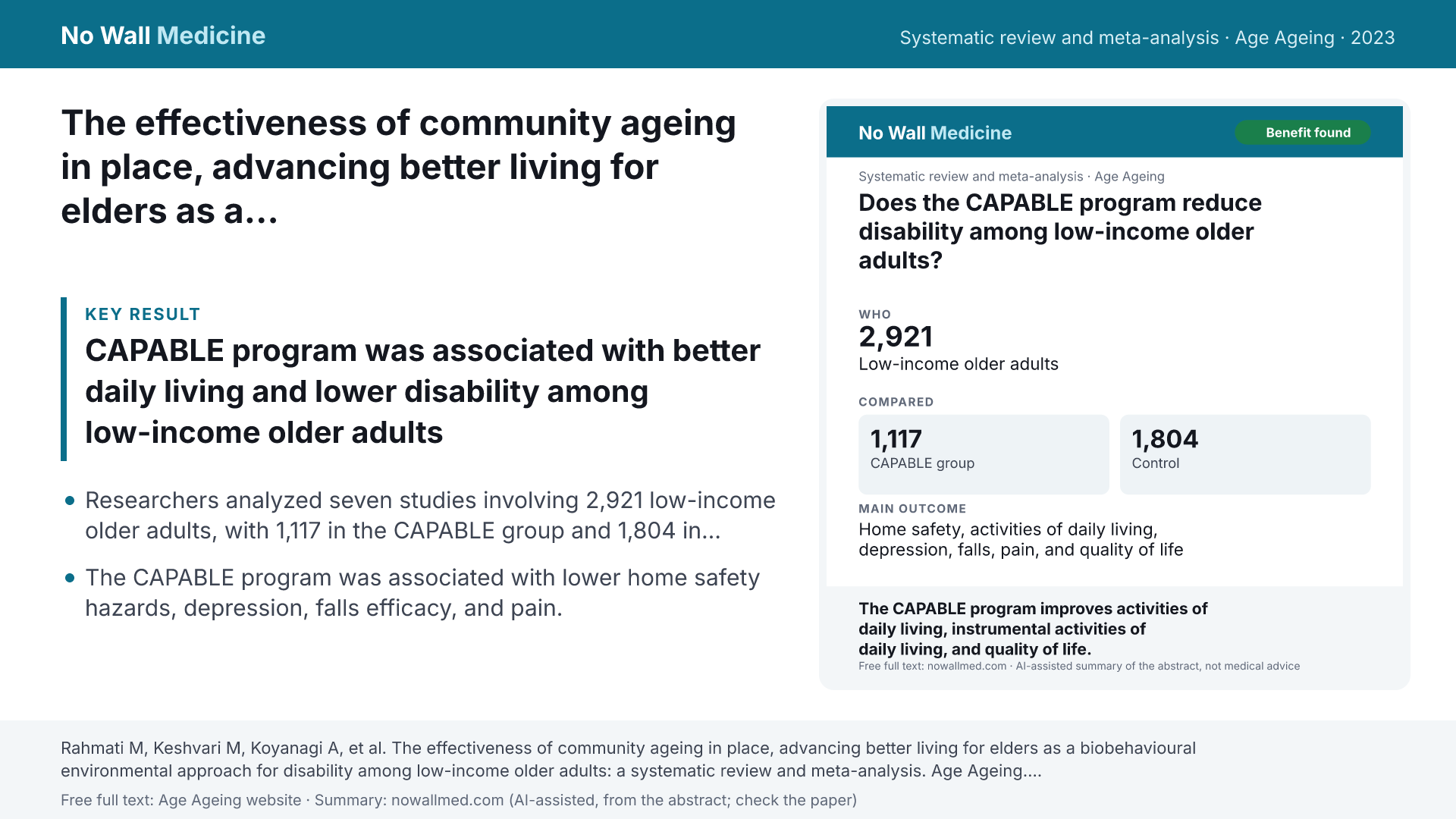
CAPABLE program was associated with better daily living and lower disability among low-income older adults
The effectiveness of community ageing in place, advancing better living for elders as a biobehavioural environmental approach for disability among low-income older adults: a systematic review and meta-analysis
Systematic review and meta-analysisBenefit found
Does the CAPABLE program reduce disability among low-income older adults?
Who
2,921
Low-income older adults
Compared
1,117CAPABLE group
1,804Control
Main outcome
Home safety, activities of daily living, depression, falls, pain, and quality of life
Bottom line: The CAPABLE program improves activities of daily living, instrumental activities of daily living, and quality of life.
Age Ageing · 2023-04-20 · Save PNG
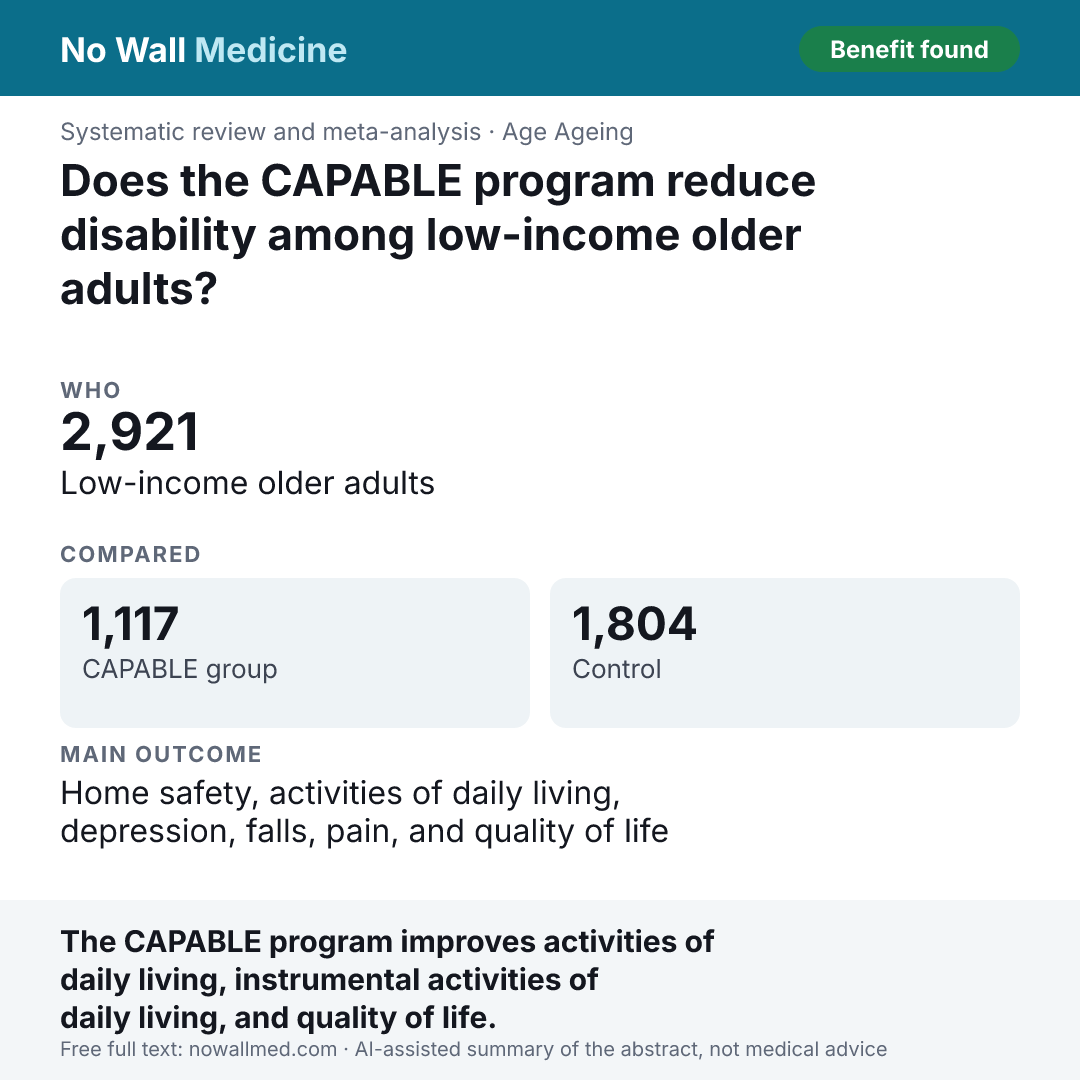
Clinical question: Does the CAPABLE program reduce disability among low-income older adults?
Why it matters: The efficacy of the CAPABLE biobehavioural environmental approach on disability outcomes for low-income older adults was not clearly established.
Key points
- Researchers analyzed seven studies involving 2,921 low-income older adults, with 1,117 in the CAPABLE group and 1,804 in a control group.
- The CAPABLE program was associated with lower home safety hazards, depression, falls efficacy, and pain.
- The program was also associated with improvements in activities of daily living, instrumental activities of daily living, and quality of life compared to controls.
Headline and key points written with AI from the paper’s abstract, with every number checked against it. Read the paper before relying on them.
Was this summary helpful?
Subject terms
Headline, design, result, key points, caveat and citation as plain text.
Cite this article
Rahmati M, Keshvari M, Koyanagi A, et al. The effectiveness of community ageing in place, advancing better living for elders as a biobehavioural environmental approach for disability among low-income older adults: a systematic review and meta-analysis. Age Ageing. 2023;52(4). doi:10.1093/ageing/afad053
Spotted a mistake? Suggest a correction