Apps with personalized exercise videos were linked to better physical function and exercise confidence
The Effectiveness of Digital Apps Providing Personalized Exercise Videos: Systematic Review With Meta-Analysis
Systematic review with meta-analysisBenefit found
Do digital apps providing personalized exercise videos improve rehabilitation outcomes?
Who
1050
People with short- and long-term disabling conditions
Compared
Personalized video exercise apps
Control
Main outcome
functional capacity
Result: standardized mean difference 0.35 (95% CI 0.19-0.51)
Bottom line: Personalized video exercise apps significantly improved physical function and confidence in exercise performance, though evidence quality was low.
Limitation: All included studies had a high overall risk of bias and evidence quality was low.
J Med Internet Res · 2023-07-13Download image
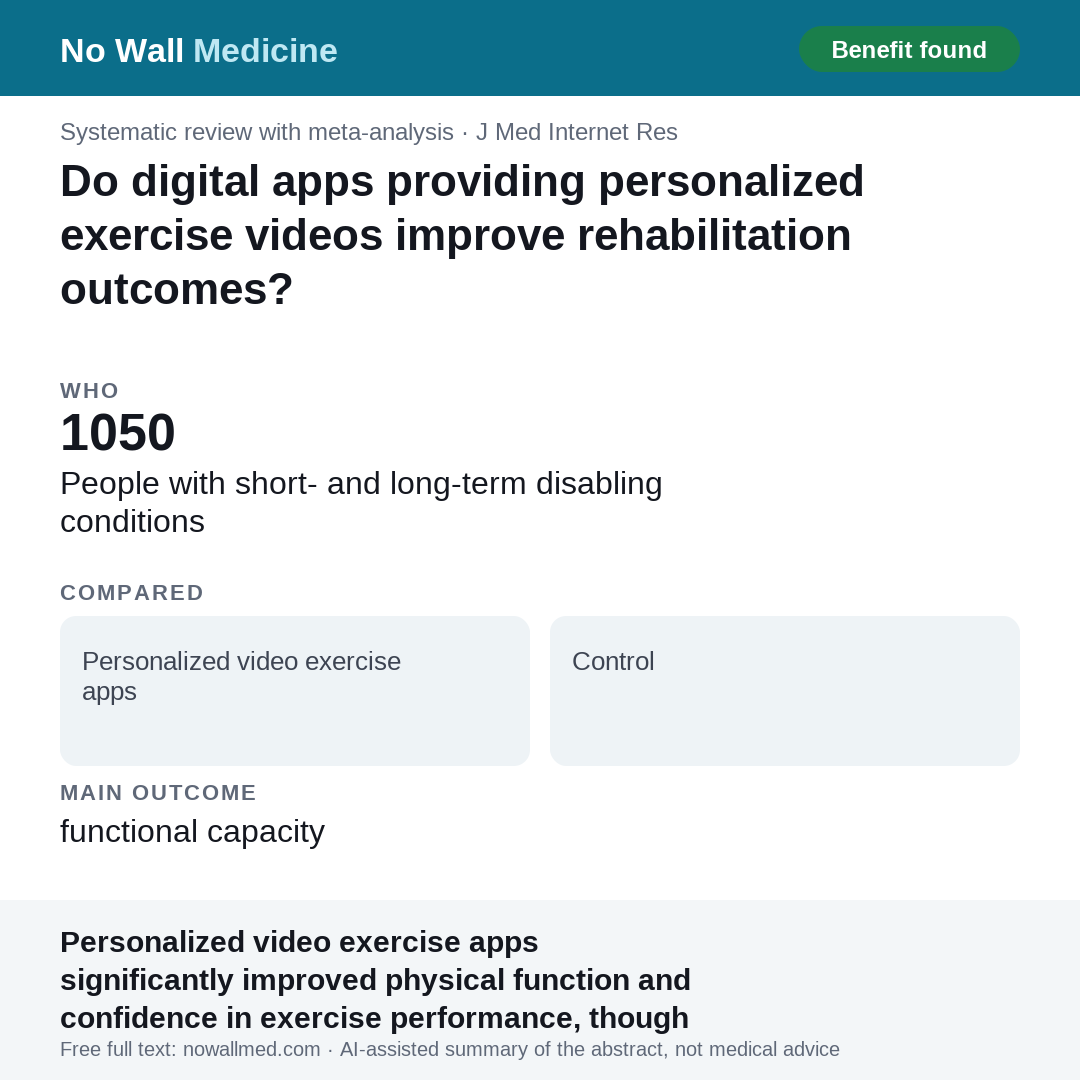
Clinical question: Do digital apps providing personalized exercise videos improve rehabilitation outcomes?
Why it matters: It was unknown if digital applications providing personalized video exercises effectively support rehabilitation for people with short- or long-term disabling conditions.
Key points
- Researchers analyzed 10 randomized controlled trials involving 1050 participants, including 906 people with musculoskeletal disorders and 144 with neurological disorders.
- Low-quality evidence suggested these apps were associated with a small to moderate improvement in physical function (SMD 0.35, 95% CI 0.19-0.51) and confidence (SMD 0.67, 95% CI 0.37-0.96).
- The apps were not linked to changes in the rate of adverse events, and effects on quality of life and adherence remained uncertain.
Limitation the authors note: All included studies had a high overall risk of bias.
Headline and key points written with AI from the paper’s abstract, with every number checked against it. Read the paper before relying on them.
Was this summary helpful?
Subject terms
Cite this article
Davergne T, Meidinger P, Dechartres A, Gossec L. The Effectiveness of Digital Apps Providing Personalized Exercise Videos: Systematic Review With Meta-Analysis. J Med Internet Res. 2023. doi:10.2196/45207
Spotted a mistake? Suggest a correction
Top studies every Monday
The week’s key trials and guidelines in your specialties, plus any topics you follow. By email, free.
Get the weekly digest