Wearable electronic device programs improved physical activity and quality of life in cancer survivors
The Effectiveness of Wearable Electronic Device System-Supported Physical Activity Programs for Cancer Survivors: Meta-Analysis of Randomized Controlled Trials
Meta-analysis of 46 randomized controlled trialsBenefit found
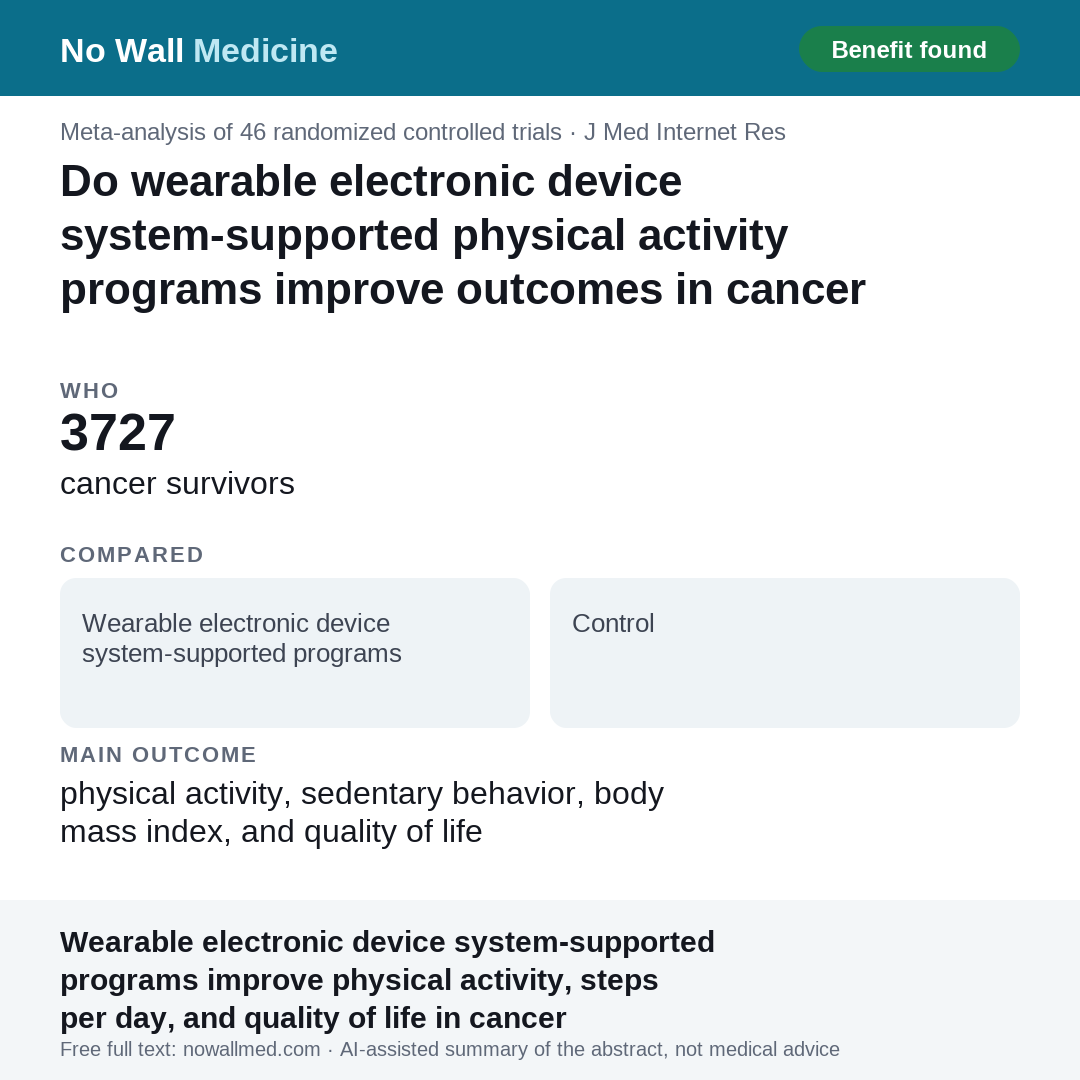
Do wearable electronic device system-supported physical activity programs improve outcomes in cancer survivors?
Who
3727
cancer survivors
Compared
Wearable electronic device system-supported programs
Control
Main outcome
physical activity, sedentary behavior, body mass index, and quality of life
Result: SMD 0.66 (95% CI 0.47-0.86) for moderate-to-vigorous-intensity physical activity
Bottom line: Wearable electronic device system-supported programs improve physical activity, steps per day, and quality of life in cancer survivors.
J Med Internet Res · 2025-08-14Download image
Clinical question: Do wearable electronic device system-supported physical activity programs improve outcomes in cancer survivors?
Why it matters: Existing findings regarding the use of wearable electronic device systems to promote physical activity and quality of life in cancer survivors remain modest and inconclusive.
Key points
- This meta-analysis of 46 randomized controlled trials involving 3727 patients found that wearable electronic device systems improved moderate-to-vigorous physical activity, steps per day, and quality of life.
- Programs using two or more tool formats or lasting 12 weeks or longer were effective for improving physical activity and quality of life.
- The interventions showed no significant effects on body mass index or sedentary behavior.
Headline and key points written with AI from the paper’s abstract, with every number checked against it. Read the paper before relying on them.
Was this summary helpful?
Subject terms
Cite this article
Wang Z, Li Y, Wang Q, Su Y. The Effectiveness of Wearable Electronic Device System-Supported Physical Activity Programs for Cancer Survivors: Meta-Analysis of Randomized Controlled Trials. J Med Internet Res. 2025. doi:10.2196/74347
Spotted a mistake? Suggest a correction
Top studies every Monday
The week’s key trials and guidelines in your specialties, plus any topics you follow. By email, free.
Get the weekly digest