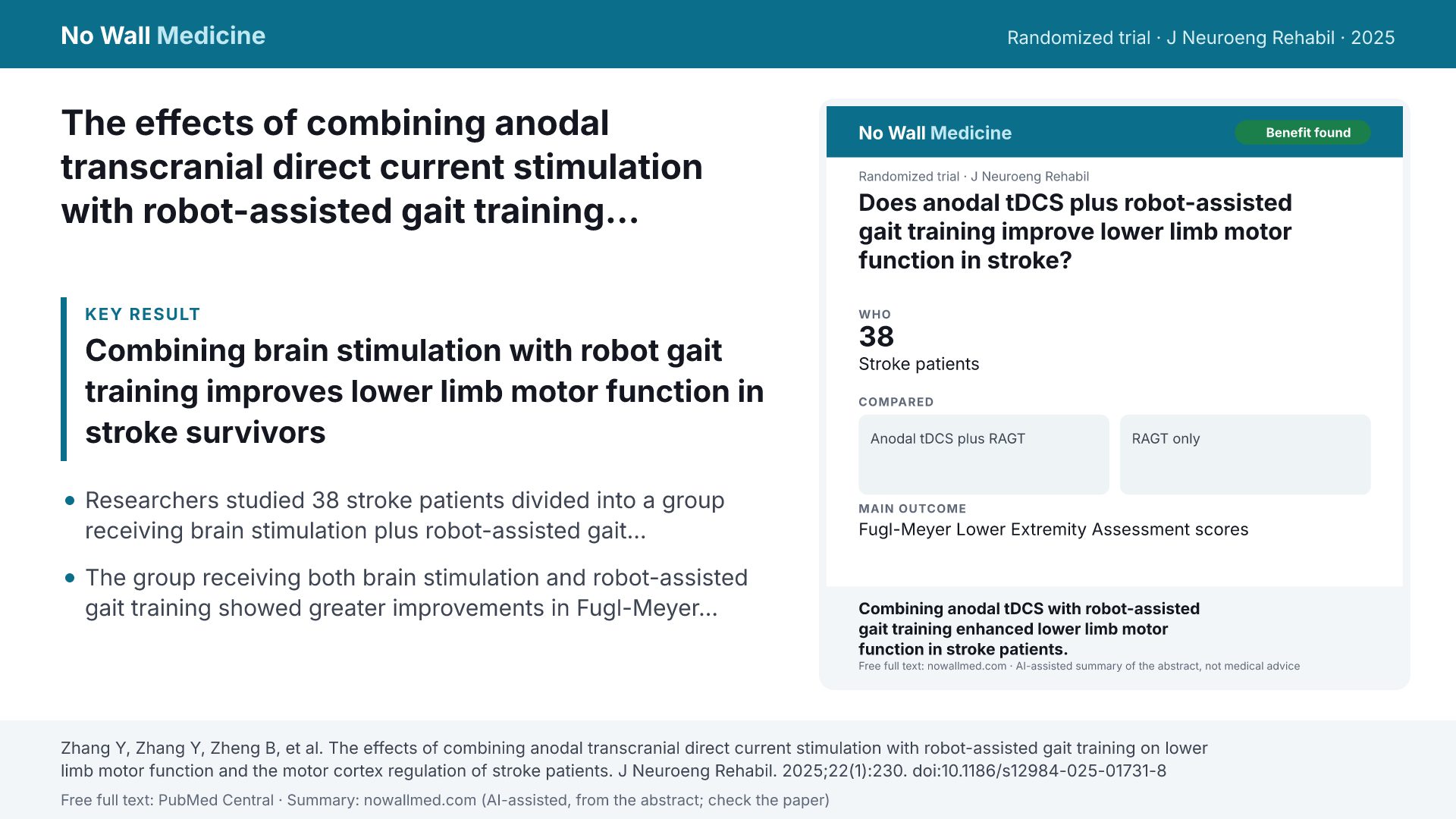
Combining brain stimulation with robot gait training improves lower limb motor function in stroke survivors
The effects of combining anodal transcranial direct current stimulation with robot-assisted gait training on lower limb motor function and the motor cortex regulation of stroke patients
Why it matters: The therapeutic effect and the brain mechanisms of combining transcranial direct current stimulation with robot-assisted gait training for stroke survivors remain unclear.
Key points
- Researchers studied 38 stroke patients divided into a group receiving brain stimulation plus robot-assisted gait training and a group receiving only robot-assisted gait training.
- The group receiving both brain stimulation and robot-assisted gait training showed greater improvements in Fugl-Meyer Lower Extremity Assessment scores compared to the control group.
- The combined therapy was associated with strengthened functional connectivity between the primary motor cortex and the pre-motor/supplementary motor cortex areas.
Headline and key points written with AI from the paper’s abstract, with every number checked against it. Read the paper before relying on them.
Was this summary helpful?
Subject terms
Cite this article
Zhang Y, Zhang Y, Zheng B, et al. The effects of combining anodal transcranial direct current stimulation with robot-assisted gait training on lower limb motor function and the motor cortex regulation of stroke patients. J Neuroeng Rehabil. 2025. doi:10.1186/s12984-025-01731-8
Spotted a mistake? Suggest a correction