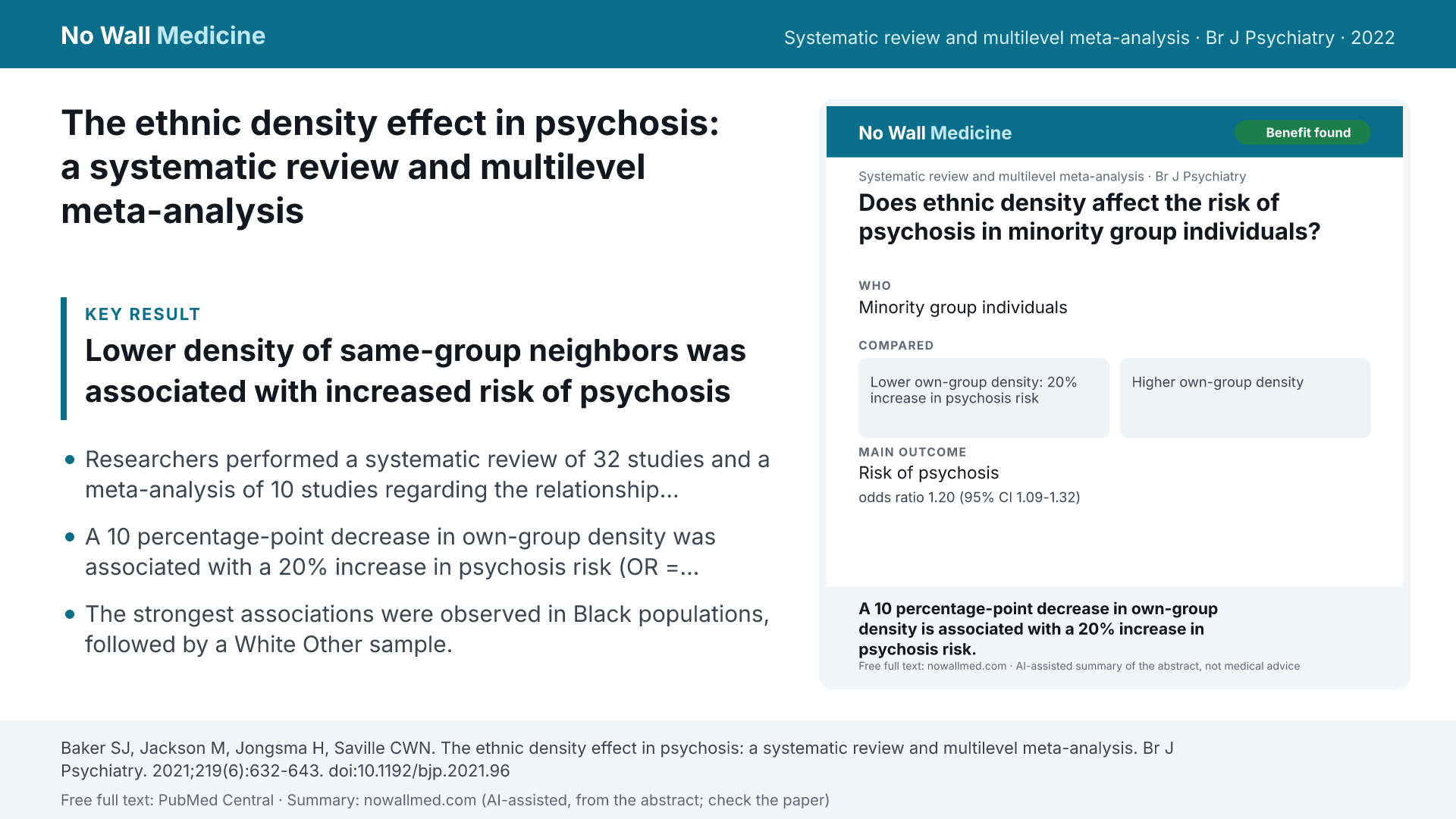
Lower density of same-group neighbors was associated with increased risk of psychosis
The ethnic density effect in psychosis: a systematic review and multilevel meta-analysis
Systematic review and multilevel meta-analysisBenefit found
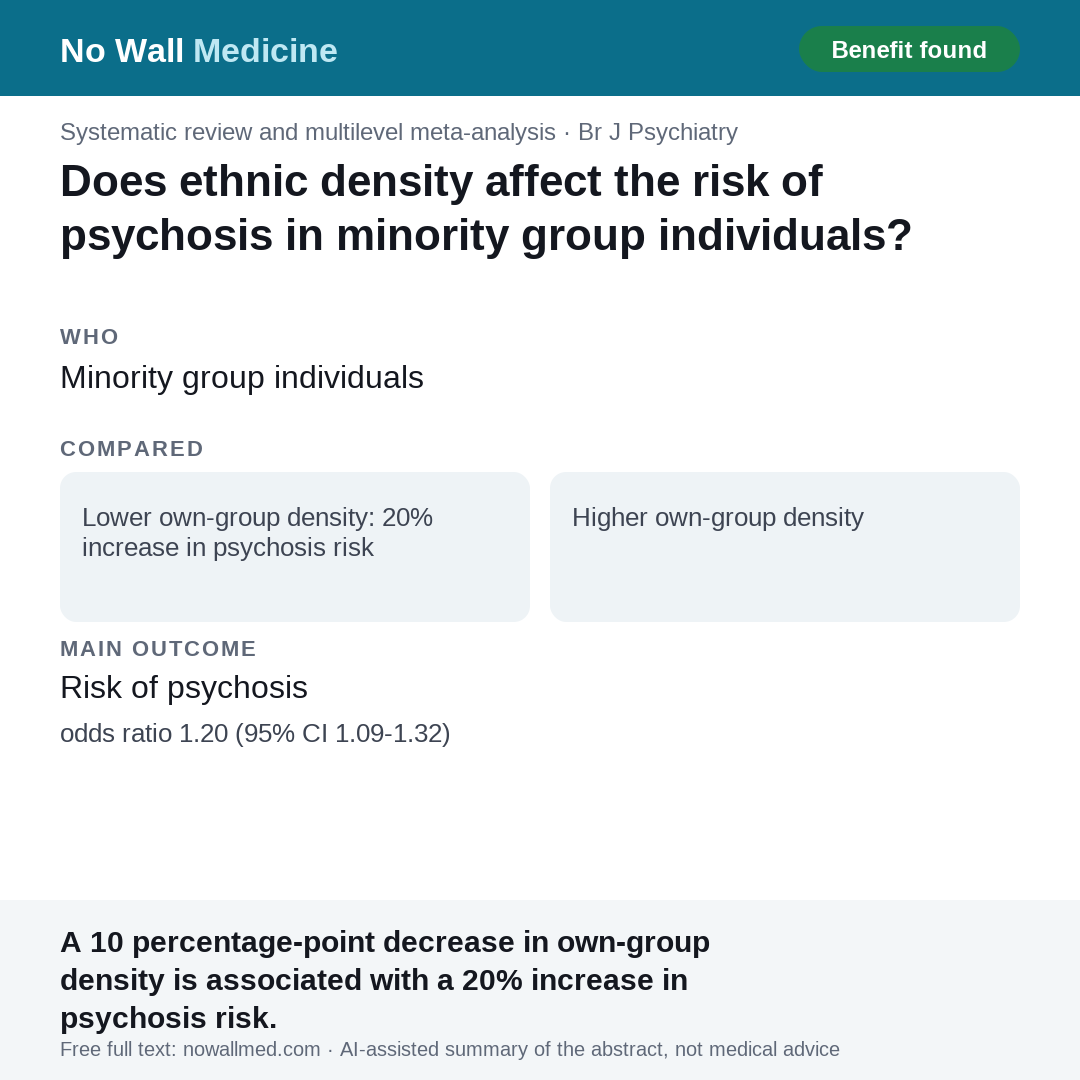
Does ethnic density affect the risk of psychosis in minority group individuals?
Who
Minority group individuals
Compared
Lower own-group density: 20% increase in psychosis risk
Higher own-group density
Main outcome
Risk of psychosis
Result: odds ratio 1.20 (95% CI 1.09-1.32)
Bottom line: A 10 percentage-point decrease in own-group density is associated with a 20% increase in psychosis risk.
Limitation: Greater heterogeneity was observed when specific minority groups were assessed.
Br J Psychiatry · 2022-01-20Download image
Clinical question: Does ethnic density affect the risk of psychosis in minority group individuals?
Why it matters: Evidence is conflicting regarding whether the relationship between neighborhood ethnic density and psychosis risk differs between various minority groups.
Key points
- Researchers performed a systematic review of 32 studies and a meta-analysis of 10 studies regarding the relationship between ethnic density and psychosis.
- A 10 percentage-point decrease in own-group density was associated with a 20% increase in psychosis risk (OR = 1.20, 95% CI 1.09-1.32, P < 0.001).
- The strongest associations were observed in Black populations, followed by a White Other sample.
Headline and key points written with AI from the paper’s abstract, with every number checked against it. Read the paper before relying on them.
Was this summary helpful?
Subject terms
Cite this article
Baker SJ, Jackson M, Jongsma H, Saville CWN. The ethnic density effect in psychosis: a systematic review and multilevel meta-analysis. Br J Psychiatry. 2022. doi:10.1192/bjp.2021.96
Spotted a mistake? Suggest a correction