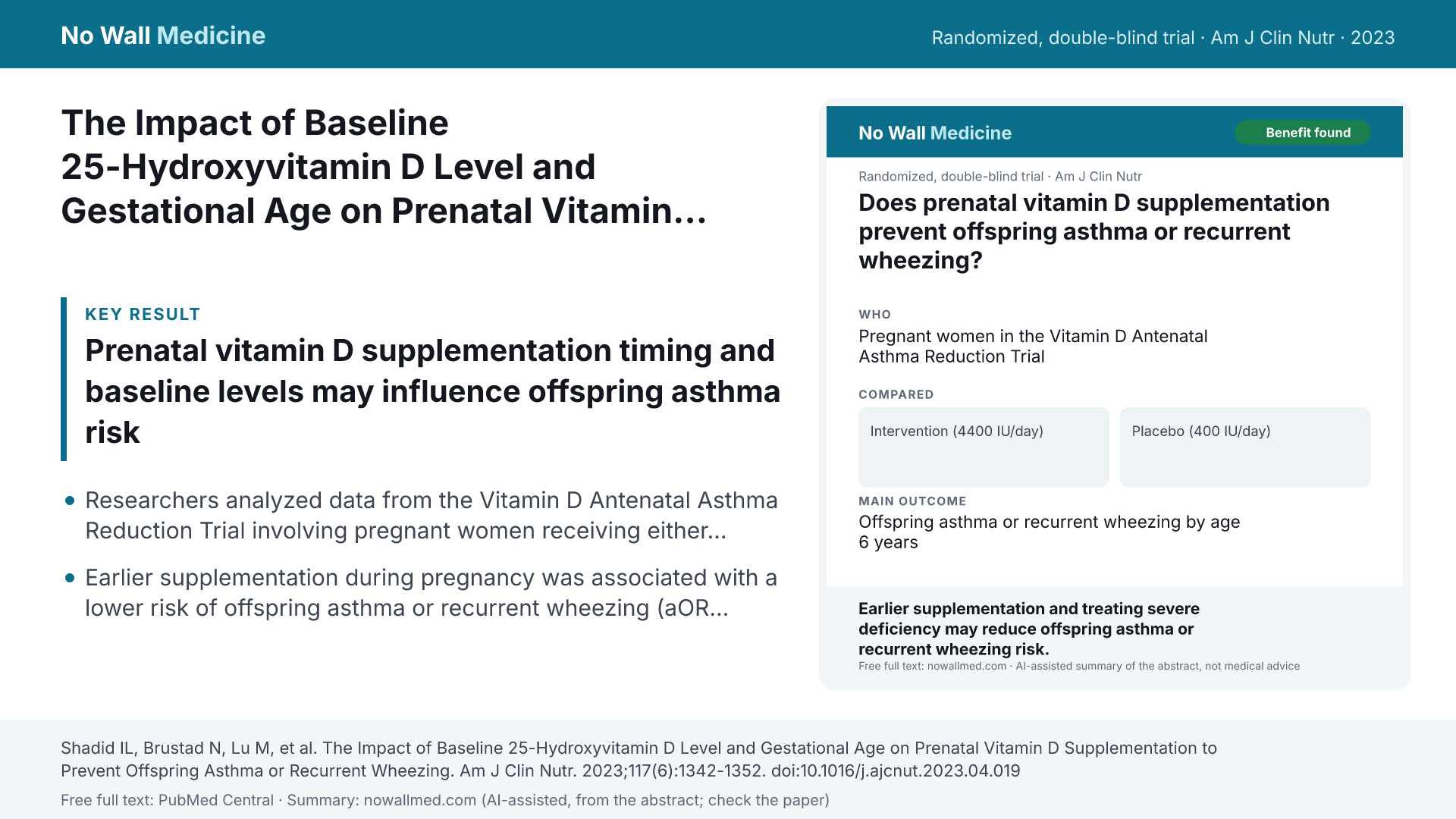
The Impact of Baseline 25-Hydroxyvitamin D Level and Gestational Age on Prenatal Vitamin D Supplementation to Prevent Offspring Asthma or Recurrent Wheezing
Key result: Prenatal vitamin D supplementation timing and baseline levels may influence offspring asthma risk
Key points
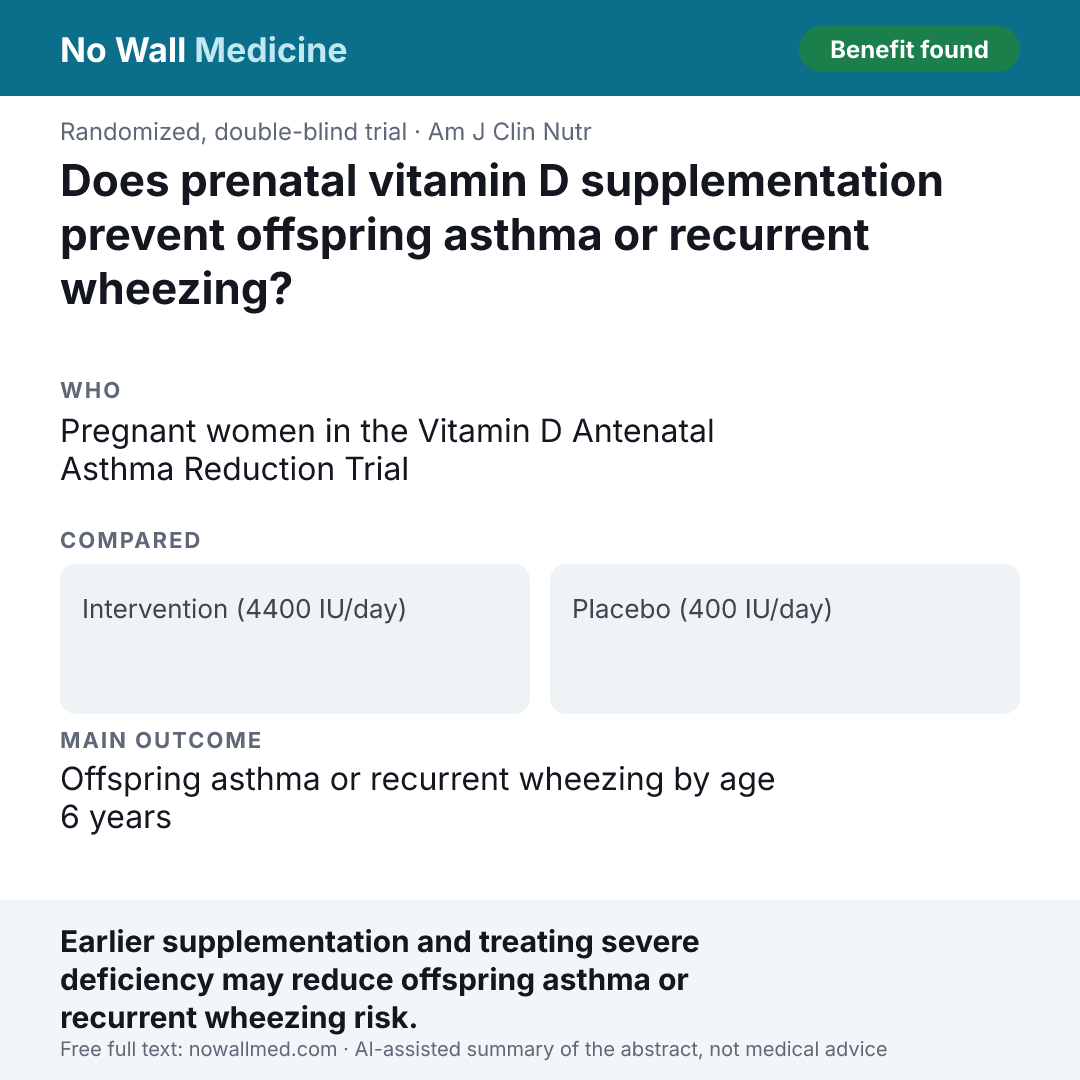
- Researchers analyzed data from the Vitamin D Antenatal Asthma Reduction Trial involving pregnant women receiving either 4400 IU or 400 IU of vitamin D daily.
- Earlier supplementation during pregnancy was associated with a lower risk of offspring asthma or recurrent wheezing (aOR = 0.85; CI: 0.76, 0.95), especially when started at 9-12 weeks (aOR = 0.45; CI: 0.24, 0.82).
- The most severe vitamin D deficiency group (25(OH)D < 12 ng/mL) showed a trend toward reduced asthma or recurrent wheezing (aOR = 0.48; CI: 0.17, 1.34).
Why it matters: Evidence from randomized trials regarding whether prenatal vitamin D supplementation prevents asthma or recurrent wheezing in offspring remains inconclusive.
Discussion prompts
- Would these patients look like yours? Who was left out?
- Is the main outcome one that matters to patients?
- Is the difference large enough to change what you do?
Cite: Shadid IL, Brustad N, Lu M, et al. The Impact of Baseline 25-Hydroxyvitamin D Level and Gestational Age on Prenatal Vitamin D Supplementation to Prevent Offspring Asthma or Recurrent Wheezing. Am J Clin Nutr. 2023;117(6):1342-1352. doi:10.1016/j.ajcnut.2023.04.019
Free full text: PubMed Central · Summary and visual abstract: nowallmed.com/a/the-impact-of-baseline-25-hydroxyvitamin-d-level-and-gestational-age-e98h3t/ (AI-assisted from the abstract; check the paper before relying on it).