Microfluidics sperm processing shows similar embryo euploidy rates compared to density gradient centrifugation
The impact of microfluidics sperm processing on blastocyst euploidy rates compared with density gradient centrifugation: a sibling oocyte double-blinded prospective randomized clinical trial
Sibling oocyte randomized controlled trialNo clear difference
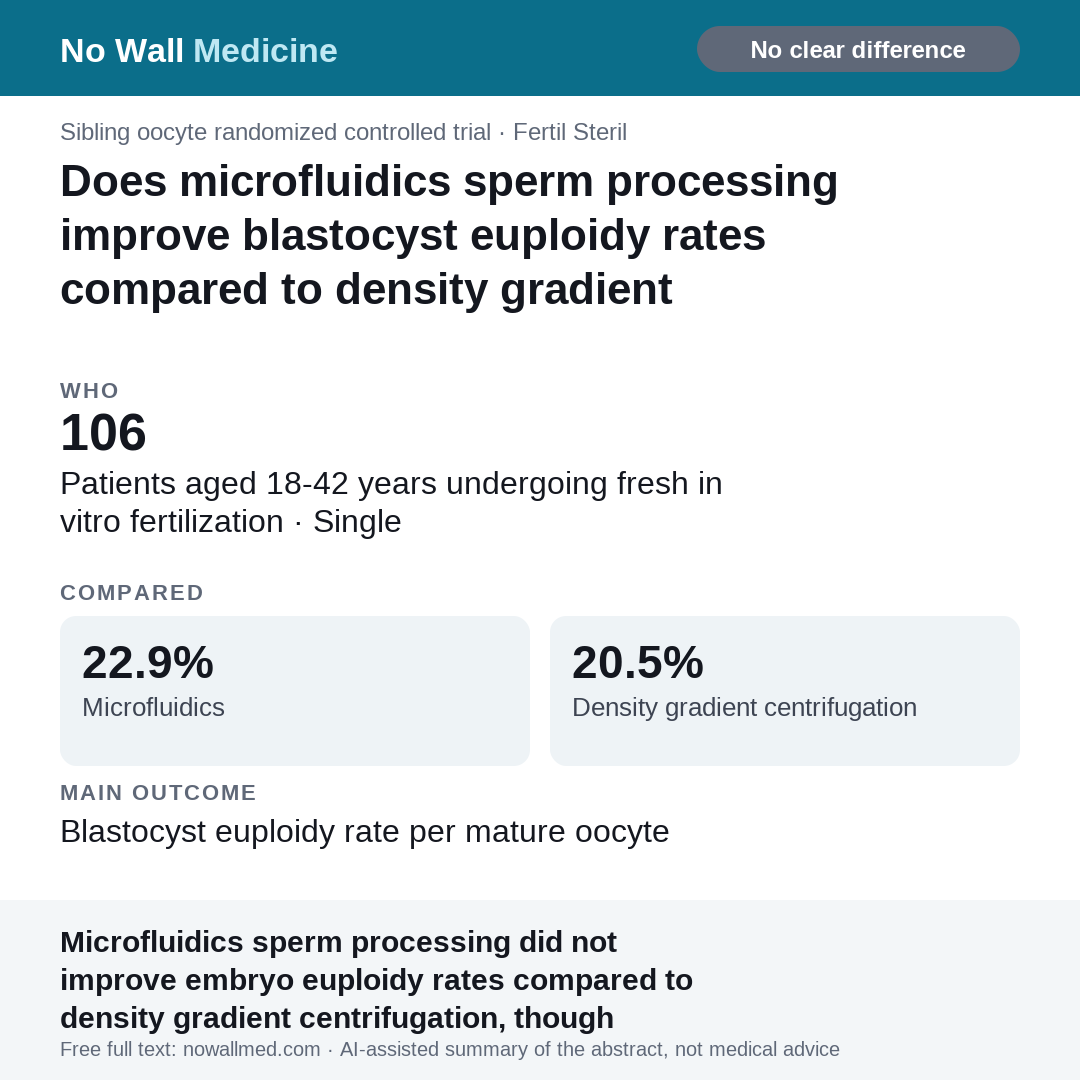
Does microfluidics sperm processing improve blastocyst euploidy rates compared to density gradient centrifugation?
Who
106
Patients aged 18-42 years undergoing fresh in vitro fertilization · Single university-affiliated infertility practice
Compared
22.9%Microfluidics
20.5%Density gradient centrifugation
Main outcome
Blastocyst euploidy rate per mature oocyte
Bottom line: Microfluidics sperm processing did not improve embryo euploidy rates compared to density gradient centrifugation, though fertilization rates were higher.
Limitation: The study was underpowered to detect differences in specific subgroups.
Fertil Steril · 2024-02-15Download image
Clinical question: Does microfluidics sperm processing improve blastocyst euploidy rates compared to density gradient centrifugation?
Why it matters: It is unknown if microfluidics sperm processing provides higher rates of chromosomally normal embryos compared to density gradient centrifugation in patients undergoing in vitro fertilization.
Key points
- Researchers studied 106 patients aged 18-42 years using 1,442 mature oocytes to compare microfluidics sperm processing with density gradient centrifugation, a standard sperm washing method.
- The blastocyst euploidy rate, or the percentage of embryos with the correct number of chromosomes, was 22.9% for microfluidics and 20.5% for density gradient centrifugation.
- The fertilization rate per mature oocyte injected was significantly higher in the microfluidics group at 76.0% compared to 69.9% in the density gradient centrifugation group.
Headline and key points written with AI from the paper’s abstract, with every number checked against it. Read the paper before relying on them.
Was this summary helpful?
Subject terms
Cite this article
Godiwala P, Kwieraga J, Almanza E, Neuber E, Grow D, Benadiva C. The impact of microfluidics sperm processing on blastocyst euploidy rates compared with density gradient centrifugation: a sibling oocyte double-blinded prospective randomized clinical trial. Fertil Steril. 2024. doi:10.1016/j.fertnstert.2024.02.021
Spotted a mistake? Suggest a correction
Top studies every Monday
The week’s key trials and guidelines in your specialties, plus any topics you follow. By email, free.
Get the weekly digest