"The Magic Glasses Philippines": a cluster randomised controlled trial of a health education package for the prevention of intestinal worm infections in schoolchildren
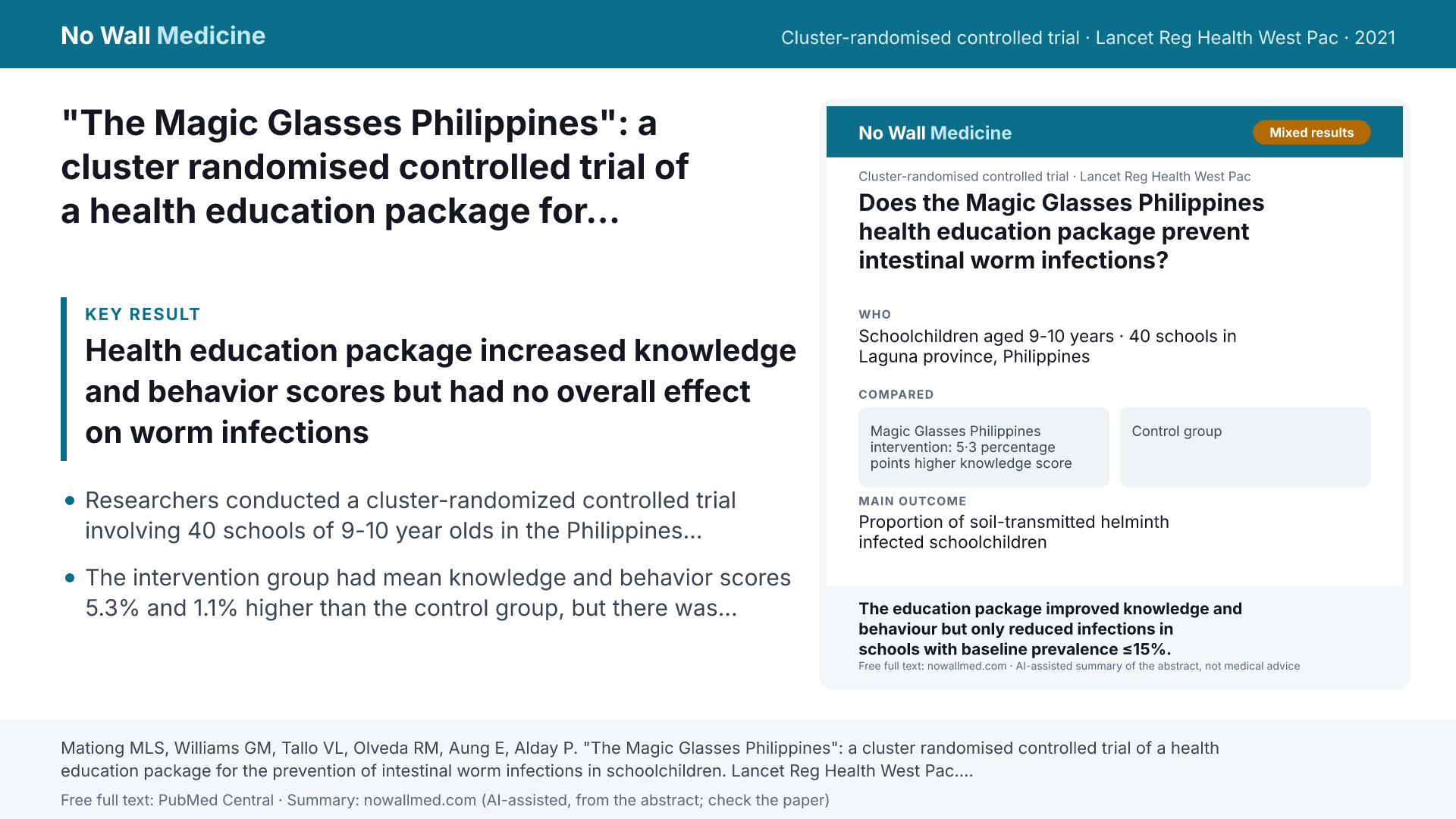
Key result: Health education package increased knowledge and behavior scores but had no overall effect on worm infections
Key points
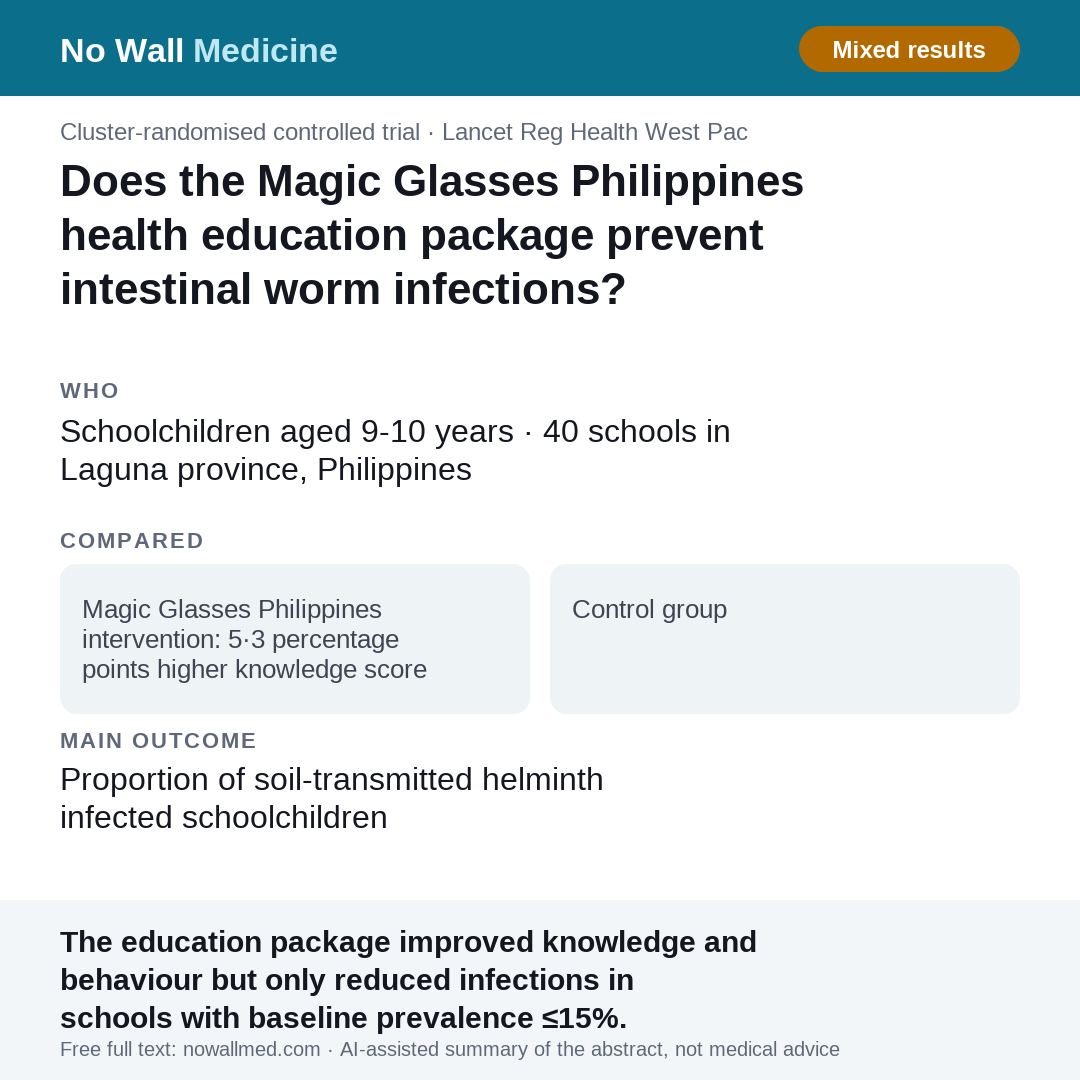
- Researchers conducted a cluster-randomized controlled trial involving 40 schools of 9-10 year olds in the Philippines to test a health education package for preventing soil-transmitted helminth infections.
- The intervention group had mean knowledge and behavior scores 5.3% and 1.1% higher than the control group, but there was no overall effect on any worm infection (aOR: 1.0; 95% CI: 0.8-1.3).
- A sub-group analysis showed a 60% reduction in the odds of any worm infection in schools where the baseline prevalence was ≤15% (aOR: 0.4; 95% CI: 0.2-0.7).
Why it matters: It was unknown if the 'Magic Glasses' health education package, which previously showed impact in China, would be effective for preventing soil-transmitted helminth infections in the Philippines.
Discussion prompts
- Would these patients look like yours? Who was left out?
- Is the main outcome one that matters to patients?
- Is the difference large enough to change what you do?
Cite: Mationg MLS, Williams GM, Tallo VL, Olveda RM, Aung E, Alday P. "The Magic Glasses Philippines": a cluster randomised controlled trial of a health education package for the prevention of intestinal worm infections in schoolchildren. Lancet Reg Health West Pac. 2021. doi:10.1016/j.lanwpc.2021.100312
Free full text: PubMed Central · Summary and visual abstract: nowallmed.com/a/the-magic-glasses-philippines-a-cluster-randomised-controlled-trial-10gte4a/ (AI-assisted from the abstract; check the paper before relying on it).