Meta-analysis identifies specific brain structure and function changes associated with adverse childhood experiences
The multimodal neuroimaging signatures and gene expression profiles for adverse childhood experiences
Meta-analysis of 63 studiesMixed results
Neurobiological signatures of adverse childhood experiences
Who
3549
adverse childhood experiences exposed individuals
Compared
ACEs exposed
unexposed controls
Main outcome
neurobiological signatures
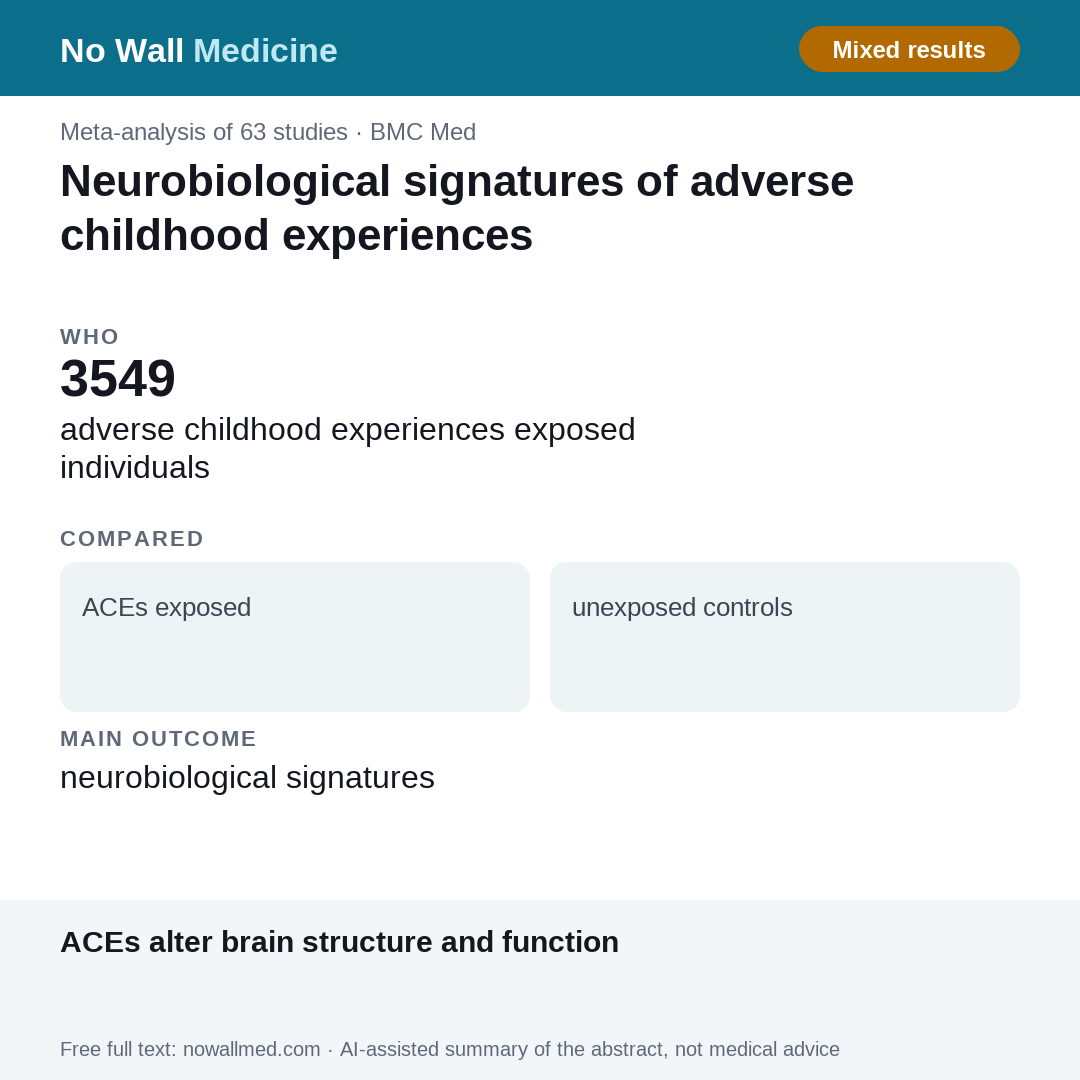
Bottom line: ACEs alter brain structure and function
BMC Med · 2025-10-08Download image
Why it matters: Identifying clear neurobiological signatures of adverse childhood experiences has been difficult due to small sample sizes, participant heterogeneity, and methodological variability.
Key points
- Researchers conducted a meta-analysis of 63 studies involving 3549 participants for functional analysis and 38 studies involving 2919 participants for structural analysis.
- Exposure to adverse childhood experiences was associated with increased amygdala activity, increased gray matter volume in the parahippocampal gyrus, and reduced gray matter volume in the inferior frontal gyrus and supramarginal gyrus.
- Structural brain changes were associated with the distribution of dopamine, serotonin, and GABA neurotransmitter systems.
Headline and key points written with AI from the paper’s abstract, with every number checked against it. Read the paper before relying on them.
Was this summary helpful?
Subject terms
Cite this article
Yu T, Zhao G, Sun Y, Lu Z, Liao Y, Yuan R. The multimodal neuroimaging signatures and gene expression profiles for adverse childhood experiences. BMC Med. 2025. doi:10.1186/s12916-025-04387-2
Spotted a mistake? Suggest a correction
Top studies every Monday
The week’s key trials and guidelines in your specialties, plus any topics you follow. By email, free.
Get the weekly digest