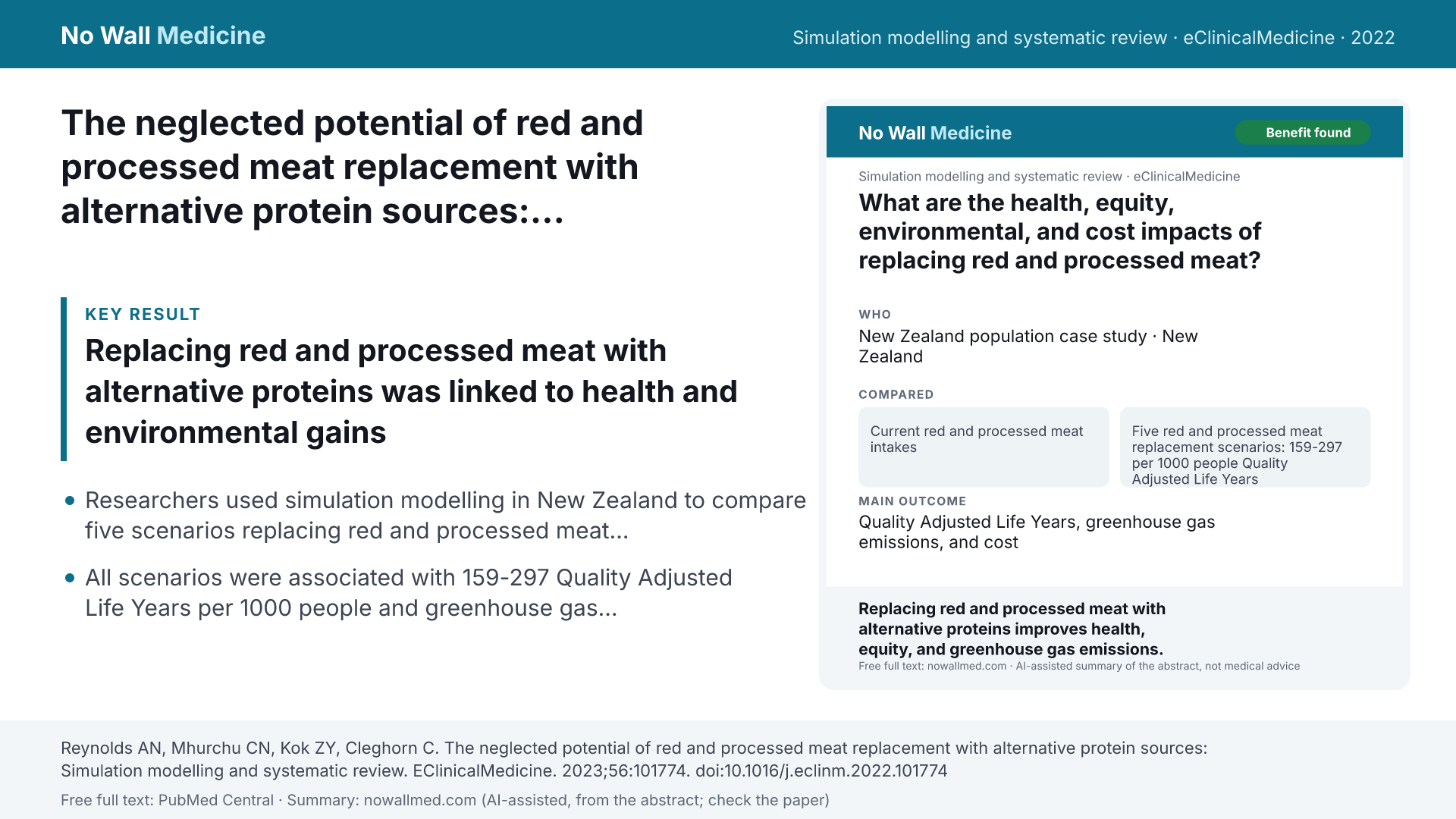
Replacing red and processed meat with alternative proteins was linked to health and environmental gains
The neglected potential of red and processed meat replacement with alternative protein sources: Simulation modelling and systematic review
Simulation modelling and systematic reviewBenefit found
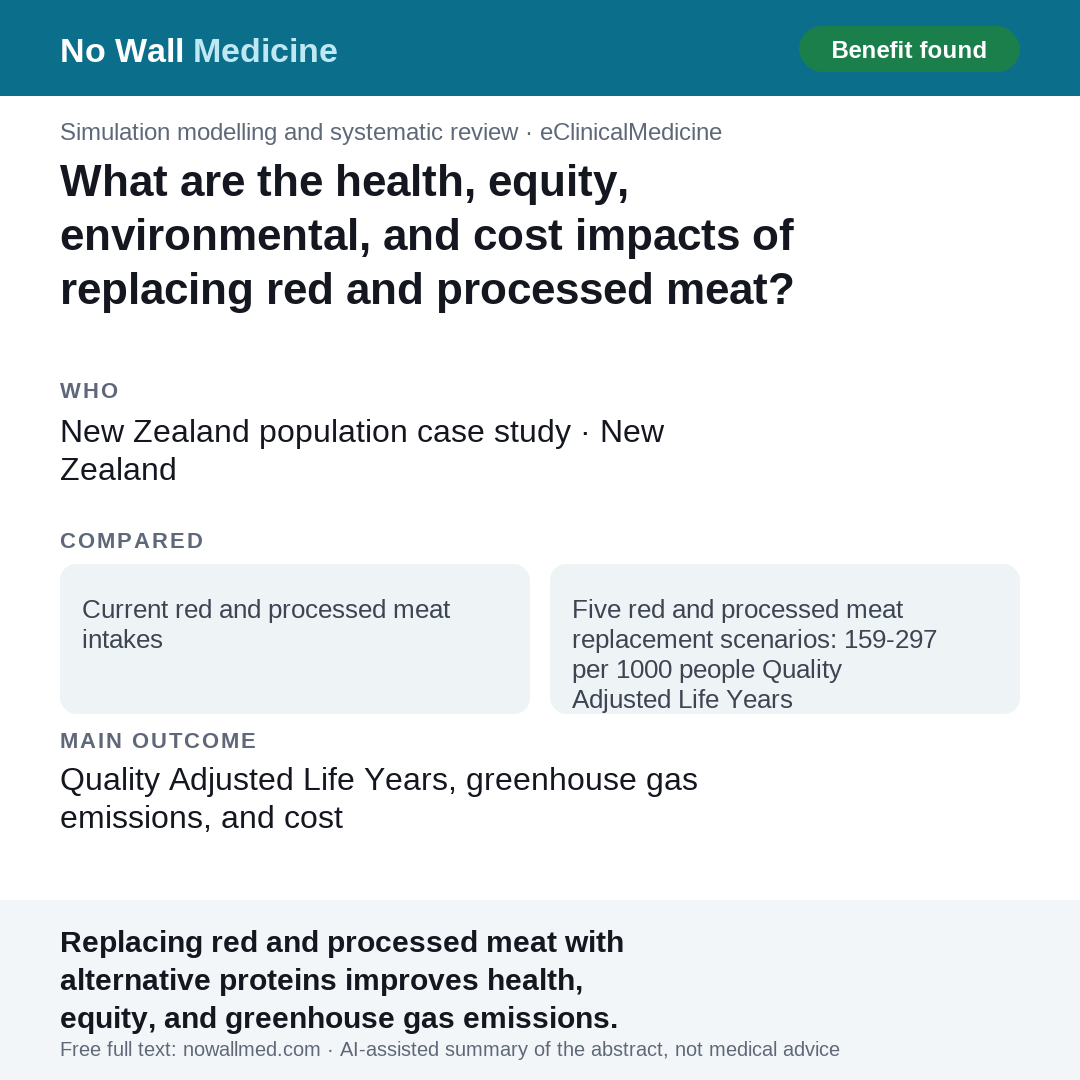
What are the health, equity, environmental, and cost impacts of replacing red and processed meat?
Who
New Zealand population case study · New Zealand
Compared
Current red and processed meat intakes
Five red and processed meat replacement scenarios: 159-297 per 1000 people Quality Adjusted Life Years
Main outcome
Quality Adjusted Life Years, greenhouse gas emissions, and cost
Bottom line: Replacing red and processed meat with alternative proteins improves health, equity, and greenhouse gas emissions.
Limitation: Evidence of real-world population strategies to achieve these benefits is currently lacking.
Funded by: Healthier Lives National Science Challenge
eClinicalMedicine · 2022-12-14Download image
Clinical question: What are the health, equity, environmental, and cost impacts of replacing red and processed meat?
Why it matters: It is unknown how different meat replacement strategies impact human health, equity, greenhouse gas emissions, and costs simultaneously.
Key points
- Researchers used simulation modelling in New Zealand to compare five scenarios replacing red and processed meat with plant-based alternatives, cellular meat, or dietary recommendations.
- All scenarios were associated with 159-297 Quality Adjusted Life Years per 1000 people and greenhouse gas emission reductions of 19-35%.
- Replacing meat with minimally-processed plant-based foods like legumes was associated with the greatest benefits for health, costs, and emissions.
Headline and key points written with AI from the paper’s abstract, with every number checked against it. Read the paper before relying on them.
Was this summary helpful?
Cite this article
Reynolds AN, Mhurchu CN, Kok ZY, Cleghorn C. The neglected potential of red and processed meat replacement with alternative protein sources: Simulation modelling and systematic review. eClinicalMedicine. 2022. doi:10.1016/j.eclinm.2022.101774
Spotted a mistake? Suggest a correction
Top studies every Monday
The week’s key trials and guidelines in your specialties, plus any topics you follow. By email, free.
Get the weekly digest