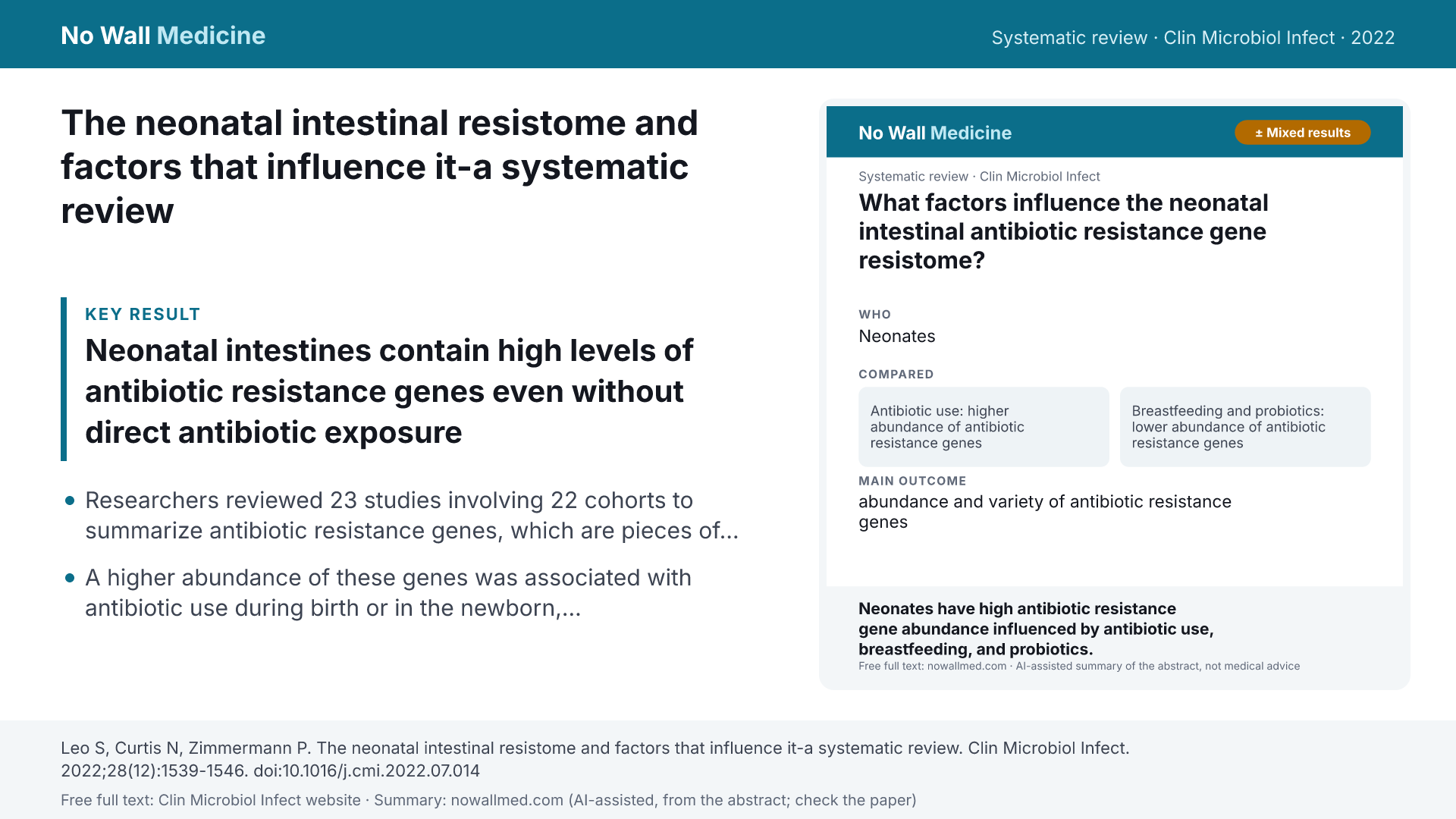
Neonatal intestines contain high levels of antibiotic resistance genes even without direct antibiotic exposure
The neonatal intestinal resistome and factors that influence it-a systematic review
Systematic reviewMixed results
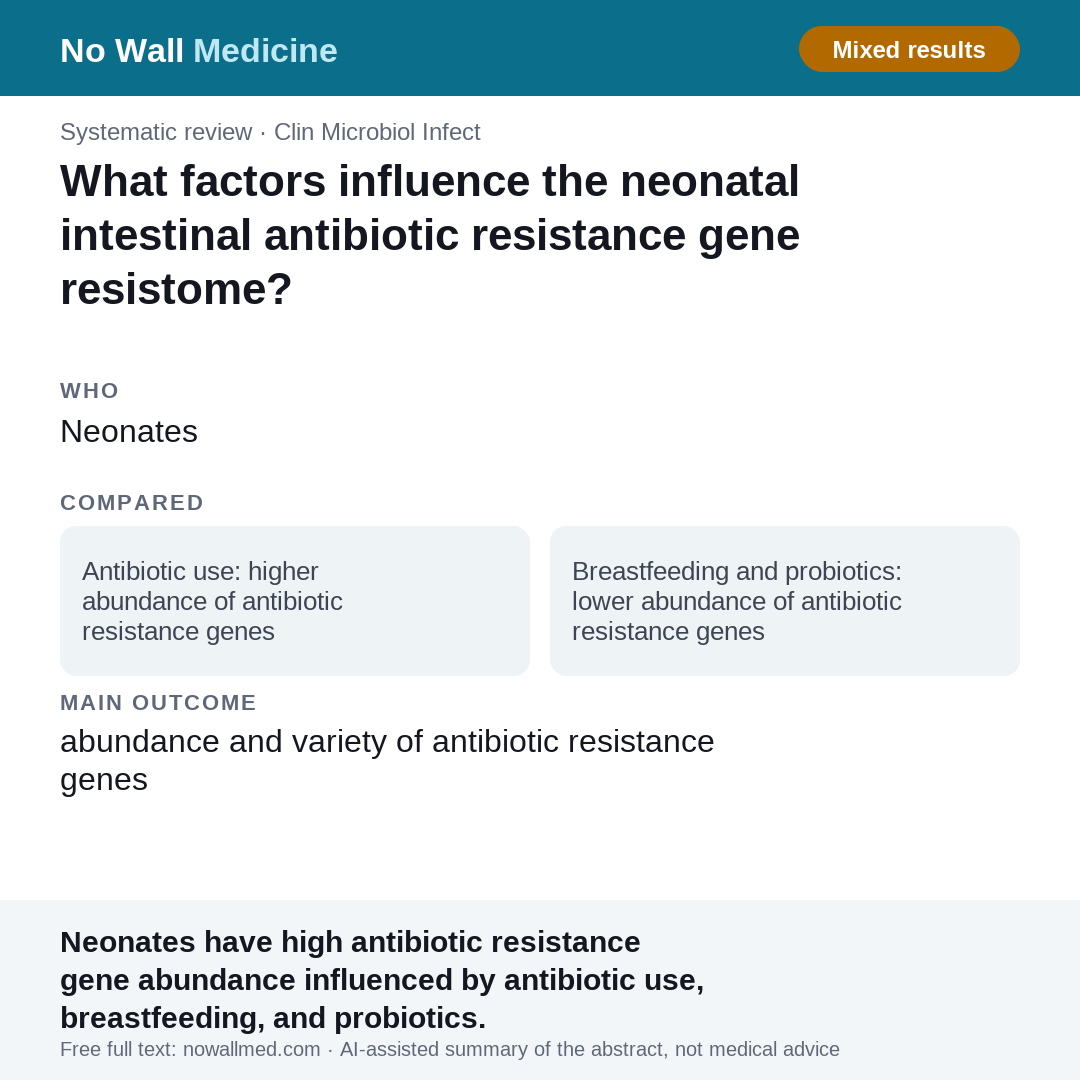
What factors influence the neonatal intestinal antibiotic resistance gene resistome?
Who
Neonates
Compared
Antibiotic use: higher abundance of antibiotic resistance genes
Breastfeeding and probiotics: lower abundance of antibiotic resistance genes
Main outcome
abundance and variety of antibiotic resistance genes
Bottom line: Neonates have high antibiotic resistance gene abundance influenced by antibiotic use, breastfeeding, and probiotics.
Limitation: Studies might be underpowered and difficult to account for effect modifiers.
Clin Microbiol Infect · 2022-07-19Download image
Clinical question: What factors influence the neonatal intestinal antibiotic resistance gene resistome?
Why it matters: It is unknown which specific factors influence the abundance and variety of antibiotic resistance genes in the neonatal intestinal microbiome.
Key points
- Researchers reviewed 23 studies involving 22 cohorts to summarize antibiotic resistance genes, which are pieces of DNA that allow bacteria to survive medicine, in neonates.
- A higher abundance of these genes was associated with antibiotic use during birth or in the newborn, while breastfeeding and probiotic use were associated with lower abundance.
- Neonates were reported to have a higher abundance of these genes compared to mothers, potentially due to a high abundance of Gammaproteobacteria in their stool.
Headline and key points written with AI from the paper’s abstract, with every number checked against it. Read the paper before relying on them.
Was this summary helpful?
Subject terms
Cite this article
Leo S, Curtis N, Zimmermann P. The neonatal intestinal resistome and factors that influence it-a systematic review. Clin Microbiol Infect. 2022. doi:10.1016/j.cmi.2022.07.014
Spotted a mistake? Suggest a correction