The new "cubism" graft technique in tympanoplasty: A randomized controlled trial
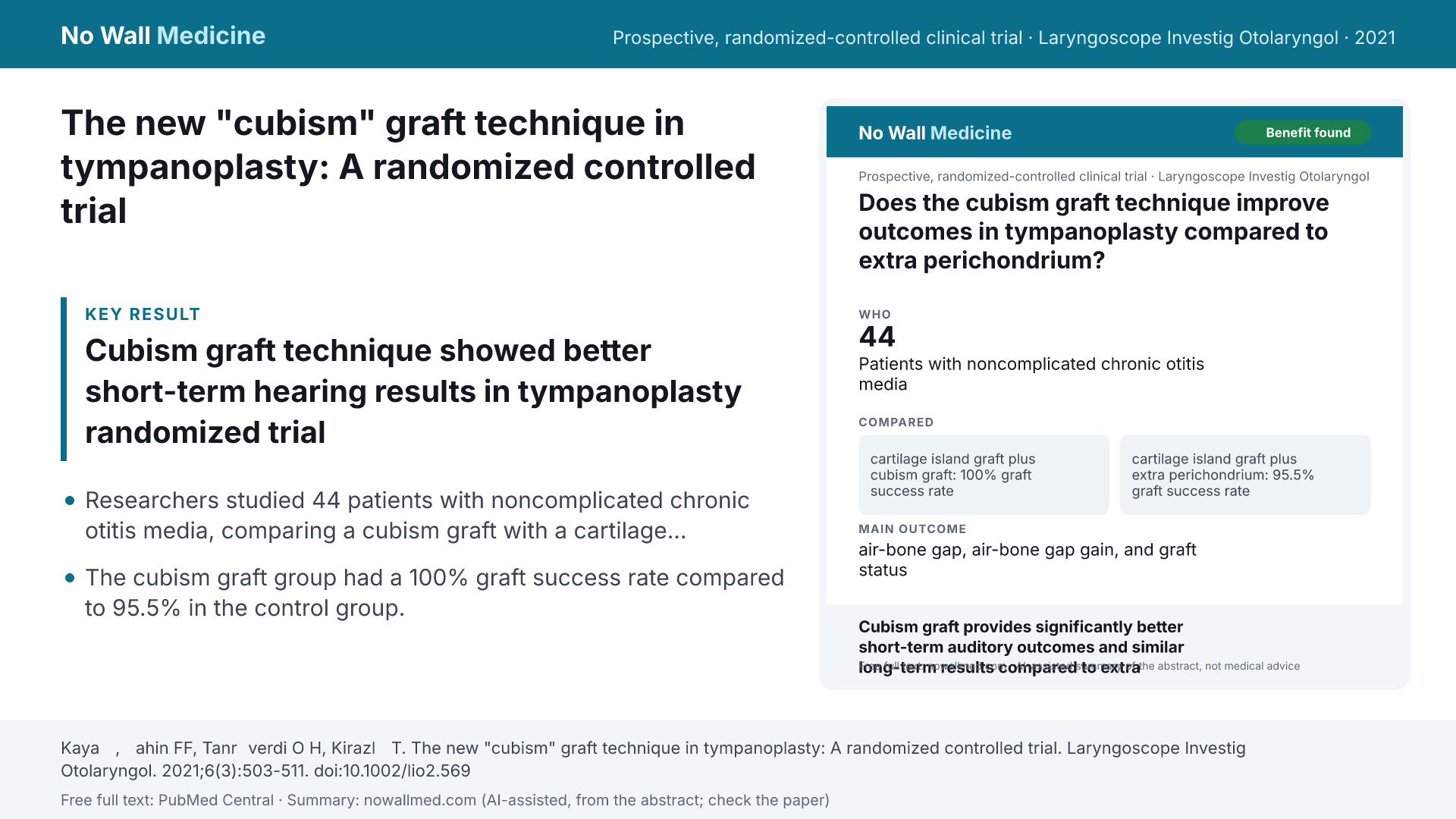
Key result: Cubism graft technique showed better short-term hearing results in tympanoplasty randomized trial
Prospective, randomized-controlled clinical trialBenefit found
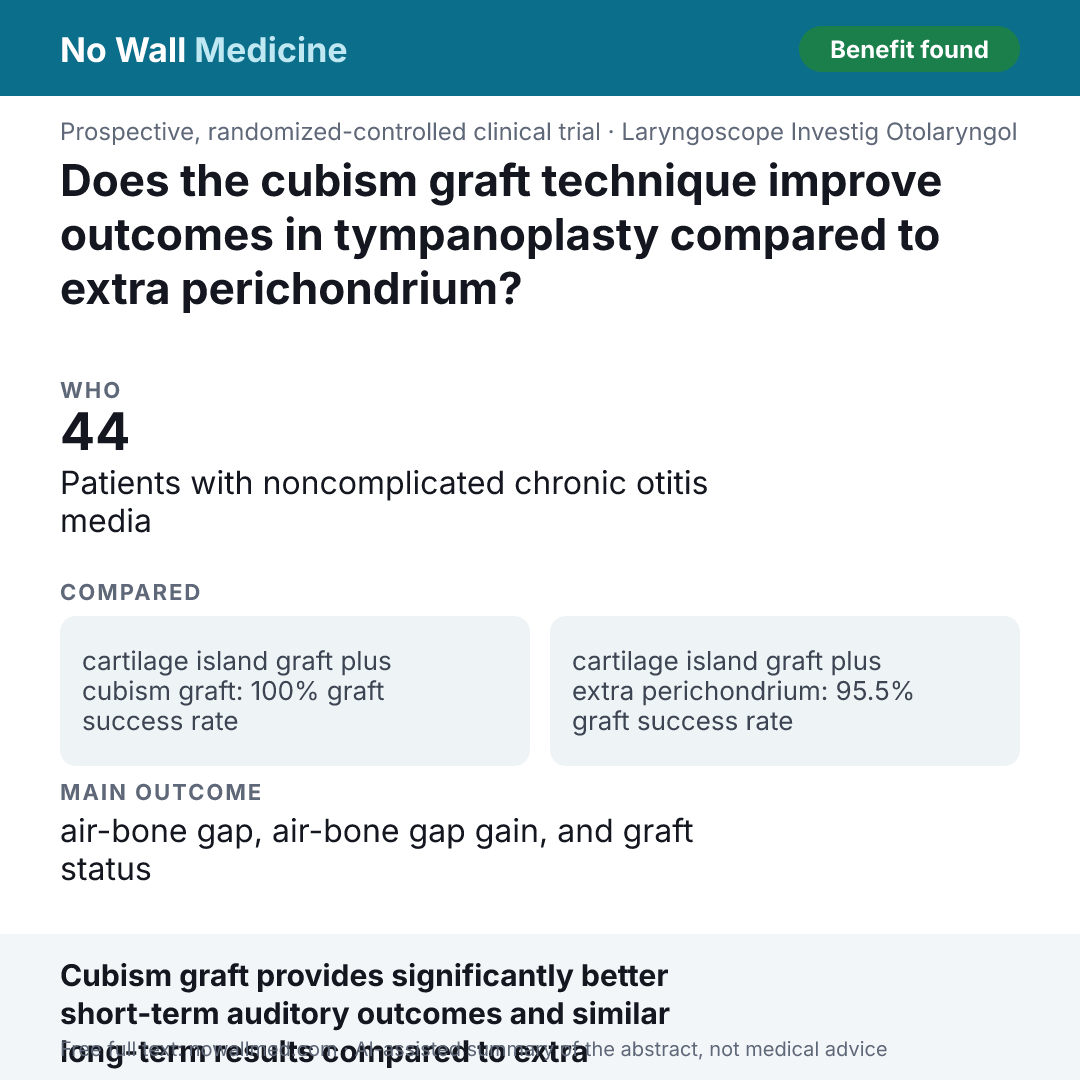
Does the cubism graft technique improve outcomes in tympanoplasty compared to extra perichondrium?
Who
44
Patients with noncomplicated chronic otitis media
Compared
cartilage island graft plus cubism graft: 100% graft success rate
cartilage island graft plus extra perichondrium: 95.5% graft success rate
Main outcome
air-bone gap, air-bone gap gain, and graft status
Bottom line: Cubism graft provides significantly better short-term auditory outcomes and similar long-term results compared to extra perichondrium.
Laryngoscope Investig Otolaryngol · 2021-05-07 · Save PNG
Key points
- Researchers studied 44 patients with noncomplicated chronic otitis media, comparing a cubism graft with a cartilage island graft to a control group using cartilage island graft plus extra perichondrium.
- The cubism graft group had a 100% graft success rate compared to 95.5% in the control group.
- The cubism graft group showed statistically significant differences in the air-bone gap (the difference between air and bone conduction hearing) and air-bone gap gain during the first postoperative month.
Discussion prompts
- Would these patients look like yours? Who was left out?
- Is the main outcome one that matters to patients?
- Is the difference large enough to change what you do?
Cite: Kaya İ, Şahin FF, Tanrıverdi O H, Kirazlı T. The new "cubism" graft technique in tympanoplasty: A randomized controlled trial. Laryngoscope Investig Otolaryngol. 2021;6(3):503-511. doi:10.1002/lio2.569
Free full text: PubMed Central · Summary and visual abstract: nowallmed.com/a/the-new-cubism-graft-technique-in-tympanoplasty-a-randomized-15mxue4/ (AI-assisted from the abstract; check the paper before relying on it).