The pathophysiology of dysphagia post-lung transplant: A systematic review
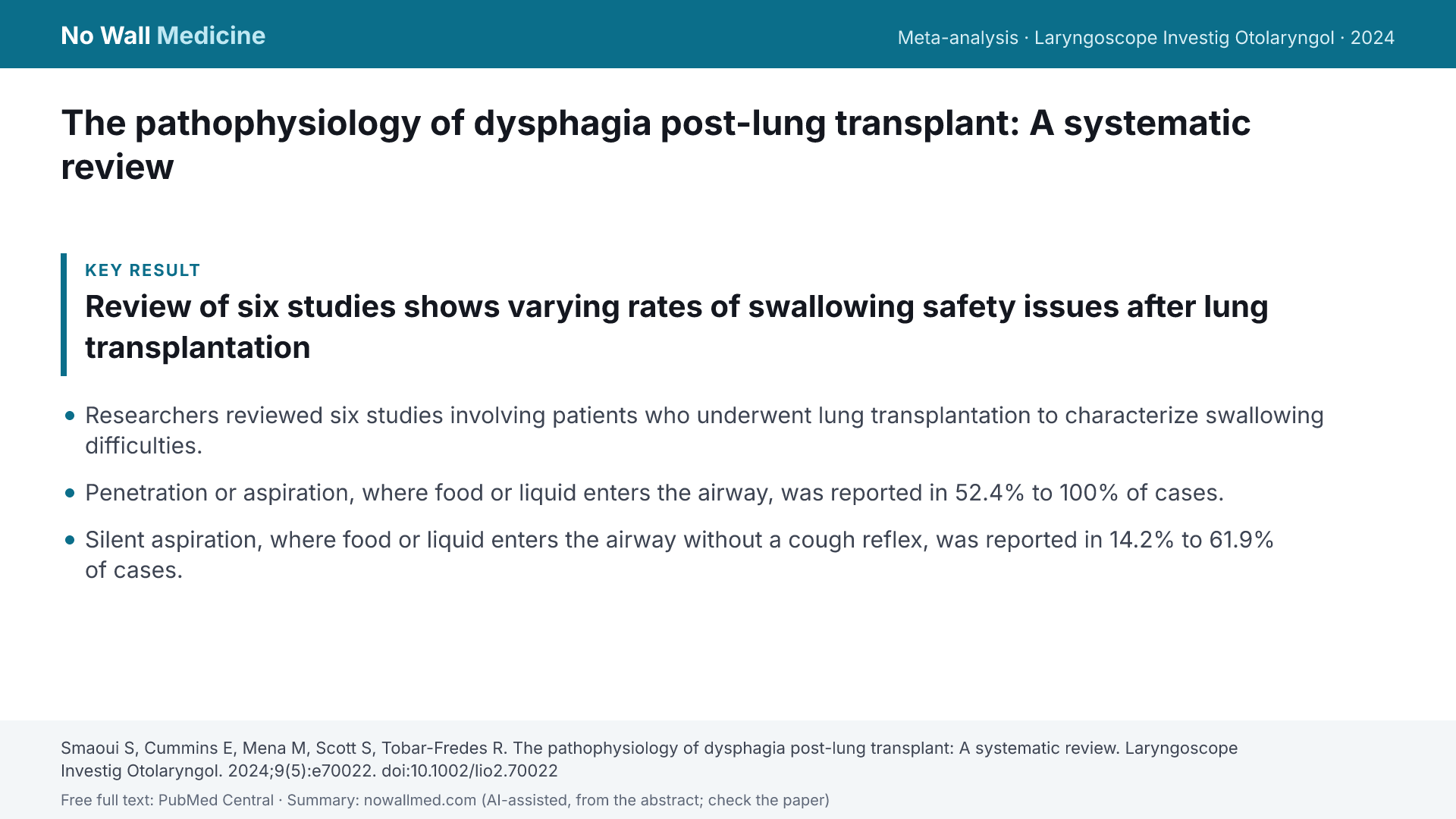
Key result: Review of six studies shows varying rates of swallowing safety issues after lung transplantation
Key points
- Researchers reviewed six studies involving patients who underwent lung transplantation to characterize swallowing difficulties.
- Penetration or aspiration, where food or liquid enters the airway, was reported in 52.4% to 100% of cases.
- Silent aspiration, where food or liquid enters the airway without a cough reflex, was reported in 14.2% to 61.9% of cases.
Why it matters: The specific physiological characteristics and mechanisms of swallowing difficulties following lung transplantation are not well-defined in existing literature.
Limitation the authors note: All but one of the included studies utilized a retrospective design, and there was a lack of transparency regarding instrumental evaluation protocols.
Discussion prompts
- Would these patients look like yours? Who was left out?
- Is the main outcome one that matters to patients?
- Is the difference large enough to change what you do?
Cite: Smaoui S, Cummins E, Mena M, Scott S, Tobar-Fredes R. The pathophysiology of dysphagia post-lung transplant: A systematic review. Laryngoscope Investig Otolaryngol. 2024;9(5):e70022. doi:10.1002/lio2.70022
Free full text: PubMed Central · Summary and visual abstract: nowallmed.com/a/the-pathophysiology-of-dysphagia-post-lung-transplant-a-systematic-aafr17/ (AI-assisted from the abstract; check the paper before relying on it).