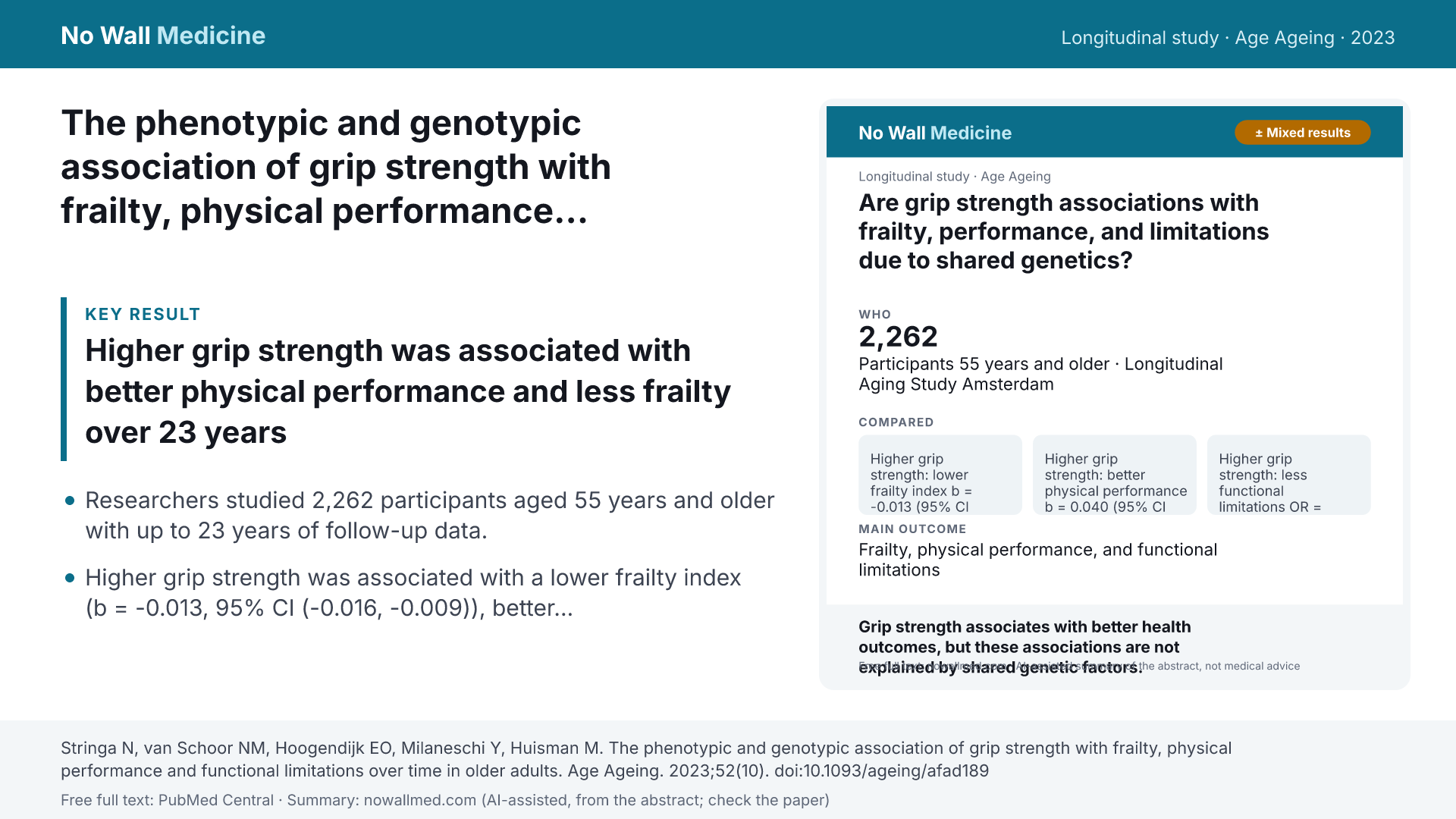
Higher grip strength was associated with better physical performance and less frailty over 23 years
The phenotypic and genotypic association of grip strength with frailty, physical performance and functional limitations over time in older adults
Longitudinal studyMixed results
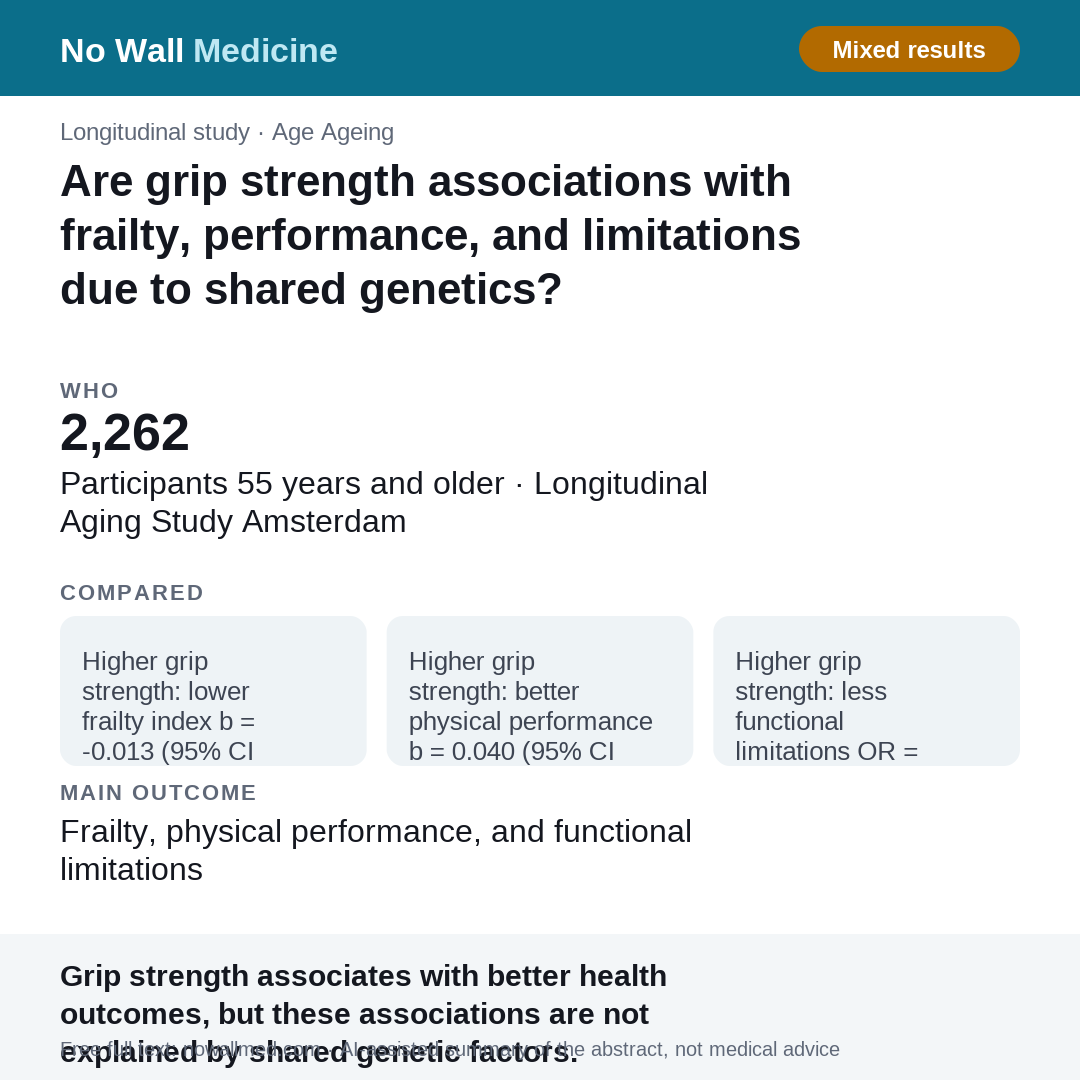
Are grip strength associations with frailty, performance, and limitations due to shared genetics?
Who
2,262
Participants 55 years and older · Longitudinal Aging Study Amsterdam
Compared
Higher grip strength: lower frailty index b = -0.013 (95% CI -0.016, -0.009)
Higher grip strength: better physical performance b = 0.040 (95% CI 0.026, 0.054)
Higher grip strength: less functional limitations OR = 0.965 (95% CI 0.954, 0.977)
Main outcome
Frailty, physical performance, and functional limitations
Bottom line: Grip strength associates with better health outcomes, but these associations are not explained by shared genetic factors.
Age Ageing · 2023-10-17Download image
Clinical question: Are grip strength associations with frailty, performance, and limitations due to shared genetics?
Key points
- Researchers studied 2,262 participants aged 55 years and older with up to 23 years of follow-up data.
- Higher grip strength was associated with a lower frailty index (b = -0.013, 95% CI (-0.016, -0.009)), better physical performance (b = 0.040, 95% CI (0.026, 0.054)), and fewer functional limitations (OR = 0.965, 95% CI (0.954, 0.977)).
- Genetic risk scores for grip strength were not associated with frailty, physical performance, or functional limitations.
Headline and key points written with AI from the paper’s abstract, with every number checked against it. Read the paper before relying on them.
Was this summary helpful?
Subject terms
Headline, design, result, key points, caveat and citation as plain text.
Cite this article
Stringa N, van Schoor NM, Hoogendijk EO, Milaneschi Y, Huisman M. The phenotypic and genotypic association of grip strength with frailty, physical performance and functional limitations over time in older adults. Age Ageing. 2023. doi:10.1093/ageing/afad189
Spotted a mistake? Suggest a correction