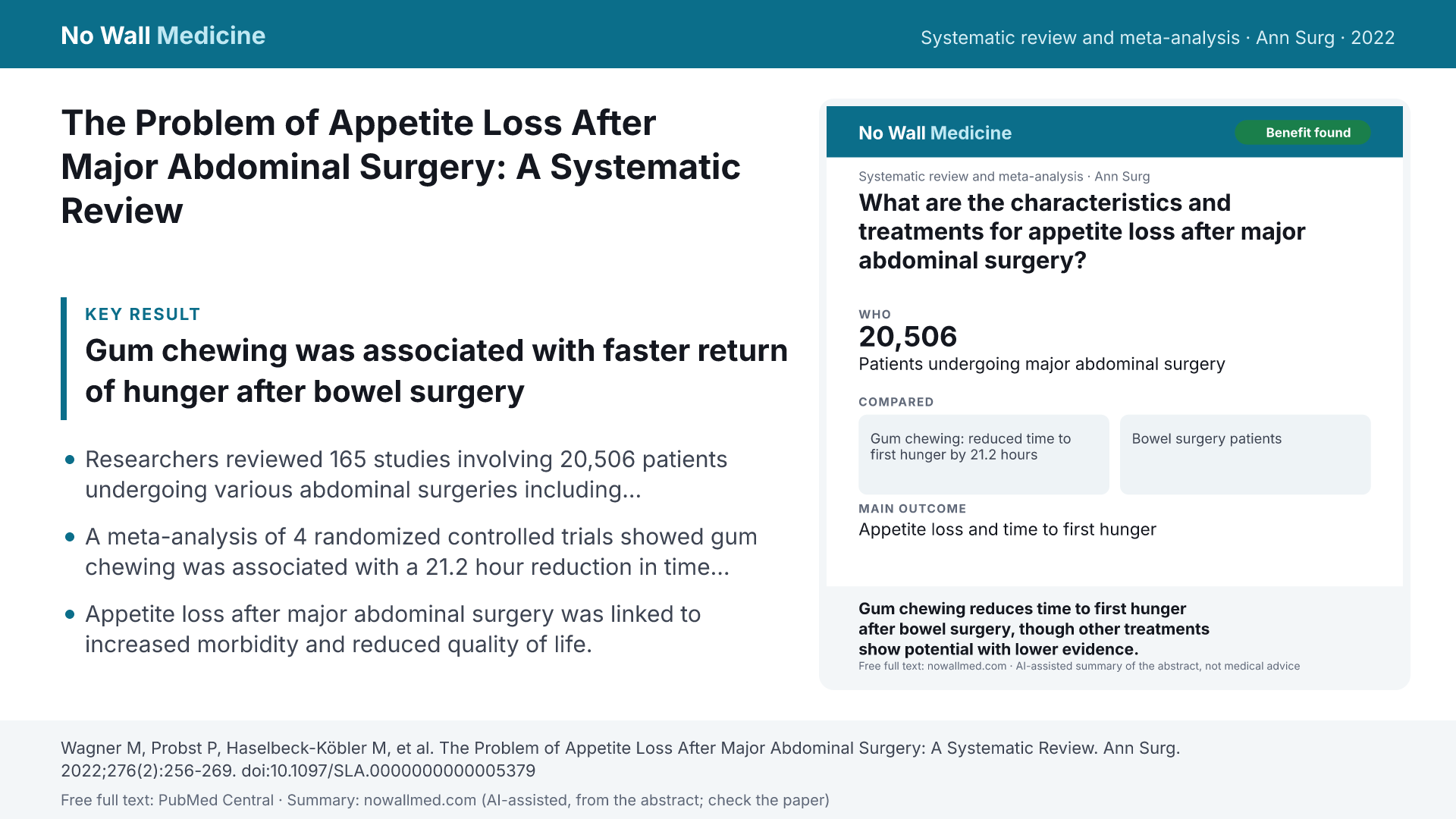
Gum chewing was associated with faster return of hunger after bowel surgery
The Problem of Appetite Loss After Major Abdominal Surgery: A Systematic Review
Systematic review and meta-analysisBenefit found
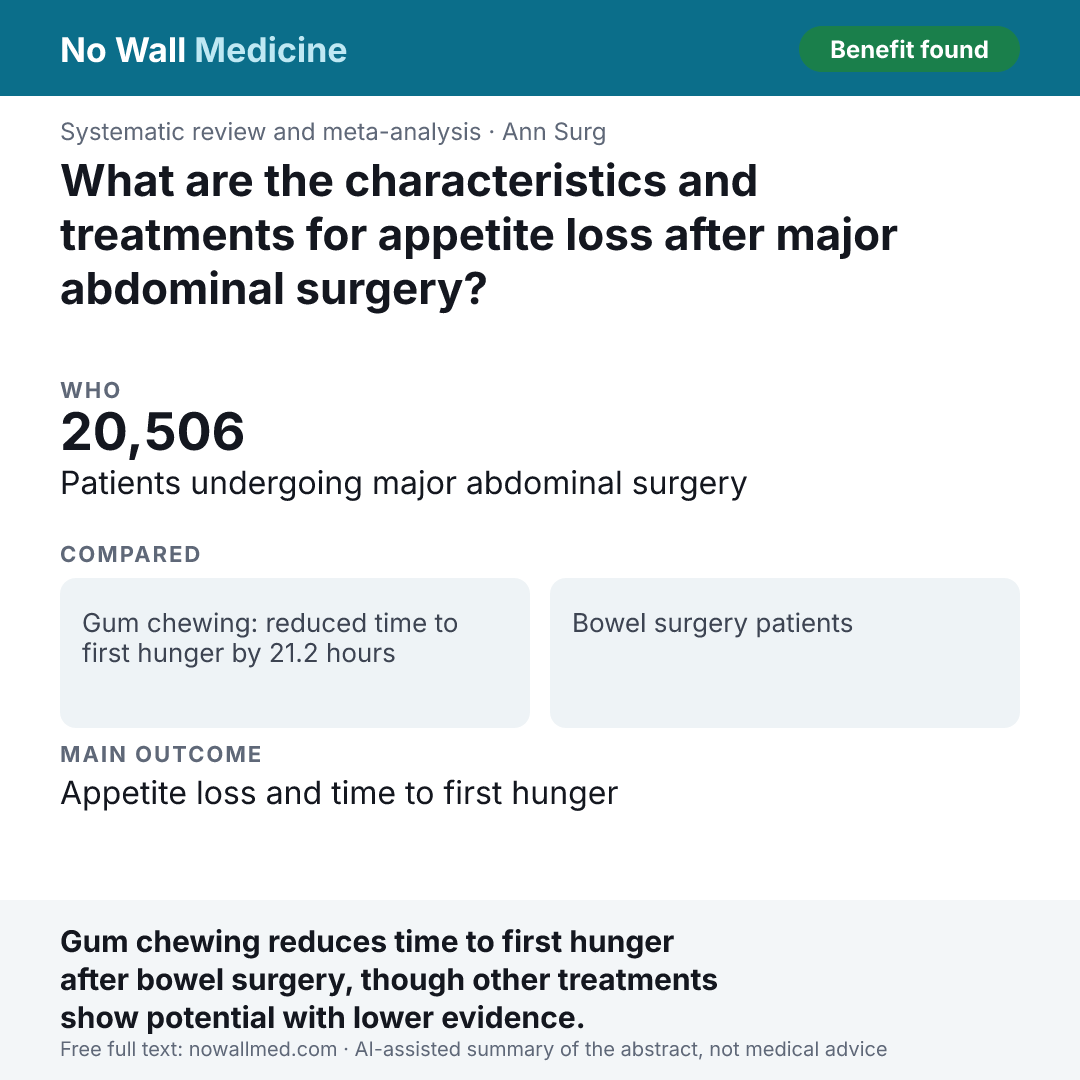
What are the characteristics and treatments for appetite loss after major abdominal surgery?
Who
20,506
Patients undergoing major abdominal surgery
Compared
Gum chewing: reduced time to first hunger by 21.2 hours
Bowel surgery patients
Main outcome
Appetite loss and time to first hunger
Bottom line: Gum chewing reduces time to first hunger after bowel surgery, though other treatments show potential with lower evidence.
Limitation: No studies investigated well-known appetite stimulants like cannabinoids, steroids, or megestrol acetate.
Ann Surg · 2022-01-27 · Save PNG
Clinical question: What are the characteristics and treatments for appetite loss after major abdominal surgery?
Why it matters: The causes and effective treatment options for appetite loss following major abdominal surgery are currently limited.
Key points
- Researchers reviewed 165 studies involving 20,506 patients undergoing various abdominal surgeries including esophageal, gastric, and colon procedures.
- A meta-analysis of 4 randomized controlled trials showed gum chewing was associated with a 21.2 hour reduction in time to first hunger for bowel surgery patients.
- Appetite loss after major abdominal surgery was linked to increased morbidity and reduced quality of life.
Headline and key points written with AI from the paper’s abstract, with every number checked against it. Read the paper before relying on them.
Was this summary helpful?
Subject terms
Headline, design, result, key points, caveat and citation as plain text.
Cite this article
Wagner M, Probst P, Haselbeck-Köbler M, et al. The Problem of Appetite Loss After Major Abdominal Surgery: A Systematic Review. Ann Surg. 2022;276(2):256-269. doi:10.1097/SLA.0000000000005379
Spotted a mistake? Suggest a correction