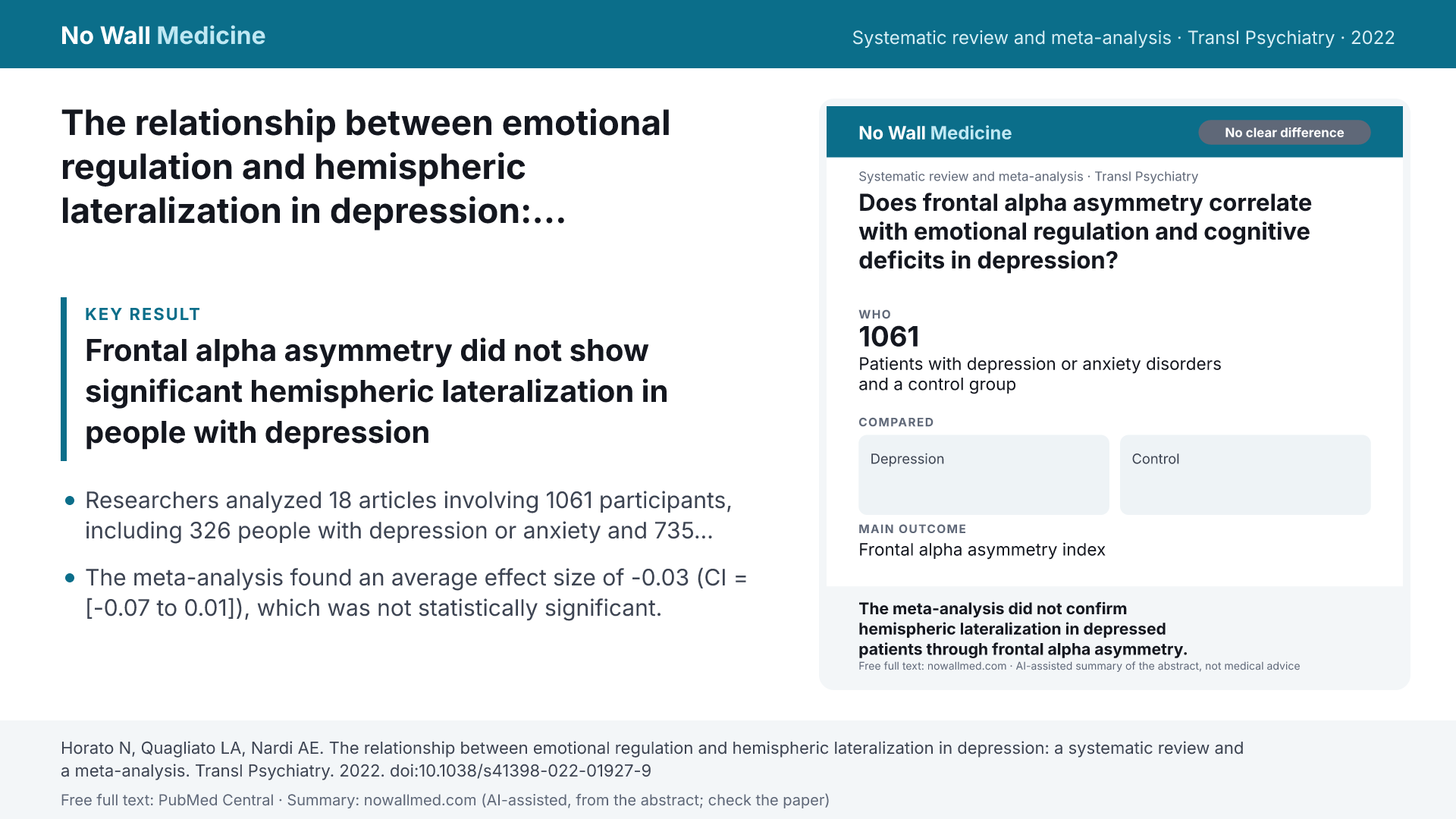
The relationship between emotional regulation and hemispheric lateralization in depression: a systematic review and a meta-analysis
Key result: Frontal alpha asymmetry did not show significant hemispheric lateralization in people with depression
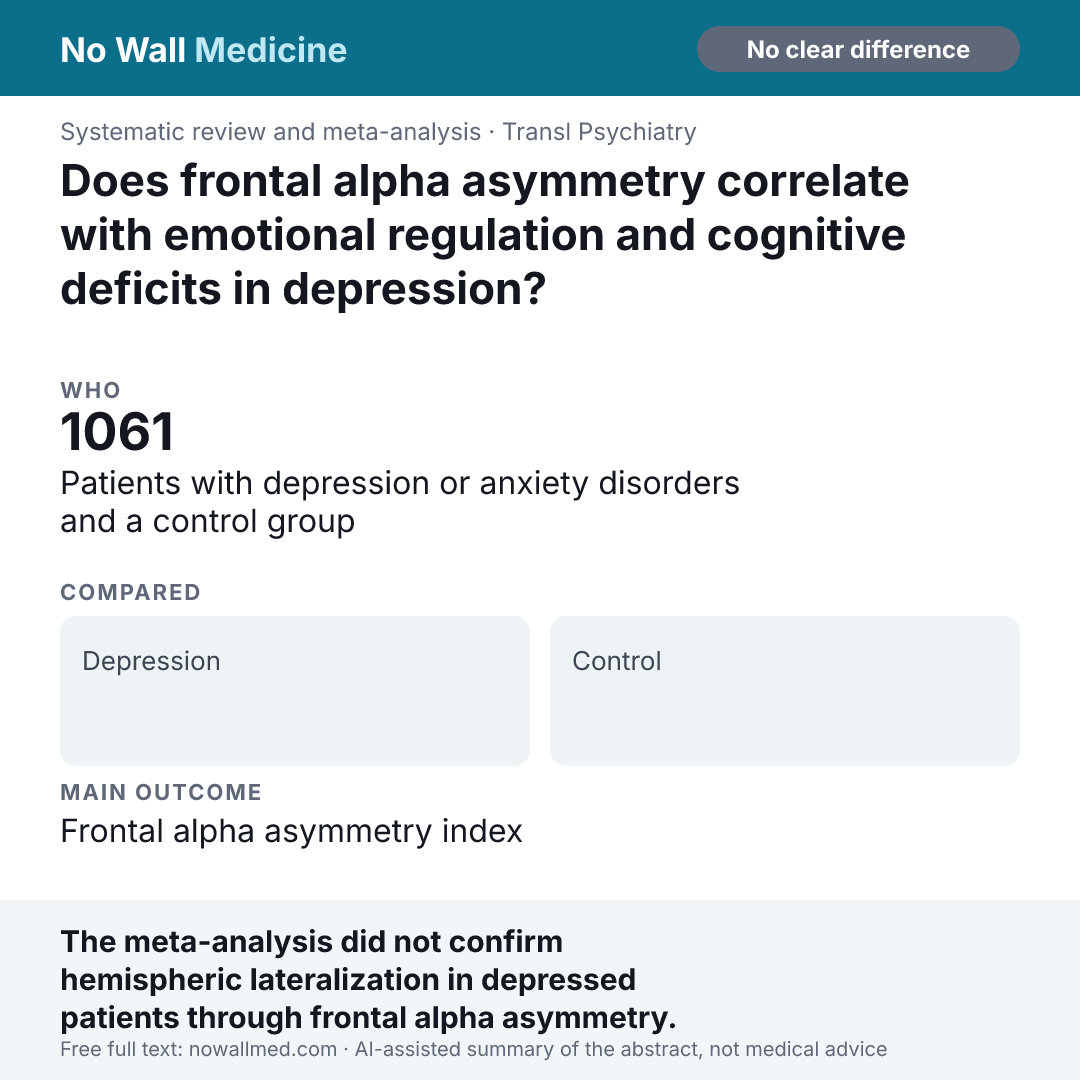
Systematic review and meta-analysisNo clear difference
Does frontal alpha asymmetry correlate with emotional regulation and cognitive deficits in depression?
Who
1061
Patients with depression or anxiety disorders and a control group
Compared
Depression
Control
Main outcome
Frontal alpha asymmetry index
Result: average effect size -0.03 (CI [-0.07 to 0.01])
Bottom line: The meta-analysis did not confirm hemispheric lateralization in depressed patients through frontal alpha asymmetry.
Transl Psychiatry · 2022-04-16 · Save PNG
Key points
- Researchers analyzed 18 articles involving 1061 participants, including 326 people with depression or anxiety and 735 control subjects.
- The meta-analysis found an average effect size of -0.03 (CI = [-0.07 to 0.01]), which was not statistically significant.
- The data suggested a slight tendency toward left lateralization in the depression group but did not confirm hemispheric lateralization.
Discussion prompts
- Would these patients look like yours? Who was left out?
- Is the main outcome one that matters to patients?
- Is the difference large enough to change what you do?
Cite: Horato N, Quagliato LA, Nardi AE. The relationship between emotional regulation and hemispheric lateralization in depression: a systematic review and a meta-analysis. Transl Psychiatry. 2022. doi:10.1038/s41398-022-01927-9
Free full text: PubMed Central · Summary and visual abstract: nowallmed.com/a/the-relationship-between-emotional-regulation-and-hemispheric-15topbo/ (AI-assisted from the abstract; check the paper before relying on it).