Higher baseline C-reactive protein levels were associated with increased cardiovascular events and mortality over 20 years
The relationship of baseline high-sensitivity C-reactive protein with incident cardiovascular events and all-cause mortality over 20 years
Randomized trialBenefit found
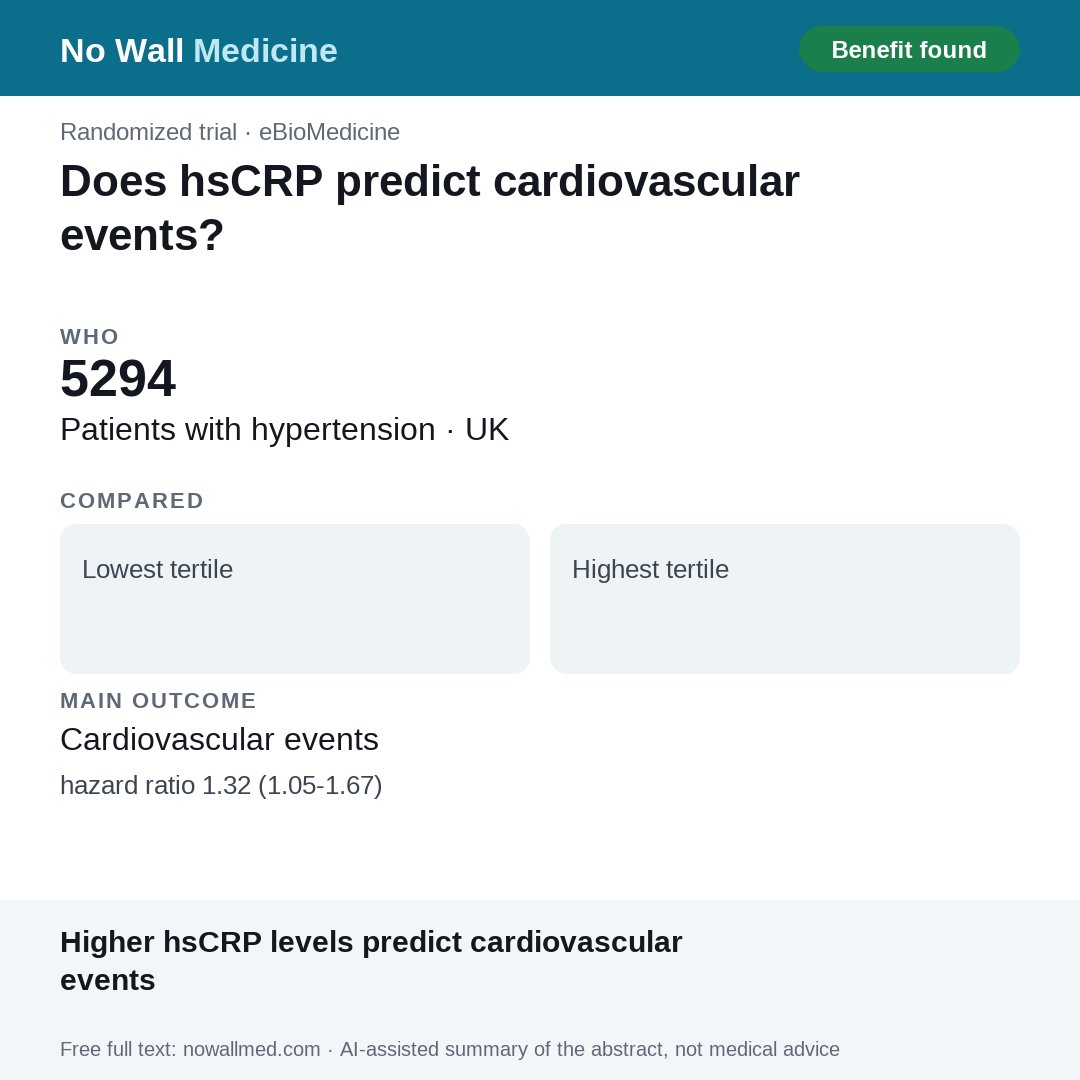
Does hsCRP predict cardiovascular events?
Who
5294
Patients with hypertension · UK
Compared
Lowest tertile
Highest tertile
Main outcome
Cardiovascular events
Result: hazard ratio 1.32 (1.05-1.67)
Bottom line: Higher hsCRP levels predict cardiovascular events
Funded by: British Heart Foundation
eBioMedicine · 2025-06-04Download image
Clinical question: Does hsCRP predict cardiovascular events?
Why it matters: The usefulness of high-sensitivity C-reactive protein for predicting very long-term cardiovascular events in patients with hypertension has been questioned.
Key points
- Researchers analyzed 5294 participants from the ASCOT Legacy Study to examine how baseline high-sensitivity C-reactive protein levels related to long-term health outcomes.
- The highest level of C-reactive protein was associated with a hazard ratio of 1.32 for non-fatal heart attacks and fatal coronary heart disease.
- Higher C-reactive protein levels were also associated with increased risks for total coronary events (HR 1.27), total cardiovascular events (HR 1.22), and all-cause mortality (HR 1.25).
Headline and key points written with AI from the paper’s abstract, with every number checked against it. Read the paper before relying on them.
Was this summary helpful?
Subject terms
Cite this article
Hartley A, Rostamian S, Kaura A, Chrysostomou P, Welsh P, Ariti C. The relationship of baseline high-sensitivity C-reactive protein with incident cardiovascular events and all-cause mortality over 20 years. eBioMedicine. 2025. doi:10.1016/j.ebiom.2025.105786
Spotted a mistake? Suggest a correction
Top studies every Monday
The week’s key trials and guidelines in your specialties, plus any topics you follow. By email, free.
Get the weekly digest