High ultra-processed food intake was associated with increased depressive symptoms in older adults
The risk associated with ultra-processed food intake on depressive symptoms and mental health in older adults: a target trial emulation
Target trial emulationHarm found
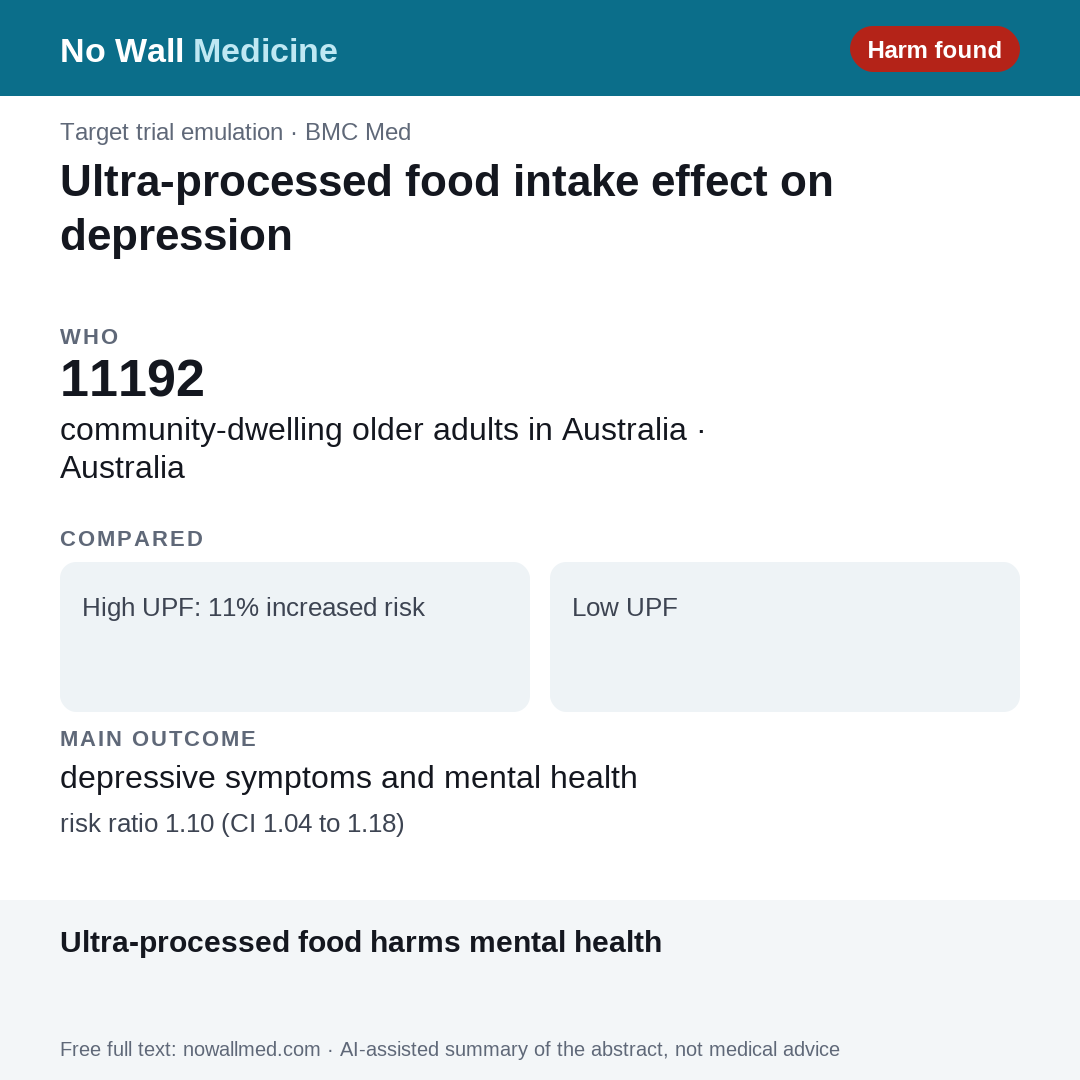
Ultra-processed food intake effect on depression
Who
11192
community-dwelling older adults in Australia · Australia
Compared
High UPF: 11% increased risk
Low UPF
Main outcome
depressive symptoms and mental health
Result: risk ratio 1.10 (CI 1.04 to 1.18)
Bottom line: Ultra-processed food harms mental health
BMC Med · 2025-03-24Download image
Why it matters: The effect of ultra-processed food consumption on depression and mental health in older adults has not been determined.
Key points
- Researchers emulated a clinical trial using 11,192 community-dwelling older adults in Australia aged 70 years or older.
- Consuming 4 or more servings of ultra-processed foods per day was associated with an 11% increased risk of depressive symptoms (RR: 1.10; CI: 1.04-1.18).
- High consumption of ultra-processed foods was also associated with lower mental health quality of life scores (β: -0.40; CI: -0.65 to -0.15).
Headline and key points written with AI from the paper’s abstract, with every number checked against it. Read the paper before relying on them.
Was this summary helpful?
Subject terms
Cite this article
Mengist B, Lotfaliany M, Pasco JA, Agustini B, Berk M, Forbes M. The risk associated with ultra-processed food intake on depressive symptoms and mental health in older adults: a target trial emulation. BMC Med. 2025. doi:10.1186/s12916-025-04002-4
Spotted a mistake? Suggest a correction
Top studies every Monday
The week’s key trials and guidelines in your specialties, plus any topics you follow. By email, free.
Get the weekly digest