Cochlear anatomy features were linked to hearing preservation after cochlear implantation in adults
The Role of Cochlear Anatomy in Hearing Preservation After Cochlear Implantation in Adults: A Systematic Review
Systematic review and meta-analysisUnclear result
Do cochlear anatomical parameters associate with postoperative hearing preservation in adults?
Who
487
Adults with preoperative residual hearing undergoing cochlear implantation
Compared
Deeper angular insertion depth: poorer hearing preservation
Longer cochlear duct length and larger volume: better hearing preservation
Main outcome
postoperative hearing preservation within 6 months
Result: pooled r = 0.23 (95% confidence interval: -0.14 to 0.54)
Bottom line: Cochlear anatomy may influence hearing preservation, but the certainty of evidence is very low.
Limitation: Certainty of evidence was rated very low and risk of bias was high.
Laryngoscope Investig Otolaryngol · 2026-09-29 · Save PNG
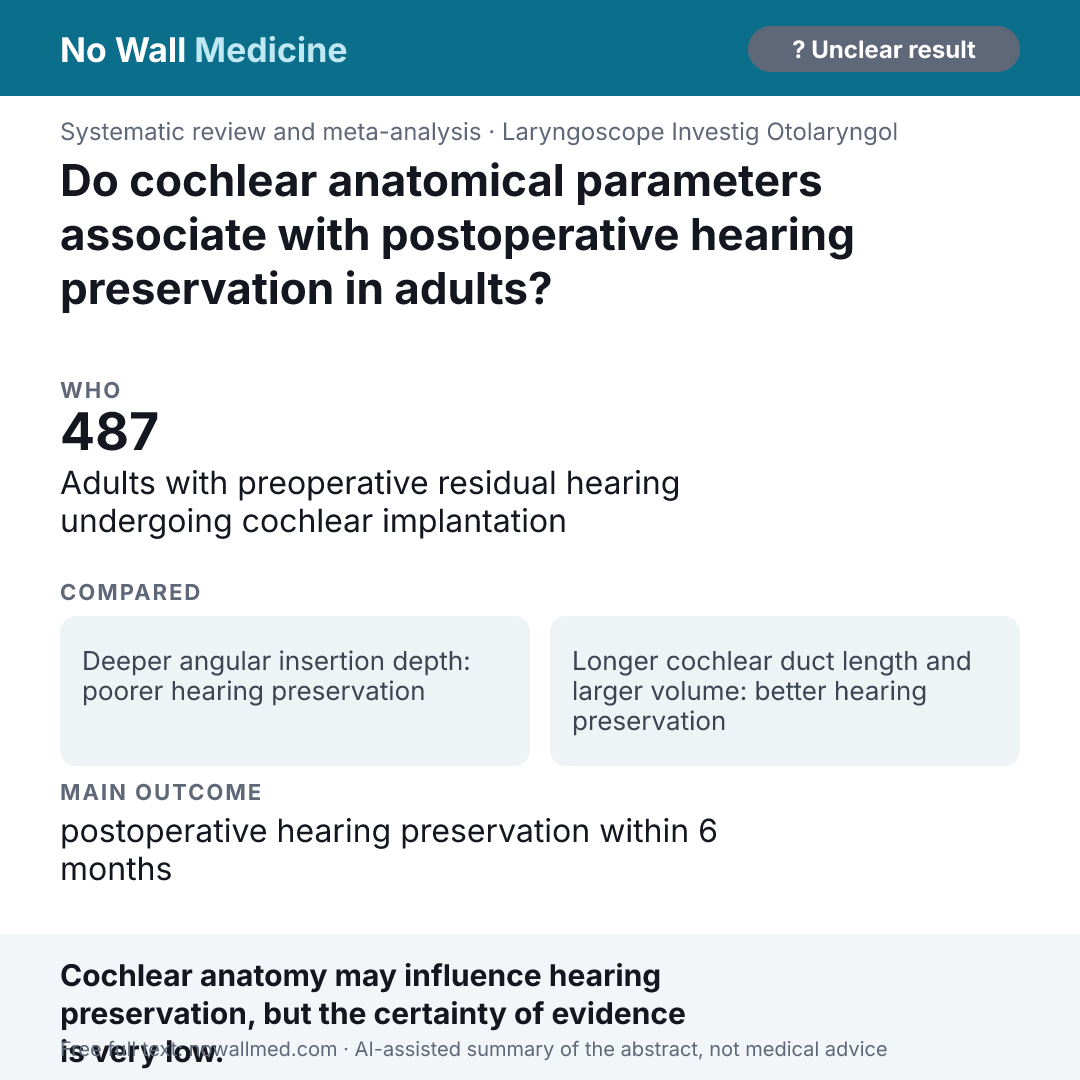
Clinical question: Do cochlear anatomical parameters associate with postoperative hearing preservation in adults?
Key points
- Researchers reviewed ten studies involving 487 implants in adults with preoperative residual hearing to examine how cochlear anatomy relates to postoperative hearing preservation.
- Longer cochlear duct length and larger cochlear volume were suggested to be associated with better hearing preservation, although findings were inconsistent.
- A meta-analysis of four studies showed a small positive correlation (pooled r = 0.23; p = 0.004; 95% confidence interval: -0.14 to 0.54) between deeper angular insertion depth and poorer hearing preservation.
Limitation the authors note: The certainty of evidence for all outcomes was rated very low, and the risk of bias was highest for study participation and confounding.
Headline and key points written with AI from the paper’s abstract, with every number checked against it. Read the paper before relying on them.
Was this summary helpful?
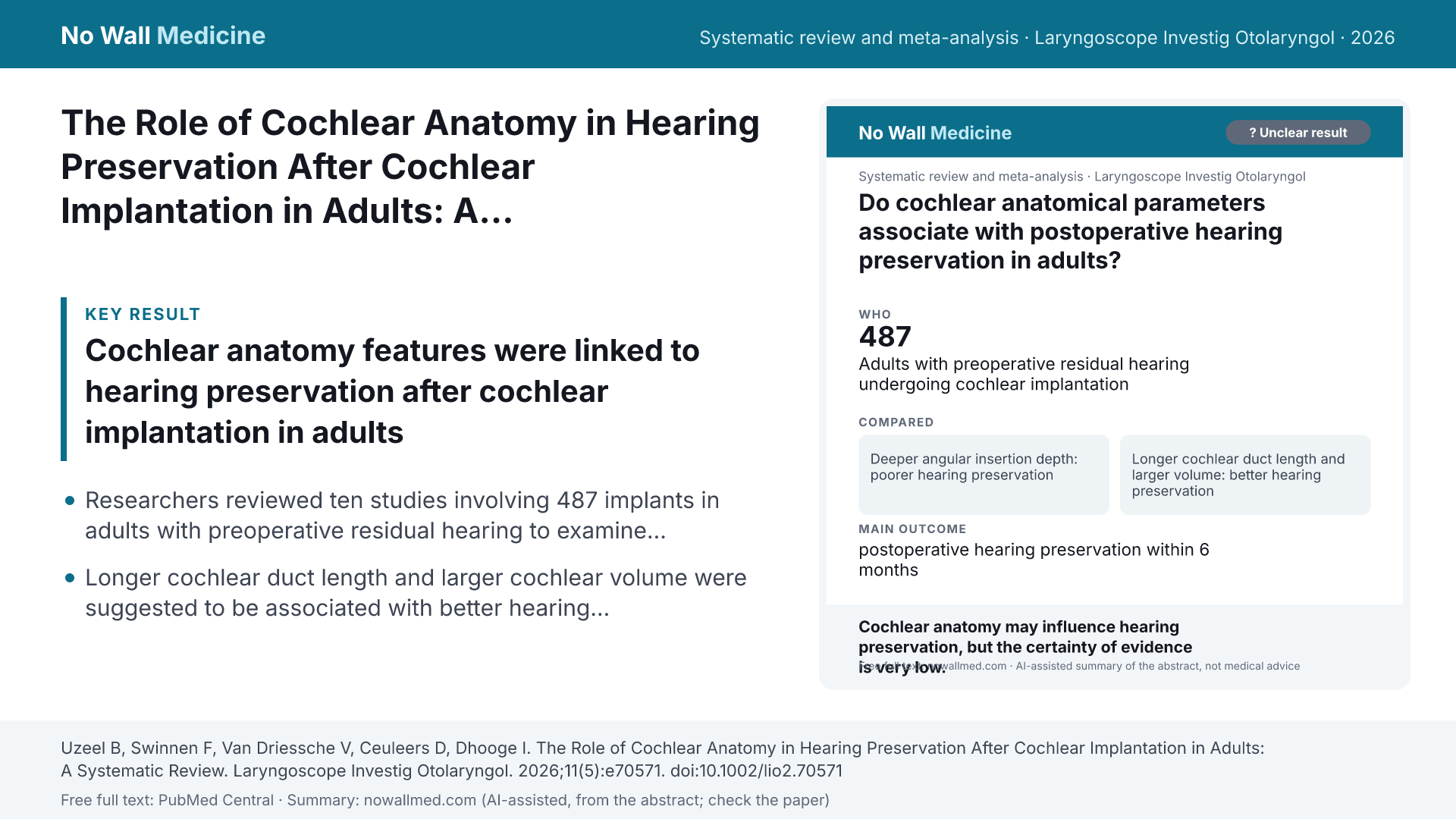
Headline, design, result, key points, caveat and citation as plain text.
Cite this article
Uzeel B, Swinnen F, Van Driessche V, Ceuleers D, Dhooge I. The Role of Cochlear Anatomy in Hearing Preservation After Cochlear Implantation in Adults: A Systematic Review. Laryngoscope Investig Otolaryngol. 2026;11(5):e70571. doi:10.1002/lio2.70571
Spotted a mistake? Suggest a correction