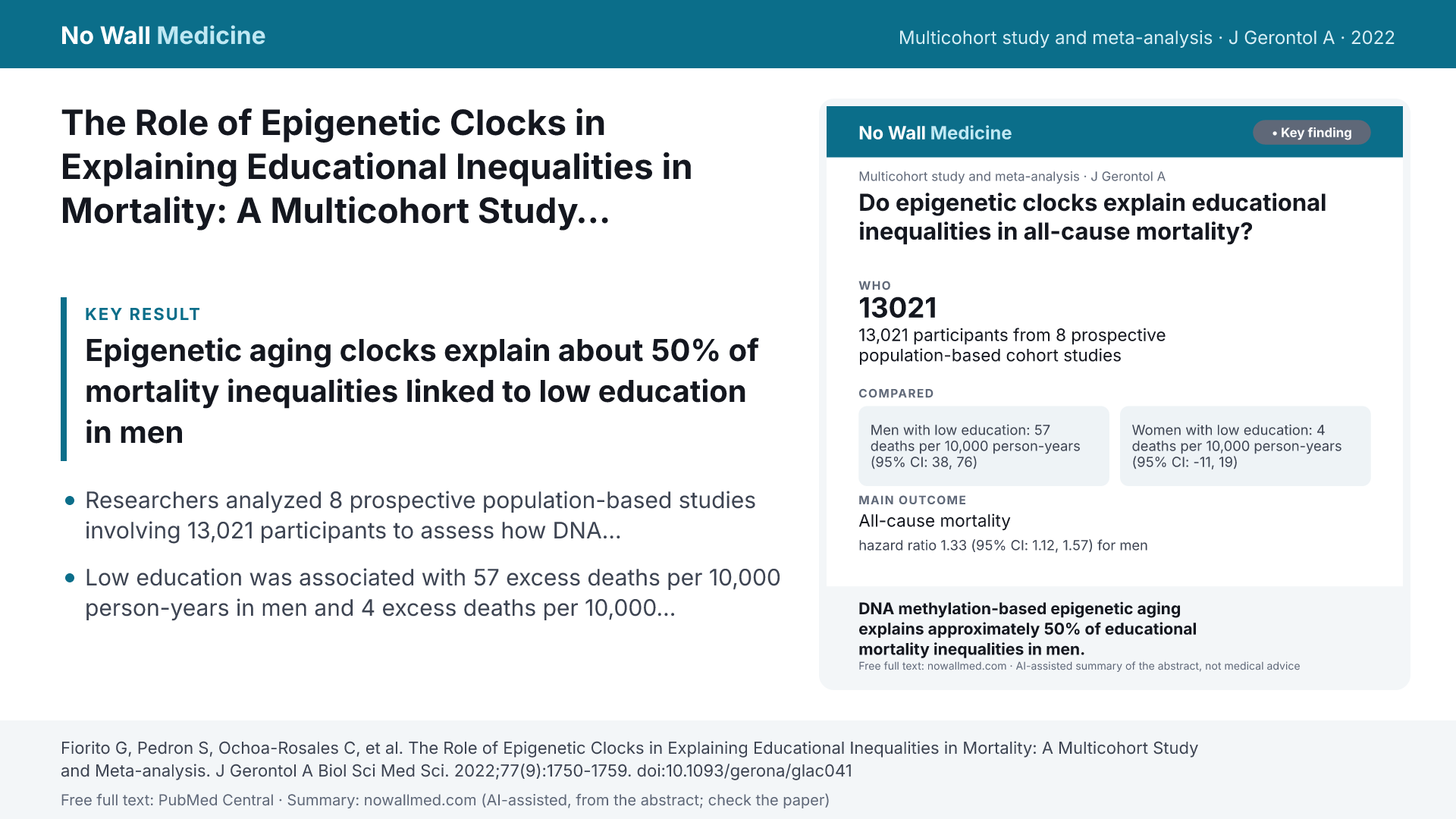
Epigenetic aging clocks explain about 50% of mortality inequalities linked to low education in men
The Role of Epigenetic Clocks in Explaining Educational Inequalities in Mortality: A Multicohort Study and Meta-analysis
Multicohort study and meta-analysisBenefit found
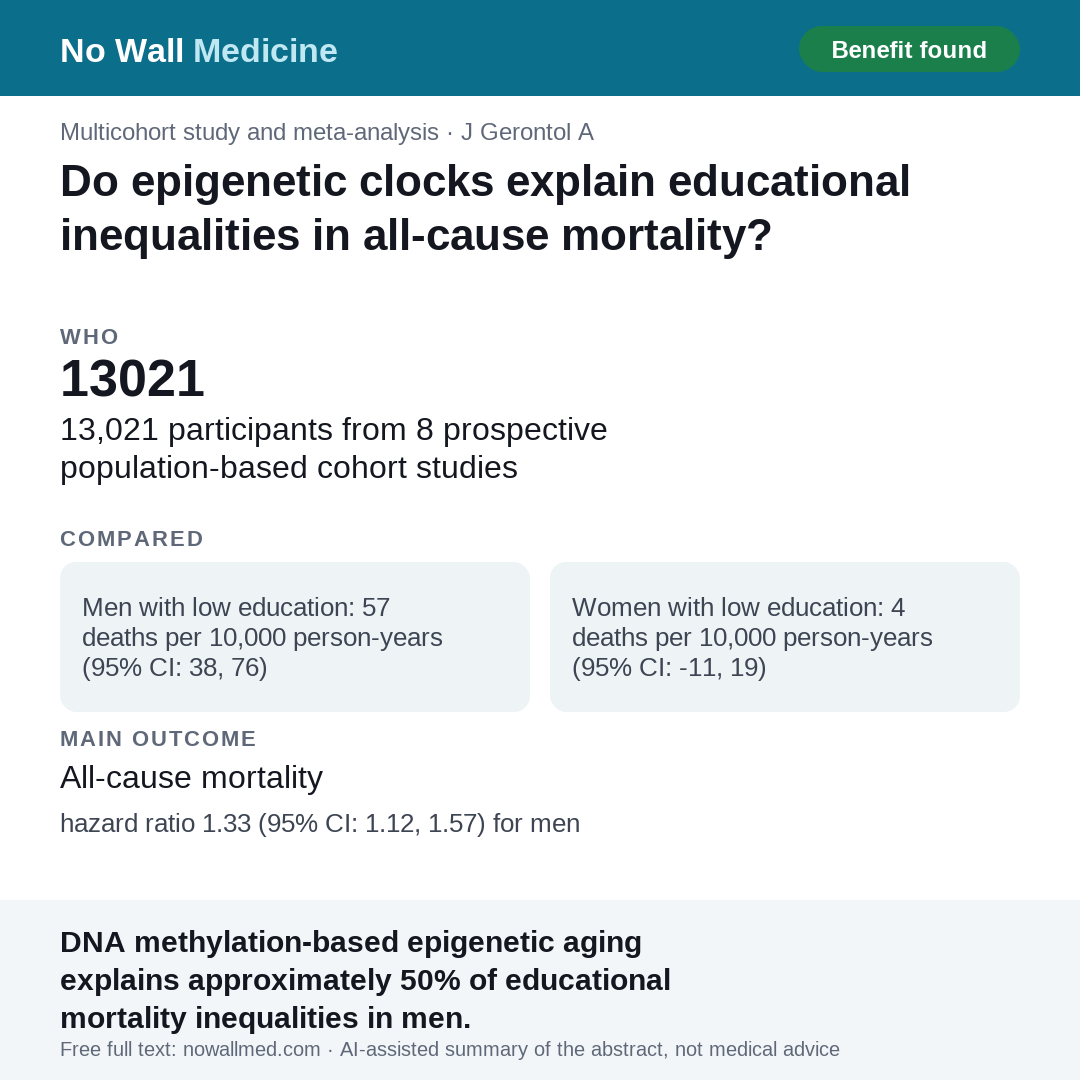
Do epigenetic clocks explain educational inequalities in all-cause mortality?
Who
13021
13,021 participants from 8 prospective population-based cohort studies
Compared
Men with low education: 57 deaths per 10,000 person-years (95% CI: 38, 76)
Women with low education: 4 deaths per 10,000 person-years (95% CI: -11, 19)
Main outcome
All-cause mortality
Result: hazard ratio 1.33 (95% CI: 1.12, 1.57) for men
Bottom line: DNA methylation-based epigenetic aging explains approximately 50% of educational mortality inequalities in men.
J Gerontol A · 2022-02-17Download image
Clinical question: Do epigenetic clocks explain educational inequalities in all-cause mortality?
Why it matters: The biological mechanisms that explain why educational inequalities are linked to differences in all-cause mortality are not well known.
Key points
- Researchers analyzed 8 prospective population-based studies involving 13,021 participants to assess how DNA methylation changes in blood relate to educational mortality gaps.
- Low education was associated with 57 excess deaths per 10,000 person-years in men and 4 excess deaths per 10,000 person-years in women.
- The DNAmGrimAge epigenetic clock accounted for approximately 50% of educational mortality inequalities in men, while the proportion for women was negligible.
Headline and key points written with AI from the paper’s abstract, with every number checked against it. Read the paper before relying on them.
Was this summary helpful?
Subject terms
Cite this article
Fiorito G, Pedron S, Ochoa-Rosales C, et al. The Role of Epigenetic Clocks in Explaining Educational Inequalities in Mortality: A Multicohort Study and Meta-analysis. J Gerontol A. 2022. doi:10.1093/gerona/glac041
Spotted a mistake? Suggest a correction