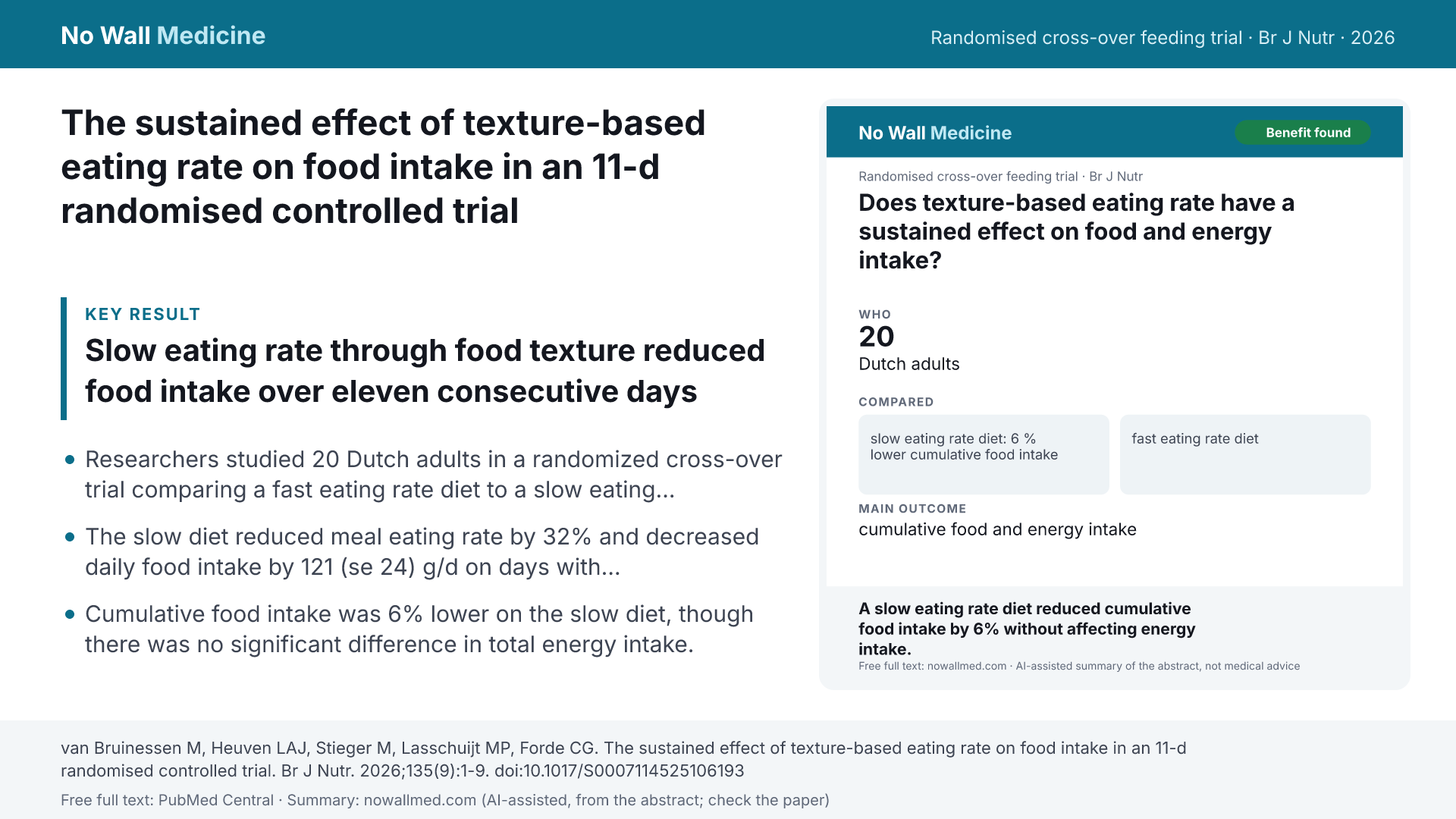
Slow eating rate through food texture reduced food intake over eleven consecutive days
The sustained effect of texture-based eating rate on food intake in an 11-d randomised controlled trial
Randomised cross-over feeding trialBenefit found
Does texture-based eating rate have a sustained effect on food and energy intake?
Who
20
Dutch adults
Compared
slow eating rate diet: 6 % lower cumulative food intake
fast eating rate diet
Main outcome
cumulative food and energy intake
Bottom line: A slow eating rate diet reduced cumulative food intake by 6% without affecting energy intake.
Br J Nutr · 2026-01-06 · Save PNG
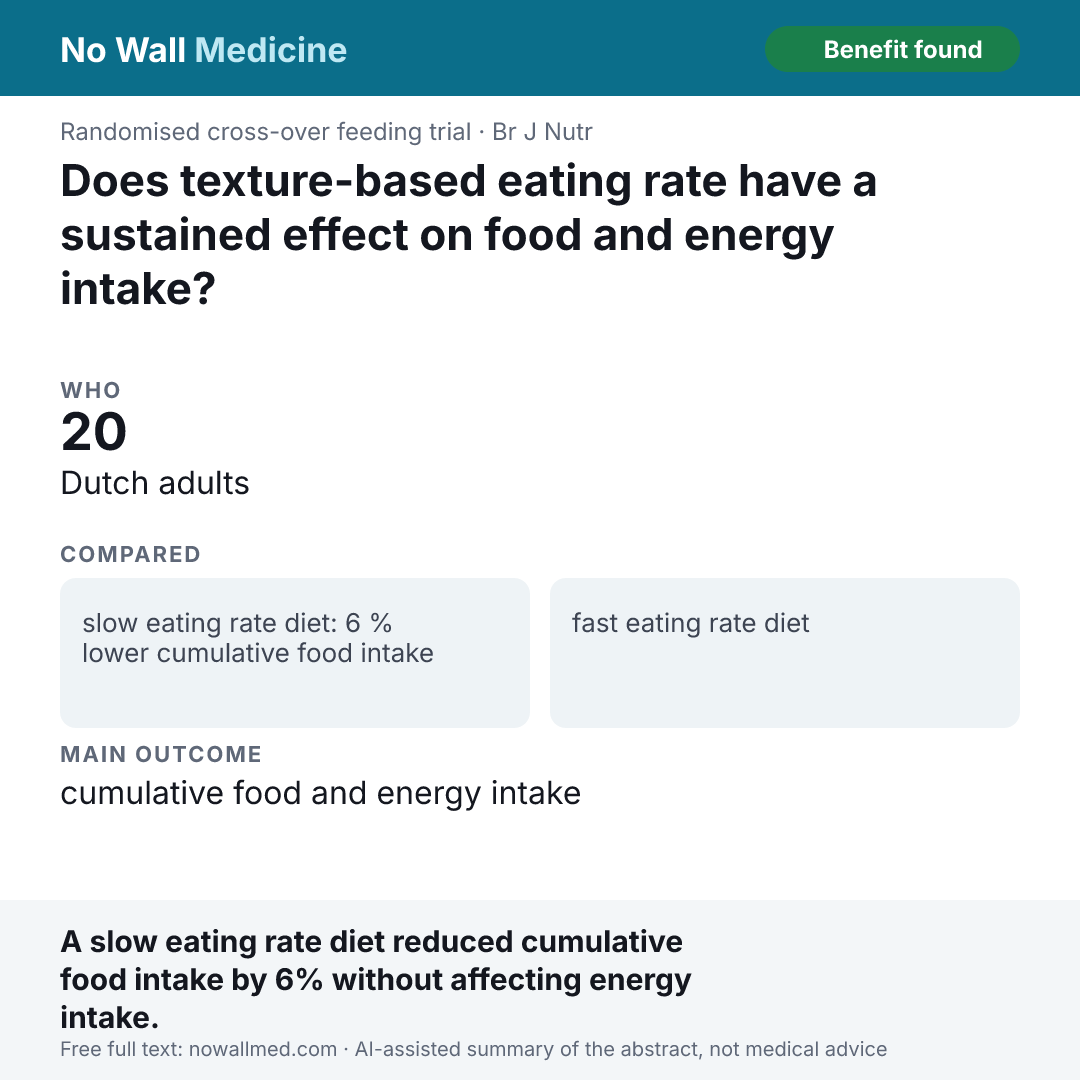
Clinical question: Does texture-based eating rate have a sustained effect on food and energy intake?
Key points
- Researchers studied 20 Dutch adults in a randomized cross-over trial comparing a fast eating rate diet to a slow eating rate diet.
- The slow diet reduced meal eating rate by 32% and decreased daily food intake by 121 (se 24) g/d on days with significant rate differences.
- Cumulative food intake was 6% lower on the slow diet, though there was no significant difference in total energy intake.
Headline and key points written with AI from the paper’s abstract, with every number checked against it. Read the paper before relying on them.
Was this summary helpful?
Headline, design, result, key points, caveat and citation as plain text.
Cite this article
van Bruinessen M, Heuven LAJ, Stieger M, Lasschuijt MP, Forde CG. The sustained effect of texture-based eating rate on food intake in an 11-d randomised controlled trial. Br J Nutr. 2026;135(9):1-9. doi:10.1017/S0007114525106193
Spotted a mistake? Suggest a correction